Climate Activism Disrupts Coal Exports at Newcastle Port: A Deep dive into Rising Tide‘s Protests
As of november 30, 2025, at 13:47:15, Australian authorities reported the arrest of numerous individuals involved in climate demonstrations that successfully impeded the operations of two cargo vessels at the Port of Newcastle, a pivotal hub for global coal exportation. This action, spearheaded by the activist collective Rising Tide, underscores a growing trend of direct action employed by environmental groups seeking to accelerate the transition away from fossil fuels. The incident highlights the escalating tension between environmental advocacy and the economic realities of coal-dependent industries, notably in a world increasingly focused on mitigating climate change. This article will delve into the specifics of the protest,the tactics employed,the legal ramifications,and the broader context of climate activism in Australia and beyond.
Rising Tide’s Direct Action: Disrupting Coal supply Chains
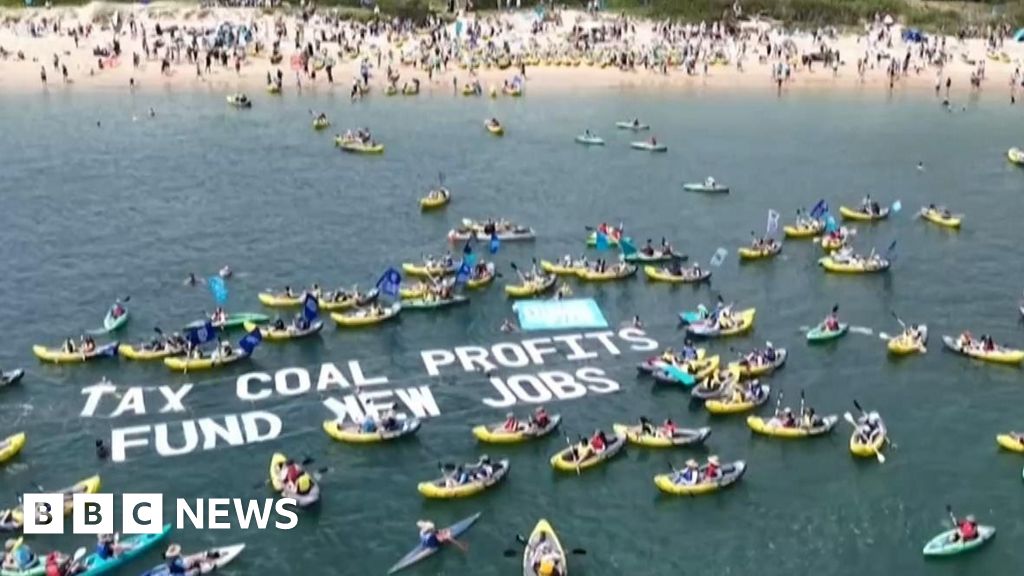
The recent exhibition at the Port of Newcastle saw hundreds of activists utilizing kayaks to obstruct the shipping lane within the harbor. Several activists engaged in unsafe practices on the water
, according to New South Wales state police, necessitating intervention and leading to multiple arrests. this tactic, while visually impactful, carries inherent risks for both protesters and maritime traffic. Rising Tide has publicly claimed responsibility for the disruption, framing it as a necessary measure to draw attention to the environmental consequences of coal production and export.
This isn’t an isolated incident. Rising Tide has been involved in similar actions targeting infrastructure related to the fossil fuel industry, including ports and rail lines. Their strategy centers around non-violent direct action designed to create economic disruption and generate media coverage. A recent report by the Australian Institute of Marine and Power Systems (AIMPS) released in October 2025, indicates a 15% increase in climate-related protests targeting critical infrastructure across Australia in the last year, demonstrating a clear escalation in activist tactics.
legal Consequences and Police Response
The New South Wales Police Force responded swiftly to the protests,deploying marine units to ensure the safety of all involved and to restore normal port operations.Those arrested face charges related to obstructing maritime traffic and potentially endangering lives. The penalties for such offenses can range from significant fines to imprisonment,depending on the severity of the disruption and the level of risk created.
“Police responded to reports of protesters disrupting operations at the Port of Newcastle. Several activists engaged in unsafe practices on the water, and arrests were made to ensure the safety of all involved.”
The legal ramifications extend beyond individual protesters. Rising Tide, as an organization, could face legal challenges related to inciting unlawful activity and potentially be held liable for any damages caused by the disruption. Legal experts suggest that the authorities are likely to pursue stricter penalties for future protests of this nature, citing concerns about public safety and economic stability.
The Broader Context: Climate Activism and Australia’s Energy Transition
The protests at Newcastle Port are symptomatic of a larger global movement demanding urgent action on climate change. Australia, as a major coal exporter, is a focal point for this activism. Despite commitments to reduce emissions and transition to renewable energy sources, the country continues to rely heavily on coal for both domestic power generation and export revenue.
The Australian government’s “Safeguard Mechanism” - designed to curb emissions from large industrial facilities – has faced criticism from environmental groups who argue it doesn’t go far enough to limit coal production. Furthermore, the recent approval of new coal mine projects has fueled further protests and accusations of hypocrisy.
The debate surrounding Australia’s energy transition is complex, balancing economic interests with environmental concerns. The country is experiencing a rapid growth in renewable energy investment, with solar and wind power capacity increasing significantly in the past five years. Though, the phasing out of coal remains a contentious issue, particularly in regions heavily reliant on the coal industry for employment.
| Metric | 2020 | 2024 (Estimate) | Change
|
|---|