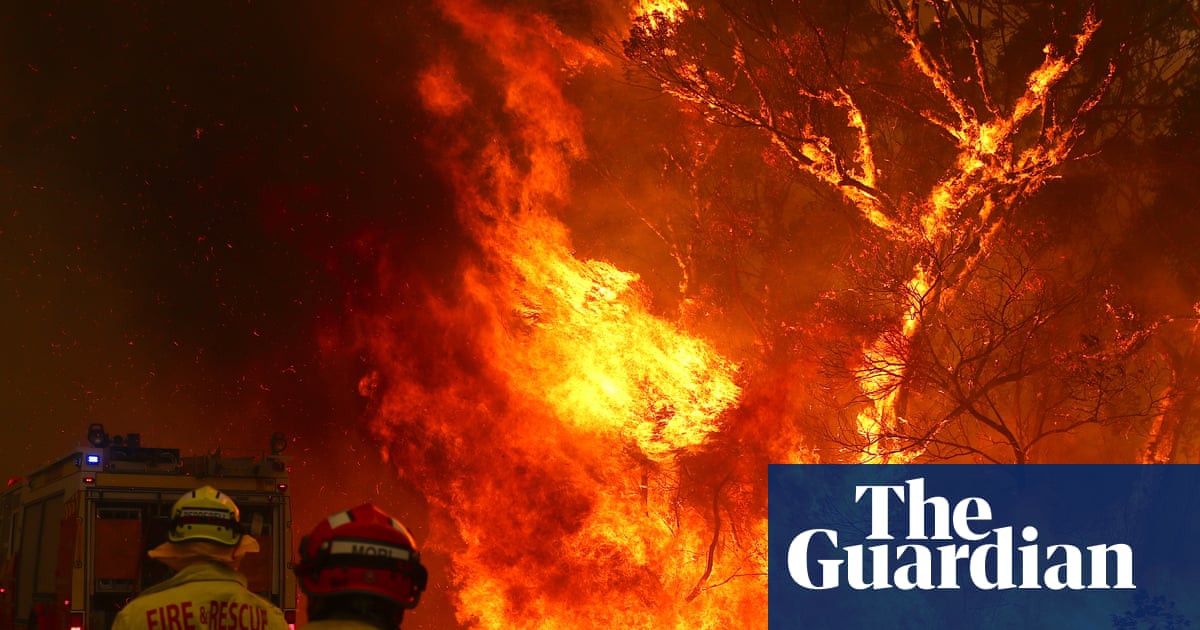
As record-breaking heatwaves and increasingly volatile wildfire seasons stretch emergency services across the United Kingdom and Europe, fire management agencies are shifting their focus toward the sophisticated, long-standing strategies utilized in Australia. While Australia’s environment faces distinct ecological challenges, its century of experience in managing “megafires” provides a critical blueprint for nations grappling with the growing reality of climate-driven landscape fires.
According to the United Nations Environment Programme (UNEP), the global surge in extreme wildfires is no longer a localized issue but a systemic threat requiring a transition from reactive firefighting to proactive, year-round land management. In Australia, the Commonwealth Scientific and Industrial Research Organisation (CSIRO) emphasizes that fire suppression alone is insufficient; instead, the focus has moved toward integrated vegetation management, community resilience, and sophisticated predictive modeling that accounts for changing atmospheric conditions.
The Australian Model: Shifting from Suppression to Stewardship
The core of the Australian approach involves a move away from the assumption that all fires can be fully extinguished during extreme weather events. As noted by researchers at the Bushfire and Natural Hazards Cooperative Research Centre, the focus in Australia has evolved toward “living with fire.” This involves the widespread implementation of prescribed burning—controlled fires lit during cooler, wetter months to reduce the accumulation of fuel loads that would otherwise feed catastrophic blazes during the summer.
For European nations, where forest management has historically prioritized commercial timber yield or conservation in ways that often allowed high fuel loads to build up, the Australian experience offers a stark lesson. The European Environment Agency (EEA) reports that as Mediterranean-style climate conditions move northward, traditional suppression methods are failing against high-intensity fires that jump across firebreaks and outpace human response times.
Community Resilience and the ‘Stay and Defend’ Doctrine
One of the most debated aspects of the Australian strategy is the “Prepare, Stay and Defend, or Leave Early” policy. This framework empowers residents to make informed decisions based on their property’s preparedness and their own physical capability to fight small spot fires. According to the New South Wales Rural Fire Service, this policy is not a blanket directive but a structured risk-management tool that reduces the chaos of mass evacuations during a fire front’s arrival.
In the UK, where fire risk was once considered negligible, the 2023 National Risk Register highlights a significant shift in the perceived threat level for wildfires. Unlike Australia’s long-established culture of bushfire preparedness, many European communities lack the specific infrastructure—such as mandatory defendable space around dwellings and localized water reserves—required to implement similar defensive strategies. The challenge for Europe lies in retrofitting established, dense residential areas to meet the fire-safe standards that have become common in high-risk Australian suburbs.
Technological Integration in Fire Prediction
Australia has invested heavily in remote sensing and predictive modeling to anticipate fire behavior before it begins. The Australian Bureau of Meteorology works in tandem with fire services to provide high-resolution fire danger ratings that are updated in real-time. These systems integrate satellite data, moisture-content sensors in forest litter, and wind-tunnel testing to predict how a fire will interact with specific topography.
This data-driven approach is increasingly being adopted by the European Forest Fire Information System (EFFIS). By utilizing the Copernicus satellite program, European authorities are aiming to move toward the same level of granular, predictive intelligence that allows Australian fire controllers to pre-position resources days before a high-danger weather window opens. The goal is to shift the timeline of intervention, moving from reacting to smoke on the horizon to managing the landscape based on atmospheric risk.
Future Outlook and Cross-Border Cooperation
The lessons from Australia suggest that the future of wildfire management in Europe will require more than just better equipment; it demands a fundamental shift in land-use policy. This includes the reintroduction of traditional land management practices, often incorporating indigenous ecological knowledge regarding fire intervals, alongside modern scientific monitoring. The Food and Agriculture Organization (FAO) has highlighted that international knowledge exchange—such as the cooperation between Australian fire experts and their European counterparts—is essential for building global resilience against the escalating fire crisis.
As the next fire season approaches, officials across Europe are expected to present updated wildfire mitigation strategies at the upcoming European Commission session on disaster resilience. These discussions will likely focus on standardizing cross-border resource sharing, mirroring the way Australian states coordinate interstate deployments during peak season. Residents and stakeholders are encouraged to monitor their local regional government portals for updated fire safety protocols and community evacuation drills scheduled throughout the coming months.
Keep reading
- 10-Day Weather Forecast for Irving, Texas
- Llechwedd Slate Mine Offers Unique Underground Ziplining and Adventure Tours
- Trump says US being ‘invaded by filthy air’ as he threatens Canada with tariffs over wildfires (archyworldys.com)
- Google-Backed FireSat Satellites Launch to Detect Global Wildfires (world-today-news.com)