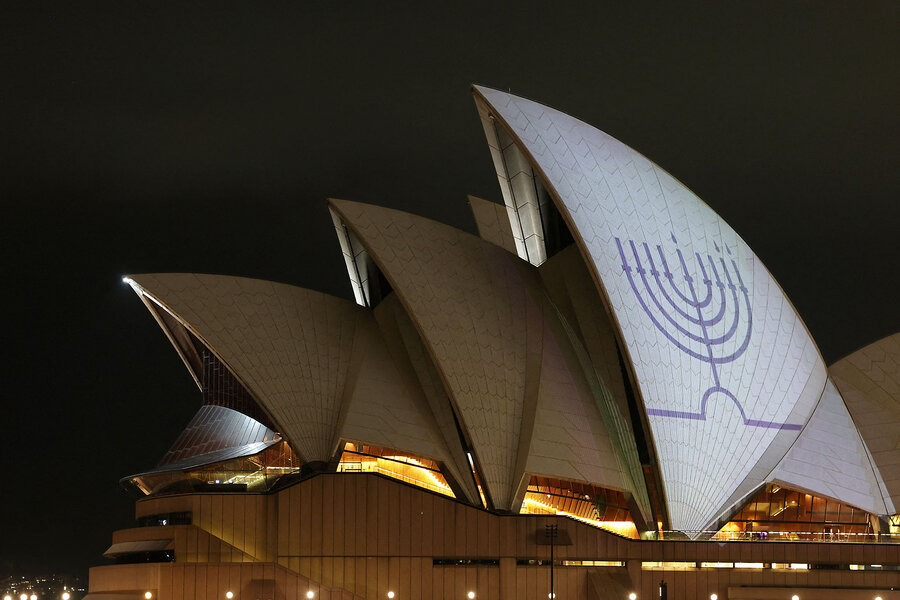
Beyond Bondi: How Heroism and Interfaith Values Offer a Path Forward After Tragedy
the horrific events of December 14th at Bondi Beach, Australia – a mass shooting during a Hanukkah gathering that claimed 15 lives – have understandably sparked a national conversation. Discussions around stricter gun control, combating antisemitism, and bolstering security measures are vital and underway. Though, amidst the grief and outrage, a powerful act of selfless courage has emerged, offering a less-discussed, yet profoundly critically important, pathway toward healing and prevention: the instinctive heroism of Ahmed al-Ahmed, a Muslim shop owner who disarmed one of the attackers, possibly saving countless lives. His actions, and the values they represent, deserve deeper examination as Australia – and the world – grapples wiht how to respond to escalating violence and division.
Al-Ahmed’s bravery, captured on video, wasn’t a calculated response rooted in ideology, but a visceral reaction to protect innocent people. “God gave me strength,” he reportedly told a cousin from his hospital bed, a testament to the immediate, human impulse that drove his actions.His father, Mohamed fateh al-Ahmed, eloquently articulated the core of his son’s motivation: a complete disregard for difference. “He wasn’t thinking about the background of the people he’s saving, the people dying in the street,” he explained. “He doesn’t discriminate between one nationality and another. Especially here in Australia, there’s no difference between one citizen and another.”
This instinct to protect, irrespective of faith or ethnicity, isn’t an isolated incident. Lubaba Alhmidi AlKahil, media director for the Australians for Syria Association, highlighted the strong communal bonds within the Syrian community, stating that refusing injustice and persecution is deeply ingrained. “we’ve refused injustice and persecution [in Syria] and it’s not strange that one of us had the feeling: ’no, I will not watch, I will die to help.'” This speaks to a cultural ethos of collective responsibility and a willingness to intervene in the face of harm.
A Historical Context: Interfaith Harmony and the Legacy of the Ottoman Empire
While the Middle East is often portrayed through the lens of conflict,it’s crucial to remember that violence isn’t its sole historical narrative. For centuries, regions within the Middle East, particularly under the ottoman Empire, fostered a remarkable degree of religious coexistence.Josef Meri, a Georgetown University faculty member specializing in interfaith relations, points to this legacy in The New Arab, noting the Ottoman Empire’s tradition of mutual respect for Jews, Christians, Muslims, and other faiths.
Central to this historical context is the islamic principle of religious freedom, explicitly enshrined in the Quran: “Let there be no compulsion in religion: Truth stands out clear from Error” (Surah Al-Baqarah, 2:256). This foundational tenet underscores a core value of tolerance and non-coercion, a principle that resonates deeply with the actions of individuals like Ahmed al-Ahmed. It’s a reminder that the potential for peaceful coexistence and interfaith understanding is not merely aspirational, but rooted in historical precedent and religious doctrine.
The Bondi Beach shooting, therefore, isn’t simply a tragedy to be analyzed through the prism of gun control or security failures. It’s a stark reminder of the power of individual action and the enduring importance of fostering a society built on respect, tolerance, and a shared commitment to protecting all its citizens. Senator Dave Sharma, former Australian Ambassador to Israel, aptly summarized the national sentiment, stating that the attack was perceived as an assault on Australia’s fundamental values – “our multi-faith society of respect, tolerance, diversity, and fundamentally a peaceful and respectful attitude towards one’s fellow citizens.”
Moving Forward: Cultivating a Culture of Courage and Inclusion
Ahmed al-Ahmed’s heroism serves as a powerful “corrective remedy,” as some have described it, demonstrating the capacity for compassion and bravery that exists within all communities. However, relying solely on spontaneous acts of heroism isn’t a lasting solution. Building a truly resilient society requires proactive efforts to cultivate a culture of courage,empathy,and inclusion.
This includes:
* Strengthening interfaith dialog: creating platforms for meaningful interaction and understanding between different faith communities.
* Promoting inclusive education: Educating future generations about the richness of religious diversity and the importance of tolerance.
* addressing the root causes of extremism: Tackling the ideologies and social conditions that contribute to radicalization.
* Celebrating acts of courage and compassion: Recognizing and amplifying stories like Ahmed al-Ahmed’s to inspire others.
Related reading