
Austria’s unemployment figures for May reveal a troubling upward trend, with 378,000 people registered as jobless—a rise that underscores persistent economic challenges across the country. The latest data, released by the Austrian Public Employment Service (AMS), highlights not just a numerical increase but also deepening structural issues, including a sharp rise in long-term unemployment and disproportionate impacts on women. Economists warn the figures signal broader labor market weaknesses, while regional disparities—particularly in Upper Austria and Styria—further complicate recovery efforts.
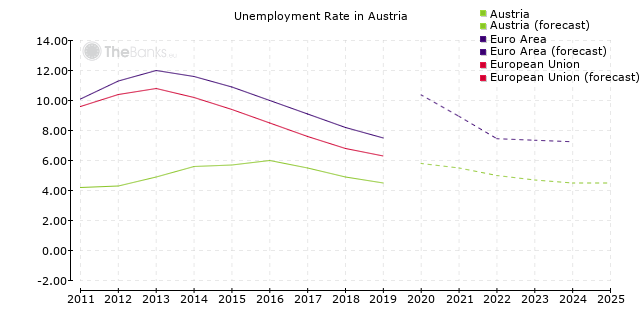
For context, Austria’s unemployment rate has fluctuated in recent years, influenced by post-pandemic recovery, energy price shocks, and shifts in industrial demand. The May figures, however, stand out for their acceleration in long-term unemployment, which now accounts for nearly one-third of all jobless claims, according to AMS. This trend raises alarms about the sustainability of current labor policies and the need for targeted interventions to prevent a lasting crisis for vulnerable groups.
While national averages mask regional variations—Upper Austria (OÖ) and Styria have seen particularly steep increases—experts point to structural mismatches between skills and available jobs, as well as demographic pressures, as key drivers. The data also reveals that women are disproportionately affected, with unemployment rates among female job seekers rising faster than among men. This gender gap reflects broader challenges in sectors like care work and part-time employment, where women remain overrepresented.
Visualizing the data: The AMS publishes monthly unemployment statistics in interactive formats. For the latest regional breakdowns, see the AMS Regional Employment Dashboard. Below is a summary of key May figures:
| Region | Unemployed (May 2024) | Change vs. April | Long-Term Unemployment Rate |
|---|---|---|---|
| Upper Austria (OÖ) | ~65,000 | +3.2% | ~35% |
| Styria | ~44,733 | +5.1% | ~30.7% |
| Vienna | ~110,000 | +1.8% | ~28% |
| Austria (National) | 378,000 | +2.1% | ~32% |
Why the numbers matter: Austria’s labor market has long been a point of national pride, with historically low unemployment compared to EU peers. The May spike, however, aligns with broader European trends of stagnant wage growth and rising energy costs, which disproportionately affect low-income households. The AMS attributes the rise to seasonal adjustments in tourism-related jobs and ongoing restructuring in manufacturing, but economists caution that the increase in long-term unemployment—those out of work for over a year—is particularly concerning.
“The real risk isn’t just the headline number,” says Dr. Anna Weber, an economist at the Vienna Institute for International Economic Studies (wiiw). “It’s the erosion of skills among long-term unemployed workers. Once someone is out of work for 12 months, their reintegration prospects drop dramatically.” Weber’s research shows that nearly 40% of long-term unemployed Austrians in 2023 had not found work even two years later, a statistic that could worsen if current trends continue.
Regional Disparities: Upper Austria and Styria Lead the Increase
While Vienna’s unemployment rate remains below the national average, Upper Austria (OÖ) and Styria are experiencing the steepest rises. In Upper Austria, the AMS reports a 3.2% increase in registered job seekers from April, with long-term unemployment now accounting for 35% of all claims. The region’s economy, heavily reliant on automotive and machinery manufacturing, has faced automation-driven layoffs alongside a decline in traditional industrial demand.
Styria’s situation is equally dire. The Kleine Zeitung reports that the region’s unemployment rate has risen by 5.1% month-over-month, with 44,733 people without work. Styria’s challenges stem from deindustrialization in steel and metal processing, coupled with a shortage of skilled labor in healthcare and IT. The regional government has launched targeted retraining programs, but critics argue these efforts are underfunded and gradual to reach affected workers.
Gender gap widens: Across Austria, women are 1.5 times more likely to be unemployed than men, according to AMS data. This disparity is driven by part-time employment traps, where women often work reduced hours but remain classified as “economically inactive” rather than unemployed. In sectors like retail and hospitality, where women dominate, wage stagnation and job insecurity have pushed many into long-term unemployment. The Der Standard highlights that 60% of new long-term unemployed claims in May were from women, a trend that aligns with pre-pandemic patterns.
Policy Responses: What’s Being Done?
Austria’s government has rolled out a multi-pronged approach to address the rising unemployment, combining short-term relief with long-term structural reforms. Key measures include:
- Expanded training subsidies: The AMS has increased funding for upskilling programs, particularly in digital literacy and green energy sectors, where demand is rising.
- Regional employment pacts: Upper Austria and Styria have secured €50 million in federal funds to create public-sector jobs in infrastructure and social services.
- Tax incentives for hiring: Employers in hard-hit industries (e.g., automotive, textiles) receive subsidies of up to €10,000 per new hire, though uptake has been mixed due to lingering economic uncertainty.
However, labor unions and opposition parties argue that these measures are insufficient. The Österreichischer Gewerkschaftsbund (ÖGB) has called for a national job guarantee program, while the Green Party demands a wealth tax on corporations to fund social safety nets. Economists like Weber warn that without bolder reforms—such as a universal basic income pilot or expanded childcare subsidies—the unemployment crisis could deepen.
What Happens Next? Key Checkpoints
The next critical data release will be the Austrian National Bank’s (OeNB) June economic forecast, scheduled for June 14, 2024. The OeNB’s projections on GDP growth and inflation will shape expectations for labor market stability. Additionally:
- The AMS will publish June unemployment figures on July 10, with analysts watching for signs of stabilization or further deterioration.
- The European Commission’s summer economic report (July 2024) will assess Austria’s compliance with EU employment targets, potentially influencing future EU funding.
- Parliamentary debates on the 2025 federal budget begin in August, where labor policies will be a focal point.
For readers affected by unemployment, the AMS offers detailed guides on benefits and retraining. Those in Upper Austria or Styria can contact their regional employment offices for localized support.
Key Takeaways
- National unemployment rose to 378,000 in May, a 2.1% increase from April, with long-term unemployment at 32%.
- Upper Austria and Styria are hardest hit, with regional unemployment rising by 3.2% and 5.1%, respectively.
- Women are disproportionately affected, accounting for 60% of new long-term unemployment claims.
- Policy responses include training subsidies and regional job pacts, but critics argue they lack scale.
- Next critical data points: OeNB forecast (June 14), AMS June figures (July 10), and EU economic report (July 2024).
As Austria grapples with these challenges, the coming months will be pivotal in determining whether the labor market can stabilize—or if deeper reforms are needed. We’ll continue to monitor developments and provide updates as they unfold.
What are your experiences with unemployment in Austria? Share your insights in the comments below—or help others by tagging a friend who may need this information.