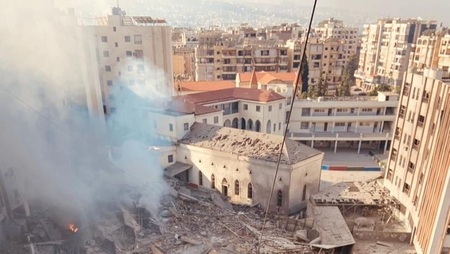
The escalating conflict in the Middle East has prompted a chorus of concern from religious leaders, with Austrian bishops issuing a stark plea for peace on March 13, 2026. Amidst reports of continued attacks and rising geopolitical tensions, the bishops warned of a potential “greater conflagration” if hostilities are not swiftly brought to an end. Their call for a cessation of violence underscores a growing international anxiety over the humanitarian consequences and regional instability stemming from the ongoing crisis. The situation is further complicated by the ongoing war in Ukraine and concerns for Christian communities throughout the region, prompting calls for sustained diplomatic efforts and increased humanitarian aid.
The Austrian Bishops’ Conference, concluding its spring assembly in St. Johann bei Herberstein, released a statement emphasizing the fundamental rights of all people in the Middle East – the right to live in peace, freedom, security, justice, and with dignity. This appeal comes as the conflict continues to unfold, with significant implications for global energy markets and international security. The bishops’ message, encapsulated in the urgent cry of “Stop the war!”, reflects a deep concern for the suffering inflicted upon civilians and a recognition that military solutions are ultimately unsustainable. The statement highlights a critical juncture in the region, where the potential for wider escalation remains a significant threat.
The bishops’ statement directly addresses the erosion of international law, observing that powerful nations are increasingly disregarding its principles. This disregard, they argue, undermines the foundations of a stable and just world order. They implore political and military leaders to grant unimpeded access to humanitarian organizations, including the United Nations, to provide aid to those in need. This call for adherence to international law is particularly relevant given recent reports of escalating attacks and the complex legal considerations surrounding the conflict. The bishops’ stance aligns with broader international efforts to uphold humanitarian principles and protect civilian populations in armed conflict.
Escalating Conflict and Humanitarian Concerns
The situation in the Middle East remains highly volatile. According to reports from tagesschau.de on March 13, 2026, the conflict is entering its second week with no clear end in sight. The news outlet reports that the United States has increased its attacks on Iran, while Israel has launched a new wave of offensives. The economic repercussions are also becoming increasingly apparent, with rising oil prices benefiting Russia’s President Putin, as the US has temporarily loosened sanctions on Russian oil to mitigate the impact on global markets. Tagesschau.de notes that this move allows for the sale of oil already loaded onto tankers for a period of one month, providing Russia with additional revenue. The situation is further complicated by disruptions to air travel, with Flightradar24 reporting a near-complete halt to flights over Iran and neighboring countries.
The Austrian bishops expressed particular concern for the plight of Christian communities in conflict zones, noting that minorities are often the first to suffer in times of war. They referenced warnings from Catholic patriarchs and bishops in the Middle East regarding a potential exodus of Christians from their ancestral lands, a trend that threatens to erase a two-millennia-aged presence. This concern echoes broader anxieties about the protection of religious minorities in the region and the preservation of cultural heritage. The bishops’ statement underscores the importance of safeguarding the rights and security of vulnerable populations amidst the ongoing conflict. The potential loss of Christian communities represents a significant cultural and historical tragedy.
Beyond the Middle East: Remembering Ukraine and Armenia
Archbishop Franz Lackner, Chairman of the Austrian Bishops’ Conference, emphasized during the press conference that the crisis in the Middle East should not overshadow other ongoing conflicts, particularly the war in Ukraine. He stated that the war against Ukraine, now in its fourth year, remains a “great injustice” and a clear violation of international law. According to reports from kathpress, Lackner highlighted the suffering of civilians during the harsh winter months, as attacks on infrastructure have left many vulnerable. He stressed that the war must not be forgotten and that a just and lasting peace remains the ultimate goal. This call for continued attention to Ukraine underscores the interconnectedness of global conflicts and the need for a comprehensive approach to peacebuilding.
Lackner also addressed the precarious situation of the Armenian Apostolic Church, expressing deep concern over recent developments. He noted that the Austrian bishops had previously expressed solidarity with the church in Armenia, which faces political pressure. In February, a gathering of Armenian bishops in St. Pölten was disrupted when the head of the church, Catholicos Karekin II, and other bishops were prevented from traveling by Armenian authorities, with some bishops reportedly being detained. Lackner’s statement, “Armenia must not be forgotten,” serves as a reminder of the challenges faced by religious communities in politically unstable regions and the importance of international advocacy for their protection. The situation in Armenia highlights the vulnerability of minority religious groups in conflict zones.
The Erosion of International Law and the Need for Diplomacy
The Austrian bishops’ statement reflects a growing concern among international observers regarding the weakening of international law. The principle of state sovereignty, enshrined in the UN Charter, is increasingly challenged by unilateral actions and the disregard for established norms. This erosion of the rules-based international order poses a significant threat to global stability and peaceful conflict resolution. The bishops’ call for adherence to international law is a plea for a return to multilateralism and a commitment to diplomatic solutions. The increasing disregard for international law is a worrying trend that could have far-reaching consequences.
The bishops also acknowledged the efforts of the Austrian federal government to de-escalate the violence in the Middle East, both bilaterally and through multilateral initiatives. They emphasized the importance of diplomatic engagement alongside humanitarian assistance. This recognition of Austria’s diplomatic role underscores the country’s commitment to peace and stability in the region. The bishops’ call for increased humanitarian aid reflects the urgent need to address the suffering of civilians affected by the conflict. The provision of humanitarian assistance is a critical component of any comprehensive response to the crisis.
The Austrian Bishops’ Conference’s appeal for peace is a timely reminder of the human cost of conflict and the urgent need for a diplomatic solution to the crisis in the Middle East. Their statement, coupled with concerns for Ukraine and Armenia, highlights the interconnectedness of global conflicts and the importance of upholding international law and protecting vulnerable populations. The situation demands a concerted effort from the international community to address the root causes of conflict and promote a just and lasting peace. The bishops’ call for prayer and fasting for peace underscores the spiritual dimension of the crisis and the need for collective action.
Looking ahead, the international community will be closely monitoring developments in the Middle East and assessing the effectiveness of ongoing diplomatic efforts. The next key checkpoint will be the upcoming United Nations Security Council meeting scheduled for March 20, 2026, where the situation in the region will be discussed. As reported by Tagesschau.de, this meeting is expected to address the escalating violence and explore potential pathways to de-escalation. We encourage readers to stay informed about these developments and to engage in constructive dialogue about the challenges facing the region. Share your thoughts and perspectives in the comments below.
Related reading