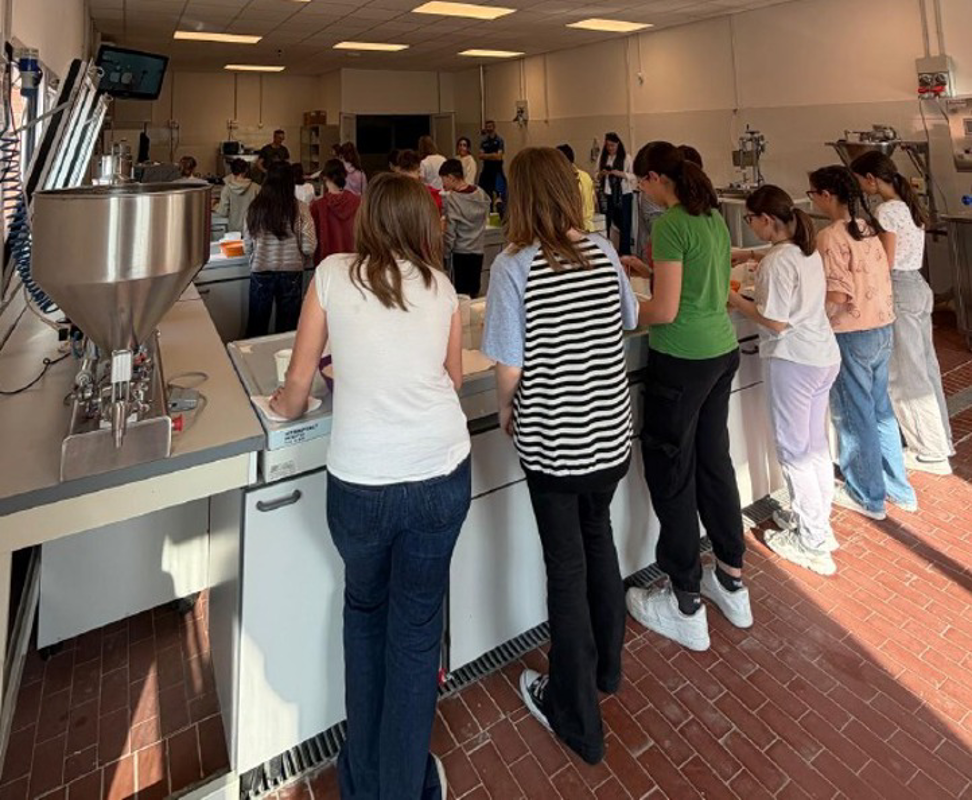
In the Lombardy region of northern Italy, the town of Pandino has become a focal point for discussions around small-business development and local economic revitalization, particularly following the announcement of a new laboratory facility aimed at supporting artisanal food producers. Located in the province of Cremona, Pandino lies within an area renowned for its dairy traditions, most notably the production of Grana Padano and other protected-origin cheeses. The initiative, reported by local news outlet Crema News, centers on establishing a shared workspace designed to lower barriers to entry for emerging entrepreneurs in the agro-food sector.
The proposed laboratory, intended to serve as a communal hub for food innovation, would provide access to certified equipment, hygiene-compliant environments, and technical support for small-scale producers who may lack the capital to invest in standalone facilities. Such models have gained traction across Europe as part of broader efforts to strengthen regional food systems, promote sustainability, and preserve culinary heritage. In Italy, where over 60% of food businesses are classified as micro-enterprises according to ISTAT data, shared infrastructure projects are increasingly seen as vital tools for fostering inclusivity in traditional industries.
While specific funding details for the Pandino laboratory remain under review, regional development programs such as those administered by Lombardy’s Directorate General for Economic Growth often allocate grants through the European Agricultural Fund for Rural Development (EAFRD). These funds typically support projects that enhance competitiveness, encourage innovation in agri-food chains, and improve market access for small producers. Officials from the Municipality of Pandino have indicated that feasibility studies are underway, with input being gathered from local cooperatives, agricultural associations, and vocational training institutes.
Context: Crema’s Economic Landscape and Access to Credit
Discussions around the Pandino laboratory coincide with broader conversations about financial accessibility for small businesses in the Crema area. Recent data from Italy’s Bank of Italy Observatory on household and business financing shows that the average mortgage loan amount requested in the province of Cremona was approximately €127,998 in early 2024. This figure reflects lending trends for both residential and mixed-use properties, including those potentially tied to small commercial ventures or artisan workshops.
The Observatory’s quarterly report, which aggregates data from major Italian banks and financial intermediaries, notes that loan demand in Lombardy has remained relatively stable despite fluctuations in interest rates set by the European Central Bank. As of March 2024, the average interest rate for new mortgages in Italy stood at 3.65%, up from historic lows but still below peak levels seen in the early 2000s. These financing conditions influence decisions about property acquisition, renovation, and business expansion—particularly for entrepreneurs considering mixed-use spaces that combine residence with production.
Access to credit remains a critical factor for small businesses, especially in rural and semi-urban areas where collateral options may be limited. Alternative financing mechanisms, such as microcredit programs offered by institutions like PerMicro or regional confidi consortia, play an important role in bridging gaps. In Lombardy, confidi organizations have facilitated over €1.2 billion in guaranteed lending to small and medium enterprises since 2020, according to data from Confidimpronta Lombardia.
Stakeholders and Potential Impact
The success of the Pandino laboratory initiative would depend on collaboration among several key stakeholders. Local government bodies, including the Comune di Pandino and the Provincia di Cremona, would likely provide administrative support and help navigate zoning or public health regulations. Agricultural cooperatives such as Coldiretti Cremona and Confagricoltura Lombardia could assist in identifying prospective users and aligning the facility with regional production cycles.
Educational institutions, particularly ITS (Istituti Tecnici Superiori) focused on agri-food technology in Lombardy, might contribute through internship programs, technical training, or joint research initiatives. For example, the ITS Agroalimentare in Cremona offers specialized courses in dairy processing, food safety, and innovation management—skills directly applicable to laboratory users.
If realized, the shared laboratory could lower operational costs for startups, reduce time-to-market for new products, and encourage experimentation with traditional recipes using modern techniques. It may also support generational renewal in family-run businesses by offering a lower-risk pathway for younger members to enter the trade. By centralizing certain production stages, such facilities can improve waste management, energy efficiency, and traceability—aligning with EU goals under the Farm to Fork Strategy.
Challenges and Considerations
Despite their potential, shared laboratory models face challenges that must be addressed during planning and implementation. Sustainability beyond initial funding is a common concern; many such projects rely on user fees, which must be set at levels that cover maintenance and utilities without deterring participation. Governance structures—whether managed by a public entity, nonprofit consortium, or private operator—also influence long-term viability.
Regulatory compliance presents another layer of complexity. Food laboratories in Italy must adhere to stringent hygiene standards outlined in Regulations (EC) No 852/2004 and 853/2004, which govern food safety and specific rules for animal-derived products. Any facility handling dairy, meat, or other perishables would need HACCP-based systems and regular inspections by local ASL (Azienda Sanitaria Locale) authorities.
cultural factors can affect adoption. In some artisanal communities, there may be reluctance to share equipment due to concerns about cross-contamination, loss of proprietary methods, or perceived threats to individual identity. Successful models often overcome these barriers through clear protocols, branding opportunities for individual producers, and strong community engagement from the outset.
Next Steps and Official Updates
As of April 2024, the Municipality of Pandino has not yet issued a formal call for expressions of interest or published a tender for the laboratory project. Interested parties are advised to monitor the official website of the Comune di Pandino (www.comune.pandino.cr.it) and the Provincia di Cremona’s economic development portal for updates on feasibility studies, funding applications, or public consultations.
The Lombardy Region’s official portal for European funds (regione.lombardia.it) provides detailed information on current grant opportunities under the 2021–2027 Programming Period, including those relevant to rural development and agro-food innovation. Business advisors at local Chambers of Commerce, such as Cremona’s (cr.camcom.it), also offer guidance on accessing regional support programs.
Stakeholders seeking to engage in the planning process can attend municipal council meetings, whose agendas and minutes are typically posted online. Public participation remains a key component of regional development planning in Italy, particularly for projects receiving EU co-financing.
For ongoing coverage of economic initiatives in Lombardy’s provinces, including updates on infrastructure, entrepreneurship, and regional policy, readers are encouraged to follow verified local news sources such as Crema News and provincial editions of Il Giorno or La Provincia.
We invite our global audience to share insights, experiences, or questions about shared laboratory models and rural economic development in the comments below. If you found this article informative, please consider sharing it with others interested in sustainable business innovation and regional resilience.
In the Lombardy region of northern Italy, the town of Pandino has become a focal point for discussions around small-business development and local economic revitalization, particularly following the announcement of a new laboratory facility aimed at supporting artisanal food producers. Located in the province of Cremona, Pandino lies within an area renowned for its dairy traditions, most notably the production of Grana Padano and other protected-origin cheeses. The initiative, reported by local news outlet Crema News, centers on establishing a shared workspace designed to lower barriers to entry for emerging entrepreneurs in the agro-food sector.
The proposed laboratory, intended to serve as a communal hub for food innovation, would provide access to certified equipment, hygiene-compliant environments, and technical support for small-scale producers who may lack the capital to invest in standalone facilities. Such models have gained traction across Europe as part of broader efforts to strengthen regional food systems, promote sustainability, and preserve culinary heritage. In Italy, where over 60% of food businesses are classified as micro-enterprises according to ISTAT data, shared infrastructure projects are increasingly seen as vital tools for fostering inclusivity in traditional industries.
While specific funding details for the Pandino laboratory remain under review, regional development programs such as those administered by Lombardy’s Directorate General for Economic Growth often allocate grants through the European Agricultural Fund for Rural Development (EAFRD). These funds typically support projects that enhance competitiveness, encourage innovation in agri-food chains, and improve market access for small producers. Officials from the Municipality of Pandino have indicated that feasibility studies are underway, with input being gathered from local cooperatives, agricultural associations, and vocational training institutes.
Context: Crema’s Economic Landscape and Access to Credit
Discussions around the Pandino laboratory coincide with broader conversations about financial accessibility for small businesses in the Crema area. Recent data from Italy’s Bank of Italy Observatory on household and business financing shows that the average mortgage loan amount requested in the province of Cremona was approximately €127,998 in early 2024. This figure reflects lending trends for both residential and mixed-use properties, including those potentially tied to small commercial ventures or artisan workshops.
The Observatory’s quarterly report, which aggregates data from major Italian banks and financial intermediaries, notes that loan demand in Lombardy has remained relatively stable despite fluctuations in interest rates set by the European Central Bank. As of March 2024, the average interest rate for new mortgages in Italy stood at 3.65%, up from historic lows but still below peak levels seen in the early 2000s. These financing conditions influence decisions about property acquisition, renovation, and business expansion—particularly for entrepreneurs considering mixed-use spaces that combine residence with production.
Access to credit remains a critical factor for small businesses, especially in rural and semi-urban areas where collateral options may be limited. Alternative financing mechanisms, such as microcredit programs offered by institutions like PerMicro or regional confidi consortia, play an important role in bridging gaps. In Lombardy, confidi organizations have facilitated over €1.2 billion in guaranteed lending to small and medium enterprises since 2020, according to data from Confidimpronta Lombardia.
Stakeholders and Potential Impact
The success of the Pandino laboratory initiative would depend on collaboration among several key stakeholders. Local government bodies, including the Comune di Pandino and the Provincia di Cremona, would likely provide administrative support and help navigate zoning or public health regulations. Agricultural cooperatives such as Coldiretti Cremona and Confagricoltura Lombardia could assist in identifying prospective users and aligning the facility with regional production cycles.
Educational institutions, particularly ITS (Istituti Tecnici Superiori) focused on agri-food technology in Lombardy, might contribute through internship programs, technical training, or joint research initiatives. For example, the ITS Agroalimentare in Cremona offers specialized courses in dairy processing, food safety, and innovation management—skills directly applicable to laboratory users.
If realized, the shared laboratory could lower operational costs for startups, reduce time-to-market for new products, and encourage experimentation with traditional recipes using modern techniques. It may also support generational renewal in family-run businesses by offering a lower-risk pathway for younger members to enter the trade. By centralizing certain production stages, such facilities can improve waste management, energy efficiency, and traceability—aligning with EU goals under the Farm to Fork Strategy.
Challenges and Considerations
Despite their potential, shared laboratory models face challenges that must be addressed during planning and implementation. Sustainability beyond initial funding is a common concern; many such projects rely on user fees, which must be set at levels that cover maintenance and utilities without deterring participation. Governance structures—whether managed by a public entity, nonprofit consortium, or private operator—also influence long-term viability.
Regulatory compliance presents another layer of complexity. Food laboratories in Italy must adhere to stringent hygiene standards outlined in Regulations (EC) No 852/2004 and 853/2004, which govern food safety and specific rules for animal-derived products. Any facility handling dairy, meat, or other perishables would need HACCP-based systems and regular inspections by local ASL (Azienda Sanitaria Locale) authorities.
cultural factors can affect adoption. In some artisanal communities, there may be reluctance to share equipment due to concerns about cross-contamination, loss of proprietary methods, or perceived threats to individual identity. Successful models often overcome these barriers through clear protocols, branding opportunities for individual producers, and strong community engagement from the outset.
Next Steps and Official Updates
As of April 2024, the Municipality of Pandino has not yet issued a formal call for expressions of interest or published a tender for the laboratory project. Interested parties are advised to monitor the official website of the Comune di Pandino (www.comune.pandino.cr.it) and the Provincia di Cremona’s economic development portal for updates on feasibility studies, funding applications, or public consultations.
The Lombardy Region’s official portal for European funds (regione.lombardia.it) provides detailed information on current grant opportunities under the 2021–2027 Programming Period, including those relevant to rural development and agro-food innovation. Business advisors at local Chambers of Commerce, such as Cremona’s (cr.camcom.it), also offer guidance on accessing regional support programs.
Stakeholders seeking to engage in the planning process can attend municipal council meetings, whose agendas and minutes are typically posted online. Public participation remains a key component of regional development planning in Italy, particularly for projects receiving EU co-financing.
For ongoing coverage of economic initiatives in Lombardy’s provinces, including updates on infrastructure, entrepreneurship, and regional policy, readers are encouraged to follow verified local news sources such as Crema News and provincial editions of Il Giorno or La Provincia.
We invite our global audience to share insights, experiences, or questions about shared laboratory models and rural economic development in the comments below. If you found this article informative, please consider sharing it with others interested in sustainable business innovation and regional resilience.
Keep reading