Azerbaijan Prepares Retaliation After Drone Attack from Iran
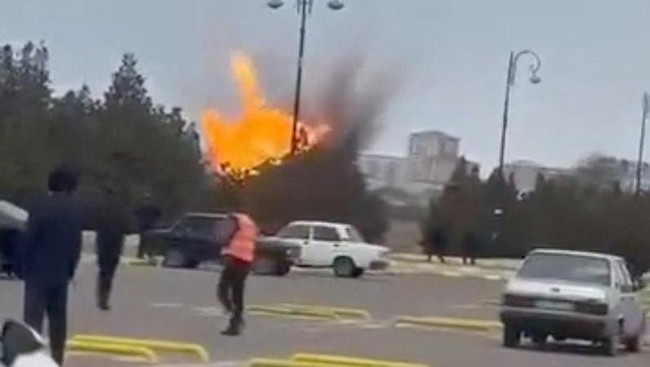
Sofia, Bulgaria – Tensions are escalating in the South Caucasus following a drone attack originating from Iranian territory that struck Azerbaijan’s exclave of Nakhichevan on Thursday, March 5, 2026. The attack, which damaged infrastructure at Nakhichevan International Airport and near a school in the village of Shekerabad, has prompted Azerbaijan to announce preparations for retaliatory measures. The incident marks a significant deterioration in already strained relations between the two nations, raising concerns about regional stability.
According to a statement released by the Azerbaijani Foreign Ministry, at least two drones crossed the border from Iran, impacting the airport terminal and a location close to a school. Two civilians were reportedly injured in the attack. Nakhichevan, a strategically essential exclave, is geographically separated from mainland Azerbaijan by Armenia, adding a complex layer to the geopolitical dynamics of the region. The Azerbaijani government has condemned the attack as a violation of international law and a threat to regional peace.
The Azerbaijani Ministry of Defense has stated This proves “preparing the necessary retaliatory measures to protect the territorial integrity and sovereignty of our country, as well as to ensure the safety of civilians and civilian infrastructure.” This announcement signals a firm resolve from Baku to respond to the perceived aggression. As an initial step, the Azerbaijani Foreign Ministry has summoned the Iranian ambassador in Baku to lodge a formal protest against the attack, describing it as a “strong protest” and a contravention of international norms.
Long-Standing Tensions Between Azerbaijan and Iran
This incident unfolds against a backdrop of long-standing mistrust and geopolitical competition between Azerbaijan and Iran. Tehran has consistently expressed concerns that Israel, a close ally and major arms supplier to Azerbaijan, might utilize Azerbaijani territory as a staging ground for potential attacks against Iran. These concerns were heightened in June of last year, prompting Azerbaijan to offer assurances to Iran that its territory would not be used for offensive operations against the Islamic Republic, particularly following a large-scale Israeli operation targeting sites within Iran.
Beyond security concerns, the relationship is further complicated by internal sensitivities within Iran. A significant Azerbaijani minority population resides within Iran – estimated at around 10 million people out of Iran’s total population of 83 million – and Tehran has historically been wary of any potential separatist sentiments within this community. This demographic factor adds another layer of complexity to the already fraught relationship between the two countries.
The recent escalation also occurs within a broader context of shifting alliances and geopolitical maneuvering in the South Caucasus. The United States has been actively pursuing a policy of strengthening ties with Turkey even as seeking to limit the influence of both Russia and Iran in the region, as outlined in a report by The Armenian Weekly. This policy has, in turn, contributed to Iran’s growing unease regarding Azerbaijan’s alignment with Western powers and Israel.
Iran’s concerns are not limited to potential military use of Azerbaijani territory. The Foundation for Defense of Democracies has reported that Iran views the emerging transportation corridors in the Caucasus, brokered in part by the United States, with significant apprehension. Specifically, Iran is reportedly determined to block the development of a “Caucasus corridor” – a potential trade and transport route bypassing both Russia and Iran – “with or without Russia,” according to Iran International. This corridor, if fully realized, could significantly diminish Iran’s regional economic influence.
The attack on Nakhichevan raises questions about the potential for further escalation. While Azerbaijan has not specified the nature of its planned retaliation, the possibility of military action cannot be ruled out. The situation is further complicated by the presence of Armenia, which shares a border with both Azerbaijan and Iran, and the potential for the conflict to spill over into Armenian territory.
The international community is closely monitoring the situation, with calls for restraint and a peaceful resolution to the dispute. However, the deep-seated mistrust and competing geopolitical interests between Azerbaijan and Iran suggest that a swift and easy resolution is unlikely. The incident underscores the fragility of peace in the South Caucasus and the potential for renewed conflict in a region already marked by decades of instability.
The Azerbaijani government has indicated it is investigating the origin and intent of the drone attack, seeking to determine whether it was a deliberate act of aggression or a miscalculation. Further investigation will be crucial in determining the appropriate response and preventing further escalation. The incident also highlights the need for increased dialogue and confidence-building measures between Azerbaijan and Iran to address the underlying causes of tension and prevent future incidents.
The attack on Nakhichevan is a stark reminder of the complex geopolitical challenges facing the South Caucasus. The region remains a focal point of competition between regional and global powers, and the potential for conflict remains high. The international community must work to de-escalate tensions and promote a peaceful resolution to the dispute, ensuring the stability and security of the region.
As of today, March 5, 2026, the Iranian government has not officially commented on the allegations of responsibility for the drone attack. Further developments are expected in the coming days as Azerbaijan continues its investigation and prepares its response. The situation remains fluid and requires careful monitoring.
The incident also raises concerns about the security of critical infrastructure in the region. Nakhichevan International Airport is a vital transportation hub, and any disruption to its operations could have significant economic consequences. The attack underscores the need for enhanced security measures to protect critical infrastructure from potential attacks.
The long-term implications of this incident remain to be seen. However, the attack has further strained relations between Azerbaijan and Iran, and it has increased the risk of further escalation. The international community must work to prevent a wider conflict and promote a peaceful resolution to the dispute.
Next Steps: Azerbaijan is expected to formally present evidence of Iran’s involvement in the drone attack to international organizations, including the United Nations. Further diplomatic efforts are anticipated in the coming days to de-escalate tensions and prevent further conflict. We will continue to monitor the situation closely and provide updates as they become available.
What are your thoughts on this developing situation? Share your comments below and let us know what you think should be done to address the escalating tensions in the South Caucasus.