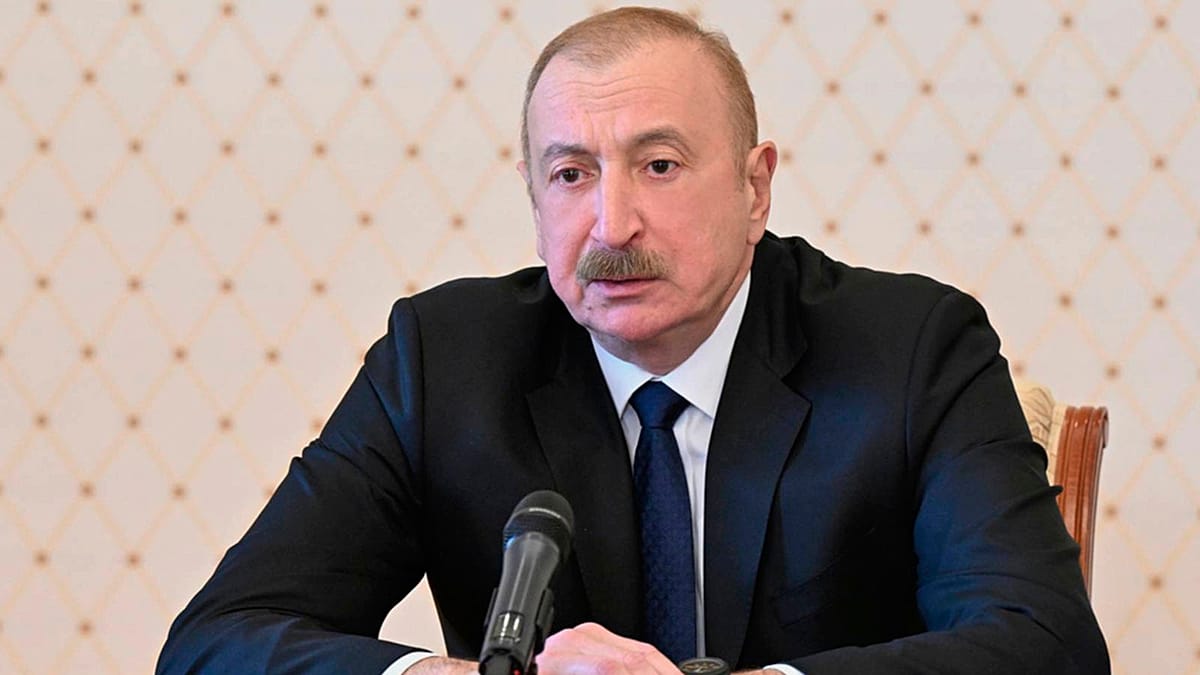
Nakhchivan, Azerbaijan – Tensions in the South Caucasus are escalating rapidly following accusations that Iran launched drone strikes on Azerbaijan’s Nakhchivan exclave on Thursday, March 5, 2026. Azerbaijani President Ilham Aliyev has condemned the incident as an “act of terror” and vowed a forceful response, placing the country’s armed forces on high alert. The incident marks a dangerous escalation in regional instability, occurring against a backdrop of wider conflict in the Middle East and complex geopolitical dynamics involving Azerbaijan, Iran, Israel, and Russia.
The alleged drone attacks targeted the Nakhchivan International Airport, damaging the passenger terminal, and a rural school, resulting in injuries to four civilians, according to initial reports. While Iran has denied any involvement, suggesting the attack may have been a false-flag operation orchestrated by Israel, Azerbaijan is demanding a full explanation and apology from Tehran. This incident has prompted a significant hardening of Azerbaijan’s stance towards Iran, with President Aliyev adopting unusually strong rhetoric.
The situation is further complicated by the presence of a large Azerbaijani minority population within Iran, estimated to be between 20 and 25 million people, concentrated in the northwest of the country along the Azerbaijan border. This demographic factor has long been a sensitive issue in relations between the two nations, and Aliyev’s recent statements referencing the hopes of Azerbaijanis living in Iran have added fuel to the fire. Azerbaijan’s strong relationship with Israel as well plays a role, as Iran views Israel as a key regional adversary.
Azerbaijan Mobilizes and Demands Accountability
In response to the alleged attacks, President Aliyev convened the Security Council of Azerbaijan on Thursday and ordered the country’s army to “full combat readiness.” The armed forces have been instructed to “prepare and implement response measures,” signaling a clear intent to retaliate if necessary. Azerbaijan has also halted all cross-border traffic with Iran, further escalating tensions. Aliyev’s firm response echoes his handling of the Azerbaijan Airlines Flight 8243 plane crash in December 2024, where he directly accused Russia of downing the aircraft, as reported by the BBC.
Aliyev has demanded that those responsible for the alleged “terrorist act” be held criminally liable, and indicated that this would not be an isolated incident. He recalled past incidents that he claims were orchestrated by Iran against Azerbaijani citizens, though specific details of these incidents were not immediately available. His statements suggest a growing pattern of distrust and animosity towards Tehran.
A Complex Regional Landscape
Nakhchivan, an isolated Azerbaijani territory bordering Iran, Turkey, and Armenia, is particularly vulnerable during times of conflict. Its strategic location makes it a potential flashpoint in the region. The recent escalation comes as the broader Middle East grapples with ongoing conflicts, raising concerns about a wider regional war. The potential for miscalculation and escalation is high, given the complex web of alliances and rivalries in the area.
Adding a surprising layer to the unfolding crisis, Aliyev revealed that Iran had requested Azerbaijan’s assistance in evacuating Iranian embassy staff from Lebanon, citing a lack of resources. Despite this request, Aliyev expressed outrage at the simultaneous attack on Nakhchivan, stating, “I said it was not necessary — if we do not assist in difficult times, when should we help? And in return for all this, to strike Nakhchivan in such a treacherous and dishonorable manner? This stain will never be erased from their disgraceful image.” This incident highlights the paradoxical nature of the relationship between the two countries, marked by both cooperation and conflict.
International Reactions and Turkish Support
The alleged Iranian attack on Azerbaijan has drawn swift condemnation from Turkey, a close ally of Baku. The Turkish Ministry of Foreign Affairs released a statement strongly condemning the drone attacks and reaffirming its continued support for Azerbaijan. Euronews reported that Ankara pledged to “continue to stand by Azerbaijan, as it always has.”
While Iran continues to deny responsibility for the attacks, the international community is closely monitoring the situation. The United States and the European Union have called for de-escalation and a peaceful resolution to the dispute. However, with both Azerbaijan and Iran taking increasingly hardline stances, the prospects for a quick and easy resolution appear slim.
The Azerbaijani-Iranian Relationship: A History of Tension
The relationship between Azerbaijan and Iran has been fraught with tension for decades. Several factors contribute to this dynamic, including the presence of the Azerbaijani minority in Iran, competing geopolitical interests, and differing alliances. Azerbaijan’s close ties with Israel, a staunch adversary of Iran, are a particularly sensitive issue for Tehran. Iran has repeatedly expressed concerns about what it perceives as Israeli activities near its borders, including alleged intelligence gathering and potential military operations.
disputes over energy resources and transportation routes in the Caspian Sea region have also fueled tensions between the two countries. Azerbaijan’s development of oil and gas pipelines that bypass Iran has been viewed by Tehran as a deliberate attempt to undermine its economic interests. These long-standing grievances have created a climate of distrust and animosity that makes it difficult to resolve disputes peacefully.
What Happens Next?
The immediate future remains uncertain. Azerbaijan has signaled its intention to respond to the alleged attacks, but the nature and scale of that response are still unknown. A military escalation could have devastating consequences for the region, potentially drawing in other actors and further destabilizing an already volatile area. Diplomatic efforts to de-escalate the situation are ongoing, but their success is far from guaranteed.
The coming days and weeks will be critical in determining whether the current crisis can be contained or whether it will spiral into a wider conflict. The international community will need to play a proactive role in mediating between Azerbaijan and Iran and preventing further escalation. The potential for miscalculation and unintended consequences is high, and the stakes are incredibly high for the entire region.
Key Takeaways:
- Azerbaijan accuses Iran of launching drone strikes on its Nakhchivan exclave, injuring four civilians.
- President Aliyev has vowed retaliation and placed the Azerbaijani armed forces on high alert.
- Iran denies involvement, suggesting a possible false-flag operation.
- The incident escalates existing tensions between Azerbaijan and Iran, fueled by geopolitical rivalries and the Azerbaijani minority in Iran.
- Turkey has expressed strong support for Azerbaijan.
The situation remains fluid, and further developments are expected in the coming days. World Today Journal will continue to monitor the situation closely and provide updates as they become available. We encourage readers to share their thoughts and perspectives in the comments section below.