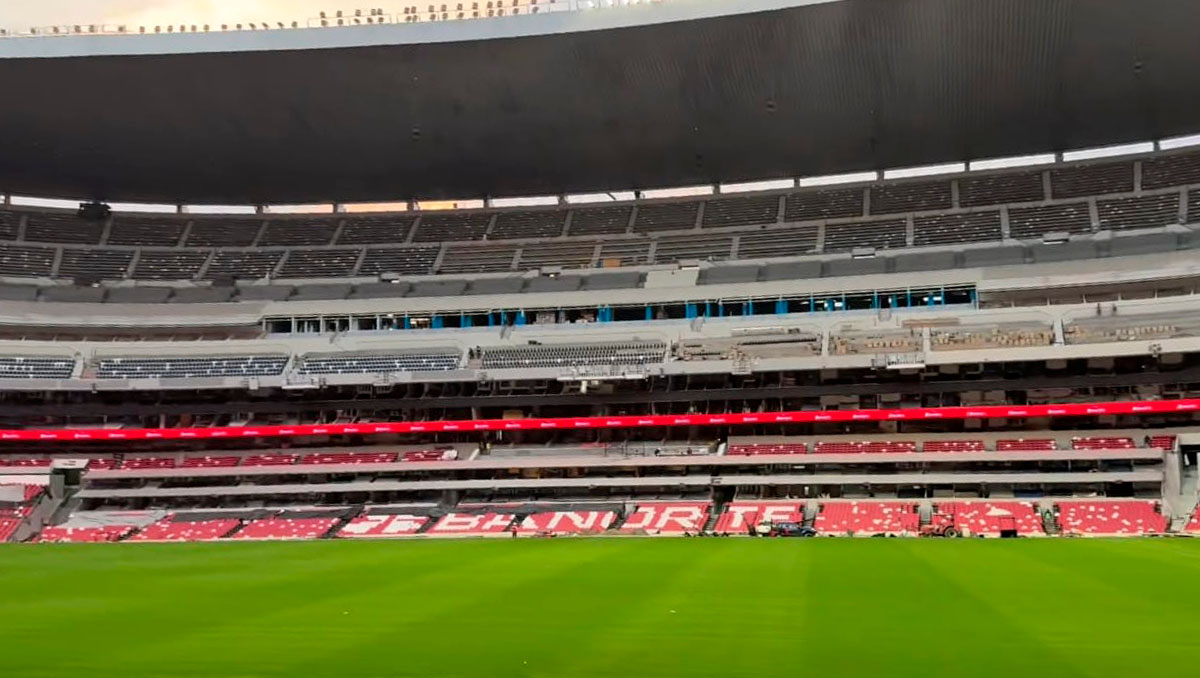
Estadio Azteca Transformation Continues Ahead of 2026 World Cup, New LED Screens Impress
Mexico City’s iconic Estadio Azteca is undergoing a significant renovation in preparation for hosting matches during the 2026 FIFA World Cup, and recent developments are offering a glimpse of the stadium’s future. While construction continues, new LED screens and other upgrades are already in place, signaling a major visual overhaul for the historic venue. The stadium is slated to reopen on March 28, 2026, with a friendly match between Mexico and Portugal, and will similarly host the Mexico vs. South Africa match on June 11th as part of the World Cup inauguration, though work will continue even after these events. The ongoing modernization aims to preserve the stadium’s legacy while enhancing the fan experience for the global sporting event.
The Estadio Azteca, originally built for the 1968 Summer Olympics, has undergone several renovations throughout its history. This current project, however, represents one of the most comprehensive overhauls in decades. Beyond the structural improvements necessary to meet modern safety standards and FIFA requirements, a key focus has been on enhancing the stadium’s visual appeal. Recent images and reports indicate substantial progress in the installation of new LED screens, both large-scale displays and those positioned within the stadium’s premium seating areas. These new screens are already undergoing testing, providing a preview of the enhanced atmosphere fans can expect.
New Screens and Premium Zones Take Shape
Fans have already expressed excitement over the initial phases of the renovation, particularly the installation of the large-format LED screens and upgraded lighting systems. More recently, attention has turned to the screens being installed in the stadium’s suites and surrounding the pitch. These additions are intended to provide a more immersive and engaging experience for spectators, offering enhanced views of the action and dynamic visual content. The installation of these screens is a key component of the broader effort to modernize the stadium’s facilities and elevate its status as a world-class sporting venue.
Work is proceeding around the clock at the Azteca, with significant activity focused on the newly renovated premium zones and a new restaurant planned for the second level. Decorative elements are being installed, particularly on the ceilings, though completion of these areas is still underway. The majority of the new seating in the recently constructed sections has yet to be installed, but construction crews are reportedly making rapid progress. Outside the stadium, work continues on the structure that will support the controversial red EFTE canopy, a feature that has drawn criticism from some fans and observers. Mediotiempo reported on the material being used for the canopy in December 2025.

Ticket Sales and Cristiano Ronaldo’s Potential Debut
The upcoming friendly match between Mexico and Portugal on March 28, 2026, is generating significant excitement, particularly due to the potential for Cristiano Ronaldo to make his first appearance in Mexico. Ticket pre-sales began on December 10, 2025, and were exclusive to cardholders of the sponsoring bank of the Estadio Azteca, continuing through December 12, 2025. General ticket sales are scheduled to follow, and will be managed through the Fanki platform. AS Mexico detailed the ticket sales process in December 2025. Given the high demand and the historical significance of the event – marking the stadium’s reopening and Ronaldo’s potential debut – tickets are expected to sell out quickly.
The Estadio Azteca’s renovation is not merely cosmetic. The upgrades are essential to meet the requirements for hosting matches in the 2026 FIFA World Cup, which will be jointly hosted by the United States, Canada, and Mexico. The stadium is set to become the first venue in history to host three FIFA World Cup tournaments, having previously hosted the finals in 1970 and 1986. The ongoing work aims to ensure the stadium meets the highest standards of safety, comfort, and technological sophistication for players and fans alike. The stadium, recently rebranded as Estadio Banorte, is undergoing a transformation that will ensure its continued relevance as a premier sporting destination for decades to come.
The potential presence of Cristiano Ronaldo adds another layer of anticipation to the March 28th match. At 41 years old in 2026, Ronaldo remains a global icon and one of the most prolific goalscorers in football history. While Portugal’s World Cup group stage matches will be played in the United States, this friendly offers Mexican fans a unique opportunity to witness his talent firsthand. The match is expected to draw a large international audience and further solidify the Estadio Azteca’s reputation as a legendary venue.
Concerns Regarding Stadium Readiness
Despite the progress, some concerns remain regarding the stadium’s readiness for the March 28th friendly. Portuguese media have reported anxieties within the Portuguese national team’s coaching staff and federation officials about whether the Estadio Azteca will meet the necessary safety and logistical standards in time. Fox Sports reported on these concerns in February 2026. These concerns stem from delays in the renovation work, raising the possibility that FIFA might reconsider not only the friendly match but also potentially other World Cup-related fixtures if key construction phases are not completed on schedule. Emilio Azcárraga, however, has acknowledged the setbacks but attempted to reassure the public that the stadium will be ready for the March fixture.
The Estadio Azteca’s renovation represents a significant investment in Mexico’s sporting infrastructure and a commitment to hosting a successful 2026 FIFA World Cup. The installation of new LED screens, the modernization of premium zones, and the ongoing construction of the canopy are all contributing to a transformed stadium experience. As the March 28th match approaches, all eyes will be on Mexico City to see if the Estadio Azteca can deliver on its promise of a spectacular and safe venue for both players and fans.
The next major milestone for the Estadio Azteca will be the completion of the final construction phases and the official inspection by FIFA officials to ensure the stadium meets all requirements for the 2026 World Cup. We will continue to provide updates as they become available. What are your thoughts on the renovations? Share your opinions in the comments below, and be sure to share this article with fellow football fans!