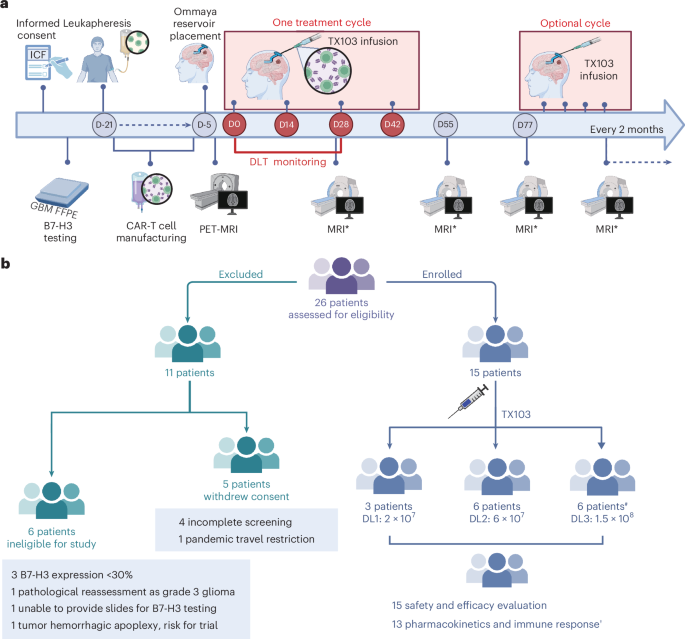
Intracranial delivery of B7-H3-targeting chimeric antigen receptor (CAR) T cell therapy in patients with recurrent glioblastoma has demonstrated an absence of dose-limiting toxicity signals alongside early signs of clinical benefit in a phase 1 dose-escalation trial published in Nature Medicine.
Glioblastoma remains one of the most aggressive and treatment-resistant forms of adult brain cancer, characterized by infiltrative growth and a poor prognosis following standard surgery, radiation, and chemotherapy. Because systemic immunotherapies often struggle to cross the blood-brain barrier effectively, investigators have increasingly focused on direct locoregional delivery methods. The phase 1 trial specifically examined B7-H3—an antigen frequently overexpressed on glioblastoma cells—as a target for modified T cells, offering a new avenue for patients facing recurrent disease.
According to the findings detailed in the clinical trial publication, the primary objective was to establish the safety profile and identify maximum tolerated doses of intracranial B7-H3 CAR-T cell infusion. Across the escalation cohorts, the treatment did not trigger acute dose-limiting toxicities that halted the study, providing an initial safety benchmark for direct central nervous system administration of these targeted cellular products. Researchers also tracked secondary clinical endpoints, noting preliminary indicators of disease stabilization and potential therapeutic response in a patient population with historically limited options.
Evaluating Safety and Locoregional Delivery Mechanisms
Administering cellular immunotherapy directly into the intracranial space requires precise neurosurgical techniques, such as the placement of specialized catheters or reservoirs to ensure accurate drug distribution. In this phase 1 evaluation, the trial design allowed for dose escalation to determine how much engineered cellular material the local brain tissue and systemic circulation could tolerate without inducing severe neurotoxicity or cytokine release syndrome.
Clinical investigators closely monitored patients for procedure-related adverse events, cerebral edema, and localized inflammatory responses, which often accompany successful immune cell activation inside the confined intracranial cavity. The data indicated that while manageable inflammatory changes occurred as the T cells engaged their target antigen, the adverse event profile remained within acceptable parameters for early-phase oncology trials targeting recurrent brain tumors. These findings suggest that locoregional delivery bypasses systemic clearance issues while maintaining acceptable tolerability.
Targeting B7-H3 in Recurrent Brain Tumors
B7-H3 (also known as CD276) is an immune checkpoint molecule and tumor-associated antigen that is broadly expressed across various solid tumors, including glioblastoma, while showing restricted expression in normal healthy tissues. This differential expression makes it an attractive target for CAR-T cell engineering, theoretically minimizing off-target damage to healthy brain parenchyma.
Previous preclinical models demonstrated that B7-H3-redirected T cells could successfully migrate toward and eliminate glioblastoma cells in vitro and in animal models. The transition of this target into a human phase 1 trial marks a critical translational step. By directing engineered receptors against B7-H3 directly at the tumor site, researchers aim to overcome the immunosuppressive microenvironment that typically neutralizes endogenous immune responses in glioblastoma patients.
Next Steps in Clinical Evaluation
While the phase 1 trial establishes initial safety and encourages further clinical exploration, larger multi-center studies will be required to confirm efficacy, optimize dosing schedules, and evaluate long-term survival outcomes for patients with recurrent glioblastoma. Investigators continue to analyze biomarker data from trial participants to correlate immune cell persistence and trafficking with clinical responses.
Readers seeking further details on ongoing clinical trials involving cellular therapies for neuro-oncology can consult clinical trial registries such as ClinicalTrials.gov or review the full study publication in Nature Medicine. We invite our readers to share their thoughts and perspectives on these developments in the comments section below.