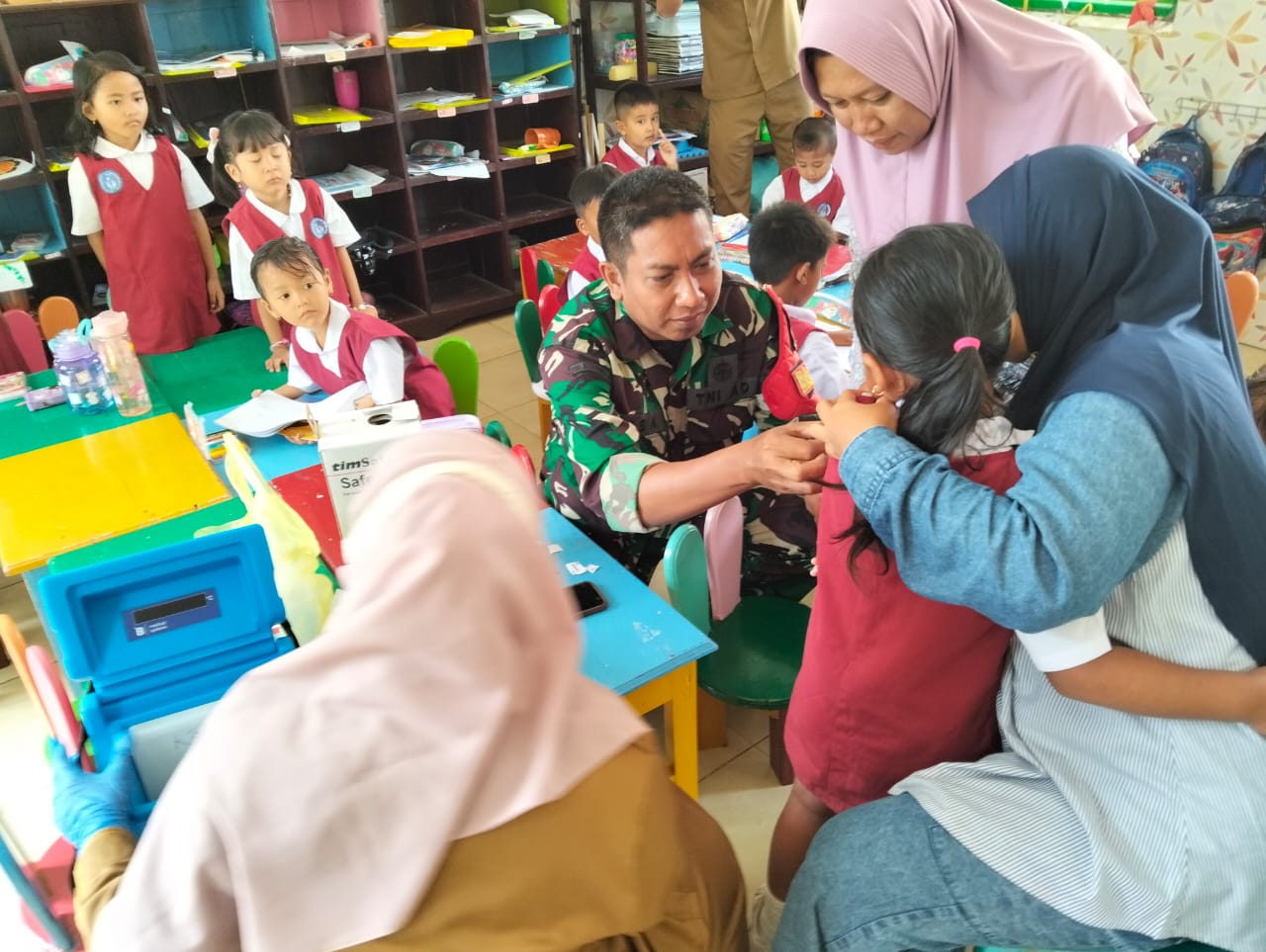
Military personnel assigned to the Saronggi region in Indonesia recently assisted local health workers during a Posyandu (Integrated Healthcare Center) session, which included the administration of measles vaccinations for kindergarten students. These community-based health initiatives, known as Posyandu, serve as a critical component of Indonesia’s public health infrastructure, focusing on maternal and child health at the village level according to the Indonesian Ministry of Health.
The involvement of the Babinsa—a term for village-level military non-commissioned officers—is part of a broader national strategy to improve vaccine uptake and monitor child development in rural areas. By providing logistical support and encouraging parental participation, these personnel aim to bridge the gap between healthcare providers and families in remote or underserved communities. Such efforts are essential to meeting national immunization targets, which the World Health Organization identifies as vital for protecting children against highly contagious, vaccine-preventable diseases like measles.
The Role of Posyandu in Indonesian Public Health
Posyandu centers function as the frontline of primary healthcare in Indonesia. These centers are typically managed by community volunteers, known as cadres, who work under the guidance of local Puskesmas (community health centers). According to the United Nations Children’s Fund (UNICEF) Indonesia, these centers are designed to provide routine monitoring of child growth, nutritional supplementation, and essential immunization services to children under the age of five.
When military personnel or local officials participate in these sessions, the objective is often to increase public trust and attendance. Measles, a highly infectious viral disease, remains a significant public health concern in the region. The World Health Organization maintains that high-coverage routine immunization is the only effective way to prevent outbreaks, particularly in high-density settings like kindergartens and primary schools.
Why Community Support for Vaccination Matters
The participation of Babinsa officers in health drives is a common practice in Indonesia, aimed at leveraging the military’s presence in villages to ensure that health programs reach their intended targets. This collaborative model is intended to address common barriers to vaccination, such as logistical challenges, lack of information, or parental hesitancy. For parents, seeing military and local leaders present at a health post can reinforce the importance of the medical procedure.
Measles vaccinations are part of the Indonesian government’s Expanded Program on Immunization (EPI). The program is mandated under national regulations, and health officials continuously work to ensure that all children, including those in early childhood education programs, receive their required doses. According to the Ministry of Health, maintaining high immunization coverage is a priority to prevent the resurgence of preventable infections in the post-pandemic era.
Next Steps for Child Health Initiatives
Local health departments in the Saronggi area, in coordination with the Puskesmas, are expected to continue their routine schedule of community health visits throughout the coming months. Parents are encouraged to consult their local Puskesmas or the nearest Posyandu for the specific dates of upcoming immunization drives and growth monitoring sessions.
The effectiveness of these programs relies heavily on ongoing community engagement and the cooperation of local, regional, and national stakeholders. For further information on immunization schedules and child health guidelines, residents should refer to the official Indonesian Ministry of Health portal, which provides updated resources and health advisories for the public.
If you found this report helpful, please share it with your community or leave a comment below to discuss how local health initiatives are impacting your area.
Worth a look