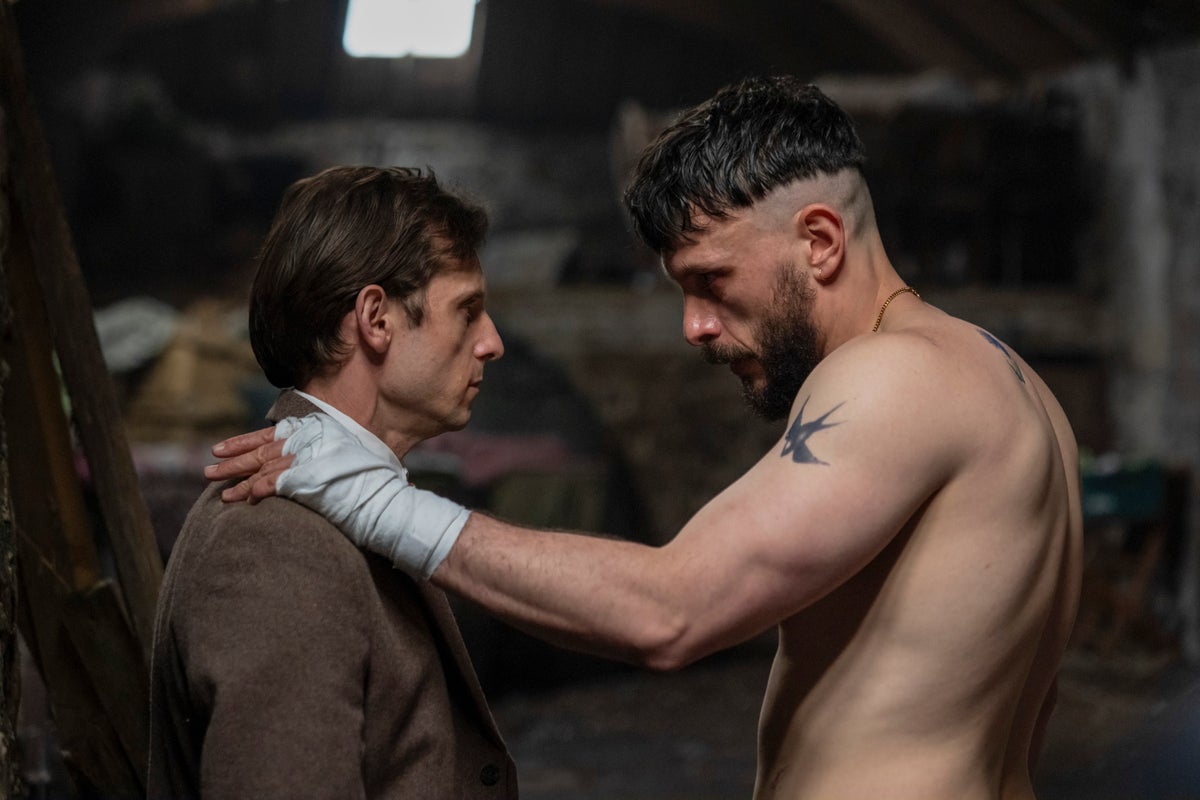
Richard Gadd has addressed the intense reaction surrounding a pivotal scene in his new BBC drama Half Man, acknowledging that viewers have interpreted the moment in starkly different ways. The Scottish comedian and writer, best known for his award-winning series Baby Reindeer, spoke candidly about the creative intent behind the sequence during a recent interview promoting the show’s release. Gadd emphasized that the ambiguity was deliberate, designed to provoke discussion about trauma, perception and the unreliability of memory rather than to deliver a clear-cut narrative resolution.
The scene in question occurs midway through the six-part series, where the protagonist, a man grappling with fragmented memories of a childhood incident, confronts a figure from his past in a dimly lit hallway. What unfolds is a tense, dialogue-heavy exchange that blurs the line between reality and psychological projection, leaving audiences divided on whether the encounter was real, imagined, or a symbolic representation of guilt. Gadd confirmed that the varied interpretations were anticipated, noting in interviews that he wanted the audience to “sit with the discomfort” and question their own assumptions about truth and accountability.
According to verified reports from BBC Studios and multiple entertainment outlets, Half Man premiered on BBC One and iPlayer on April 14, 2026, marking Gadd’s first major television project since the global success of Baby Reindeer in 2024. The series, co-written with frequent collaborator Ed Miller, blends elements of psychological thriller and dark comedy, exploring themes of masculinity, silence, and the long-term effects of unresolved trauma. Early critical reception has highlighted the show’s atmospheric tension and Gadd’s nuanced performance, with The Guardian describing it as “a haunting meditation on what we choose to remember – and what we bury.”
In discussing the controversial scene, Gadd explained that he drew from personal experiences and extensive research into post-traumatic stress, particularly how the mind reconstructs painful events over time. He referenced studies from the American Psychological Association on memory distortion in trauma survivors, noting that the brain often fills gaps with imagined details to create a coherent narrative, even if it diverges from objective reality. This scientific grounding, he said, was crucial to ensuring the portrayal remained respectful and psychologically authentic rather than sensationalized.
The actor-writer similarly addressed concerns about the scene’s emotional intensity, stating that he worked closely with intimacy coordinators and mental health consultants during filming to ensure the portrayal remained safe and responsible. He emphasized that while the moment is uncomfortable by design, it was never meant to exploit trauma for shock value. Instead, Gadd framed it as an invitation to reflect on how societal expectations around masculinity can discourage men from processing painful experiences, leading to internalized conflict that manifests years later.
Industry analysts have noted that Half Man arrives at a time of heightened public conversation about male mental health and the stigma surrounding vulnerability in men. Data from the Movember Foundation shows that men are significantly less likely than women to seek help for psychological distress, a gap that Gadd said he hopes the series helps to illuminate. By presenting a protagonist whose silence becomes his greatest obstacle, the show underscores the cost of emotional repression in a culture that often equates stoicism with strength.
Despite the polarized reactions to the central scene, early audience metrics from BBC iPlayer indicate strong engagement, with completion rates exceeding 75% for the first three episodes – a figure considered high for a drama of this genre and tone. Social media analysis reveals that discussions around the show have been particularly active on platforms like X and Reddit, where users debate everything from the reliability of the narrator to the symbolic significance of recurring visual motifs, such as locked doors and flickering lights.
Gadd has remained open to the spectrum of interpretations, stating in a recent panel discussion at the Sheffield Documentary Festival that he values audience engagement over consensus. “If people are arguing about what it meant,” he said, “then it’s doing its job.” He added that he intentionally avoided providing definitive answers in post-show materials, preferring to let the ambiguity linger as part of the viewing experience. This approach aligns with his broader artistic philosophy, which prioritizes emotional truth over narrative closure.
Looking ahead, the BBC has confirmed that Half Man will be available for international streaming via BBC Studios’ global distribution partners beginning in late May 2026, expanding access beyond the UK market. While no official announcement has been made regarding a second season, Gadd has hinted in interviews that the story was conceived as a limited series, though he remains open to revisiting the character if compelling new material emerges. For now, the focus remains on audience response and critical discourse surrounding the series’ complex portrayal of memory and masculinity.
As conversations continue to unfold online and in critical circles, Half Man stands as a significant addition to the growing body of work examining the psychological landscape of modern manhood. Richard Gadd’s willingness to embrace ambiguity and discomfort reflects a maturing artistic voice unafraid to challenge viewers – and himself – with questions that resist uncomplicated answers. For those seeking to engage with the themes explored in the series, resources on trauma-informed care and male mental health are available through organizations such as the National Alliance on Mental Illness (NAMI) and the Campaign Against Living Miserably (CALM), both of which offer confidential support and informational materials.
We invite our readers to share their thoughts on Half Man and the scene that has sparked such varied reactions. What did you interpret the moment to mean? How did it resonate with your own understanding of memory and trauma? Join the conversation in the comments below and help keep the dialogue going.