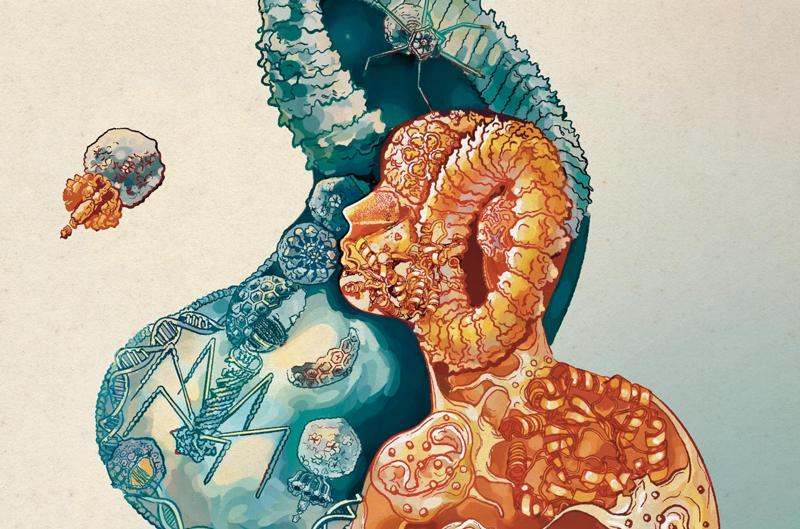
For billions of years, a silent, microscopic war has been raging beneath our feet and inside our bodies. Bacteria and viruses have been locked in an evolutionary arms race, developing sophisticated molecular weaponry to survive. Now, scientists are turning their attention to these ancient battles between bacteria and viruses, uncovering a vast arsenal of defense systems that could inspire the next generation of medicines.
As the global health community grapples with the rising threat of antimicrobial resistance, this research into microbial history offers a promising new frontier. By understanding how bacteria have successfully defended themselves against viral invaders over eons, researchers are identifying novel proteins and enzymes that could eventually serve as powerful tools in human medicine and food safety.
Unlocking the Microbial Defense Archive
The search for new antimicrobial strategies has led researchers to explore extreme environments that have remained isolated for millennia. In recent studies, scientists have examined ancient bacteria recovered from ice caves, such as those found deep within the Apuseni mountains of Romania. These microbes, preserved for thousands of years, possess unique enzymes and antimicrobial compounds that have evolved in isolation from modern clinical pressures.
According to findings published in March 2026, these ancient organisms are often resistant to contemporary antibiotics. However, their very existence provides a roadmap for drug development. These unique microbial compounds represent an untapped reservoir of molecules that could be synthesized or adapted to combat modern “superbugs”—pathogens that have become increasingly challenging to treat with current standard-of-care medications (VaccinesWork, 2026).
Viral Fossils as a Protective Shield
While some researchers look to ancient caves, others are investigating the genetic makeup of bacteria themselves. A team at Penn State has uncovered a mechanism where dormant viral DNA—effectively “viral fossils”—is utilized by bacteria to defend against active viral threats. This discovery highlights the complexity of bacterial immunity, which often involves internal systems that have been refined over billions of years.
The research, published in Nucleic Acids Research in November 2025, identified an enzyme known as PinQ. This enzyme functions by flipping bacterial genes to generate protective proteins that block viral infection. Thomas Wood, who led the research team, noted that as traditional antibiotics face declining efficacy, the investigation of how bacteria manage their own viral defenses is becoming a critical priority for medical innovation (Penn State, 2025).
Key Takeaways: The Future of Antimicrobial Research
- Ancient Reservoirs: Isolated environments like ice caves are acting as “deep freezers” for microbes with unique, untapped antimicrobial properties.
- Genetic Defense: Bacteria use dormant viral DNA to trigger protective proteins, a process that researchers believe could be harnessed for human antiviral therapies.
- Beyond Antibiotics: With antimicrobial resistance growing, scientists are increasingly looking at viral-based therapies and bacterial defense enzymes as potential replacements for failing drugs.
- Data-Driven Discovery: Recent efforts have involved mining genomic data to create comprehensive databases of antiviral defense proteins, providing a “treasure trove” for future molecular tool development.
A New Era of Genomic Mining
The scale of this discovery is expanding rapidly. As of April 2026, researchers have successfully mined extensive genomic data to catalog thousands of previously unknown antiviral defense proteins. This genomic approach allows scientists to identify potential therapeutic candidates much faster than traditional laboratory screening methods. These databases are expected to accelerate the design of next-generation molecular tools, with applications ranging from industrial microbiology to advanced human immunology (Nature, 2026).
The shift toward understanding these ancient, innate defense mechanisms marks a significant pivot in how we approach infectious disease. Rather than relying solely on chemical antibiotics, the medical community is moving toward a more nuanced understanding of the biological systems that have successfully managed viral and bacterial threats for eons. As these findings continue to move from genomic databases to experimental validation, the potential for breakthroughs in clinical medicine remains high.
For readers interested in following these developments, official updates on antimicrobial research and public health policy are regularly published by global health organizations and peer-reviewed scientific journals. We encourage our readers to share their thoughts on these advancements in the comments section below as we continue to track the evolution of this vital field.
Related reading