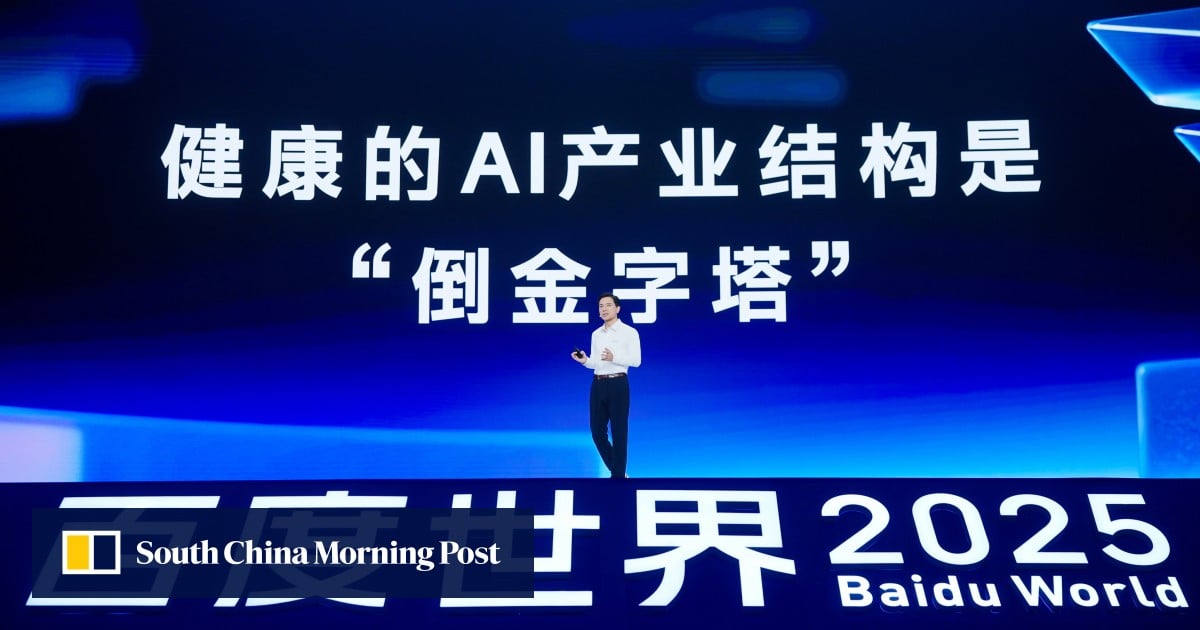
Baidu’s AI Chip Push: Fueling China’s Tech Independence
Baidu, the Chinese tech giant, recently unveiled two new artificial intelligence (AI) chips – the M100 and the M300 – signaling a major step towards technological self-reliance for China. This move positions Baidu alongside Huawei and a growing number of domestic companies striving too reduce dependence on foreign-made processors. these chips aren’t just about hardware; they represent a strategic effort to control the future of AI growth within the nation.
Why This Matters: The Drive for AI Self-Sufficiency
For years,China has relied on imported advanced processors,particularly from companies like Nvidia. However, geopolitical factors and supply chain vulnerabilities have spurred a national push for domestic chip production. Baidu’s investment in AI chip development directly addresses this need, offering a path to secure and controllable AI computing power.
The M100 and M300 are designed to tackle different aspects of AI processing.The M100 focuses on accelerating AI inference – the process of using a trained model to make predictions. Conversely, the M300 is geared towards the computationally intensive task of training massive AI models with trillions of parameters.
Diving Deeper: The M100 and M300 Chips
Let’s break down what each chip brings to the table:
* M100: This chip is optimized for “mixture-of-experts” models, a technique that improves inference efficiency. It’s slated for release in early 2026 and promises powerful, cost-effective AI processing.
* M300: Designed for training extremely large multimodal models,the M300 will launch in 2027. Multimodal models can process various data types – text, images, audio, and video - opening up new possibilities for AI applications.
Baidu isn’t stopping at individual chips. They are also developing chip clusters, like the Tianchi256 and Tianchi512, to dramatically boost performance. These clusters will integrate hundreds of chips, offering a significant leap in AI system capabilities.
Beyond Baidu: A growing Ecosystem
Baidu isn’t alone in this endeavor. Several other Chinese companies are actively developing AI chips, creating a competitive and innovative landscape. Here’s a quick look:
* Huawei’s HiSilicon: developing the Ascend AI chip series.
* Cambricon Technologies: Focused on graphics processing units (GPUs) for AI training.
* MetaX Integrated Circuits & Biren Technology: Also contributing to the GPU market for AI.
This collective effort demonstrates China’s commitment to becoming a global leader in AI technology.The competition among these companies will likely accelerate innovation and drive down costs.
what Does This Mean for You?
the development of domestic AI chips has implications beyond China’s borders. Increased competition in the AI chip market could lead to more affordable and accessible AI solutions globally. Furthermore, it could foster innovation in AI algorithms and applications tailored to diverse needs.
Here are some frequently asked questions about Baidu’s AI chip development:
Q: why is China prioritizing AI chip development?
A: China aims to reduce its reliance on foreign technology, particularly from the US, and achieve greater technological independence in the critical field of artificial intelligence. This is driven by both economic and national security concerns.
Q: What is the difference between AI inference and AI training?
A: AI training involves teaching an AI model using large datasets, a computationally intensive process. AI inference is using that trained model to make predictions or decisions on new data. The M300 is designed for training, while the M100 excels at inference.
Q: How do Baidu’s new chips compare to Nvidia’s offerings?
A: While direct comparisons are difficult without detailed specifications, Baidu aims to provide comparable performance at a lower cost. The long-term goal is to offer a competitive choice to Nvidia’s dominant position in the AI chip market.
Q: What are chip clusters like Tianchi256 and Tianchi512?
A: These are systems that combine multiple AI chips to create