
Navigating a Climate-Resilient Future: ASEAN‘s Pragmatic Path to a “Less Brown” Economy
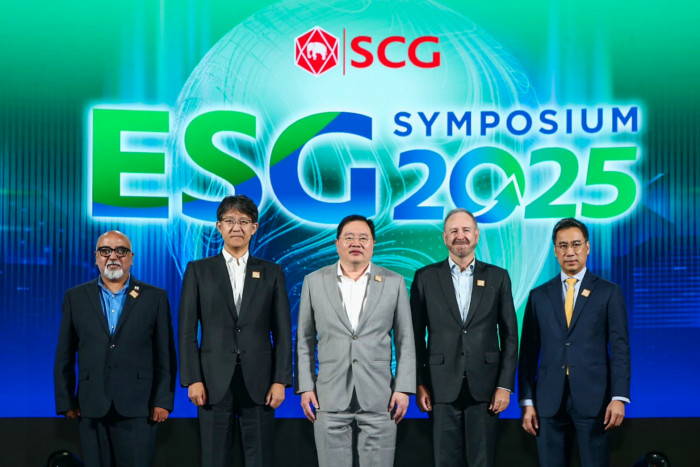
The global push for decarbonization is gaining momentum, yet the path to a ”green” future isn’t uniform. For the Association of Southeast Asian Nations (ASEAN),a region uniquely vulnerable to climate change and facing distinct economic realities,a direct replication of European or North american strategies is not only impractical but potentially detrimental. A recent symposium,featuring insights from leading economists,corporate executives,and scientific experts,underscored the need for a uniquely ASEAN approach - one prioritizing pragmatic adaptation,collaborative innovation,and a gradual transition towards a “less brown” economy.
The Unique Challenges Facing ASEAN
ASEAN nations find themselves at a critical juncture. While developed economies have historically contributed the most to greenhouse gas emissions, ASEAN bears a disproportionate burden of climate change impacts.As Dr. Sethaput suthiwartnarueput, Governor of the Bank of Thailand, highlighted, ASEAN’s economic structure differs considerably from its Western counterparts. Unlike many European nations, ASEAN economies are heavily reliant on climate-sensitive sectors like agriculture, and a staggering 77% of the population resides in low-lying coastal zones, making them acutely vulnerable to rising sea levels, extreme weather events, and resource scarcity.
This vulnerability is compounded by existing developmental challenges. ASEAN nations are often characterized by a large proportion of Small and Medium-sized Enterprises (SMEs) lacking the capital and expertise to rapidly adopt expensive green technologies. Simply demanding immediate, large-scale shifts towards fully “green” solutions risks economic disruption and exacerbates existing inequalities.
A “Lower disruption” Pathway: Adaptation and Pragmatism
The consensus emerging from the symposium was clear: ASEAN requires a “lower disruption path.” This isn’t a rejection of climate action, but a recognition that a purely mitigation-focused strategy is insufficient and potentially counterproductive. Instead,the emphasis must be on building resilience through robust adaptation measures,alongside a pragmatic transition that acknowledges the region’s specific needs and capabilities.
Dr. Sethaput powerfully articulated this approach,urging stakeholders to “stay pragmatic! Don’t let the perfect be the enemy of the good.” He stressed the necessity of a “whole of country” approach, led by government, that moves beyond relying solely on long-term infrastructure projects like disclosure frameworks and taxonomies.
Thailand is already demonstrating a viable model. The advancement of a national taxonomy for six high-emitting sectors – with energy and transportation phases already underway – is a crucial step. Furthermore, a pilot stress test for flood risk is proactively addressing a key climate vulnerability. Perhaps most significantly, a collaborative initiative involving eight banks has already channeled 96 billion baht (towards a 100 billion baht target) into financing the “brown to less brown” transition for industries like manufacturing and agriculture. This demonstrates a tangible commitment to supporting businesses in reducing their environmental impact incrementally.Beyond Electric Vehicles: Toyota’s Multi-Pathway Strategy
The need for a diversified approach was further reinforced by Mr. Koji Sato, President and CEO of Toyota Motor Corporation. He cautioned against a singular focus on Electric Vehicles (EVs), advocating instead for a “multi-pathway” strategy encompassing hybrid-electric, plug-in hybrid, fuel-cell, and hydrogen-powered vehicles.
This approach acknowledges that a one-size-fits-all solution is unrealistic, given the varying energy infrastructures and consumer needs across the ASEAN region. Mr.Sato’s philosophy, rooted in Toyota’s commitment to inclusivity, is to “leave no one behind, ensuring happiness for all.” He emphasized that the future of mobility will be “created together, not alone,” reflecting a collaborative spirit essential for successful climate action. Toyota’s own experience, prioritizing hybrid technology to meet existing customer demand, serves as a compelling example of this pragmatic approach.
A Just Transition and the Importance of Local Engagement
The symposium also highlighted the critical importance of a “just transition,” as articulated by Mr. David McLachlan-Karr, Regional Director of the UN Development Coordination Office (DCO), asia-Pacific. This means ensuring that the economic shifts driven by climate change are fair and inclusive, protecting vulnerable communities and creating new green job opportunities. International cooperation and the alignment of development and climate finance are paramount to achieving this goal.
Complementing this perspective, Dr. Sai Ravela (MIT) emphasized the need for “risk-smart” systems capable of predicting and adapting to increasingly frequent and intense climate extremes. Prof. Miho Mazereeuw (MIT) underscored the importance of “participatory path to climate adaptation,” advocating for the active engagement of local communities in designing solutions tailored to their specific urban


