Catalonia is poised to become a leading European hub for health and biomedical innovation with a strategic project slated for completion by 2035. This ambitious initiative prioritizes high-quality healthcare, cutting-edge biomedical research, and a strong commitment to university education.Considering the rapidly evolving landscape of healthcare, this development is particularly timely, aligning with a projected 13% growth in the global health innovation market by 2028, according to recent data from EvaluatePharma.
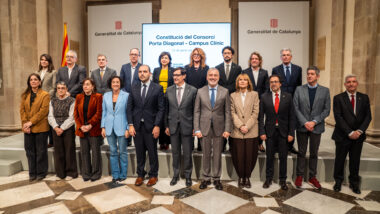
A new consortium, comprised of the Government of Catalonia, the Hospital clínic de Barcelona, the University of Barcelona, and the municipalities of Barcelona, L’Hospitalet de Llobregat, and Esplugues de Llobregat, along with the Barcelona Provincial Council and the Barcelona Metropolitan Area, is spearheading this transformative project. This collaborative approach ensures a broad range of expertise and resources are brought to bear, maximizing the potential for success.
Land Acquisition: A Critical Step Forward
The Government of Catalonia will invest €135.25 million in acquiring land located at Avenida Diagonal, 695-797, currently the site of the university of Barcelona’s sports Service. Moreover, the University of Barcelona will receive a direct grant of up to €17.5 million to partially fund the construction of a new Pharmacy Faculty. I’ve found that securing land and funding upfront is often the biggest hurdle for projects of this scale, so this proactive step is incredibly encouraging.
International architectural Competition
An international architecture competition will be launched in July 2026 – six months ahead of schedule – to solicit the most innovative and impactful designs for the future campus. This timing coincides with Barcelona’s designation as the World capital of Architecture, providing a unique platform to attract top architectural talent from around the globe. The goal is to create a space that not only meets the functional needs of a modern health and research campus but also serves as an architectural landmark.
| Milestone | Date |
|---|---|
| Land Acquisition | 2024-2026 |
| Architecture Competition | july 2026 |
| Construction Start | 2030 |
| Project Completion | Mid-2035 |
Urban Planning and Connectivity
Did You Know? Barcelona consistently ranks among the top cities in europe for biomedical research and innovation, attracting significant investment and talent.
The future campus will be guided by a comprehensive urban planning directive (PDU), shaping both the campus itself and its surrounding environment. Construction is scheduled to begin in 2030, with completion anticipated by mid-2035. This 300,000-square-meter space will integrate a mixed-use urban environment, encompassing residential areas, essential facilities, green spaces, and economic activities centered around the life sciences.
Improved accessibility is also a key focus. A new station on Metro Line 3 will enhance connectivity to the area, with extension work from Zona Universitària to Esplugues Center slated to begin in mid-2028 and the new campus station operational by 2035. This investment in public transportation will be crucial for attracting students, researchers, and professionals to the campus.
Pro tip: Keep an eye on the Barcelona City council’s website for updates on the architectural competition and urban planning developments related to this project.
This project represents a significant investment in the future of healthcare and research in Catalonia, promising to solidify its position as a leader in the field. The strategic planning, collaborative approach, and commitment to innovation are all indicators of a accomplished and impactful outcome. As the project unfolds, it will be fascinating to observe how it transforms the region and contributes to advancements in biomedical science.