
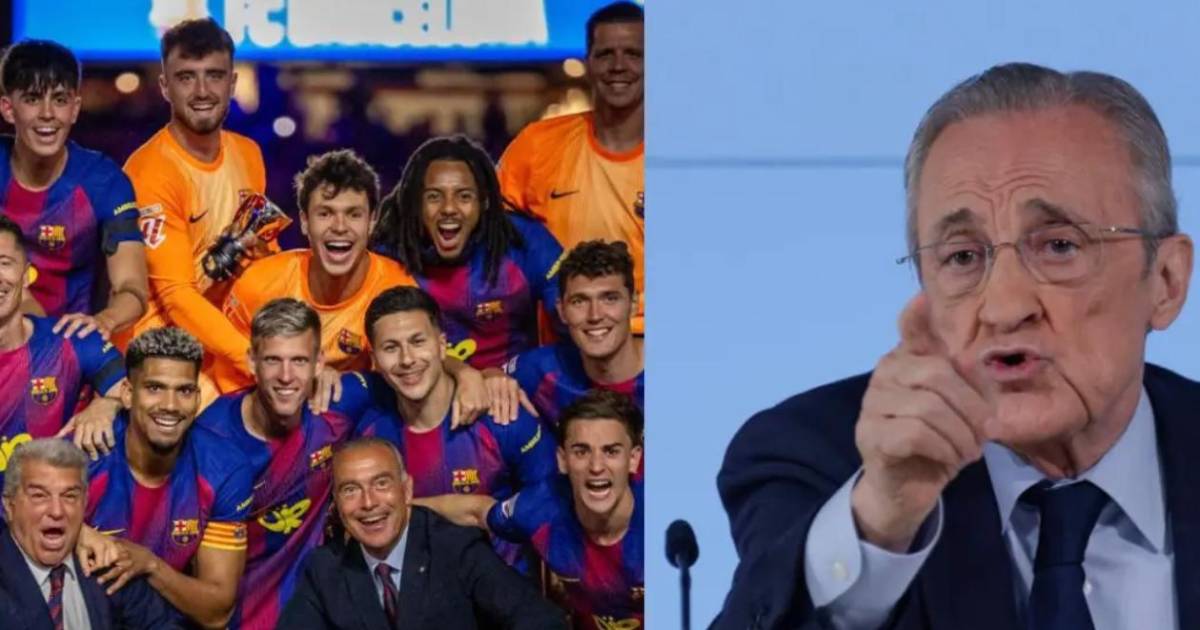
The storied rivalry between FC Barcelona and Real Madrid has always transcended the boundaries of the football pitch, evolving into a clash of political ideologies, regional identities, and institutional power. However, the current friction between the two Spanish giants has shifted from the grass of the Santiago Bernabéu and Camp Nou to the high-stakes boardrooms of European football governance.
The latest escalation comes as FC Barcelona moves to address provocative assertions made by Real Madrid President Florentino Pérez. While the tension is often framed as a sporting feud, the underlying conflict is a systemic battle over the financial future of the sport, the legitimacy of governing bodies, and the struggle for dominance in a rapidly evolving global sports economy. For those of us tracking the intersection of geopolitics and athletics, Here’s not merely a dispute between two clubs; This proves a proxy war for the soul of European football.
At the heart of the current discord is the vision for a restructured European competition—most notably the European Super League (ESL)—and the divergent ways in which the two clubs are navigating their financial recoveries. While Florentino Pérez has positioned himself as the primary architect of a new era, Barcelona’s leadership, headed by President Joan Laporta, has had to balance the desire for increased revenue with the necessity of maintaining a working relationship with UEFA and the domestic league, La Liga.
The friction intensified following Pérez’s public critiques of the current footballing ecosystem, which often subtly or overtly imply that clubs failing to align with his vision are clinging to an obsolete and unsustainable model. Barcelona’s response has been one of cautious but firm assertion, emphasizing their own path to financial stability and their commitment to the club’s unique social identity.
The Super League Schism and the Battle for Governance
To understand the current “attack” and subsequent response, one must look at the fragmented state of the European Super League project. When the ESL was first announced in April 2021, it sparked a global outcry and a swift crackdown by UEFA. While Real Madrid remained the steadfast champion of the project, FC Barcelona’s position shifted over time, reflecting the internal volatility of the club’s leadership and its dire financial straits.
Florentino Pérez has consistently argued that the current UEFA model is “broken” and fails to provide the necessary revenue to compete with the state-backed clubs of the English Premier League. His rhetoric often frames the ESL not as a “closed shop,” but as a necessary evolution to save football from financial collapse. In various interviews and presentations, Pérez has suggested that the resistance to this change is born of a lack of ambition or a failure to understand the modern economic landscape.

Barcelona’s response to this narrative has been complex. Under Joan Laporta, the club has acknowledged the need for a new competition model but has avoided the aggressive confrontation that defines Pérez’s approach. The tension arises when Pérez’s public statements are perceived as an attempt to paint Barcelona as a follower or a hesitant partner in the quest for a “new footballing order.”
A pivotal moment in this institutional struggle occurred when the Court of Justice of the European Union (CJEU) issued a landmark ruling. In December 2023, the Court of Justice of the European Union ruled that UEFA and FIFA had acted unlawfully by blocking the formation of the Super League, stating that their rules regarding the prior approval of new competitions were contrary to EU law. This ruling provided the legal ammunition Pérez needed to reignite the project, while placing Barcelona in a delicate position: they stand to gain immensely from a new revenue stream, yet they cannot afford to alienate the governing bodies that oversee their current competitions.
Financial Divergence: ‘Levers’ vs. Stability
A significant portion of the friction between the two presidents stems from their contrasting financial strategies. Real Madrid has entered this era of instability from a position of relative strength, having managed its finances conservatively under Pérez’s leadership and successfully navigating the costs of the massive renovation of the Santiago Bernabéu stadium.
In contrast, FC Barcelona has been embroiled in a financial crisis that threatened the very existence of the club. To remain competitive and register new players, Laporta implemented a series of “economic levers” (palancas). These maneuvers involved selling off future percentages of the club’s television rights and a significant stake in Barca Studios to external investors. While these moves provided immediate liquidity, they have been a point of ridicule and criticism from the Madrid camp, where the “levers” are often portrayed as a short-term fix that mortgages the club’s future.

Barcelona has responded to these critiques by framing their strategy as a necessary act of survival and a bold gamble to maintain the club’s prestige. The “attack” from Pérez is often not a direct insult, but a narrative of superiority—suggesting that the “Madrid model” of sustainable growth is the only viable path, while the “Barcelona model” is one of desperation. Barcelona’s counter-narrative focuses on the “More Than a Club” (Més que un club) philosophy, arguing that their struggle is a reflection of their commitment to their members (socios) rather than a failure of management.
The Common Enemy: The CVC Deal and Javier Tebas
Despite their fierce institutional rivalry, there is one area where Barcelona and Real Madrid have found a rare, if uneasy, alignment: their opposition to the CVC Capital Partners deal. This agreement, brokered by La Liga President Javier Tebas, involved an investment of approximately €2 billion in exchange for a percentage of the clubs’ broadcasting rights for 50 years.
Both clubs viewed the deal as an infringement on their autonomy and a long-term financial mistake. Real Madrid, in particular, launched a series of legal challenges to block the agreement, arguing that it disadvantaged the largest clubs and stripped them of their rights. Barcelona similarly opposed the deal, though their opposition was often tempered by their immediate need for cash.
This shared opposition to Javier Tebas has created a strange dynamic where the two rivals are fighting the same battle in the courts, even as they clash in the media. However, even in this alliance, there is competition. Each club seeks to be the “leader” of the opposition, with Pérez utilizing the CVC conflict to further his argument that the current league structures are predatory and inefficient.
Comparative Institutional Strategies
| Feature | Real Madrid (Florentino Pérez) | FC Barcelona (Joan Laporta) |
|---|---|---|
| ESL Stance | Primary Architect; Aggressive Promotion | Conditional Support; Strategic Alignment |
| Financial Strategy | Conservative Growth; Asset Investment | “Economic Levers”; Asset Liquidation |
| Relationship with UEFA | Confrontational; Legalist | Pragmatic; Diplomatic |
| La Liga Governance | Open Opposition to CVC/Tebas | Opposition to CVC; Strategic Negotiation |
The Global Implications of the Boardroom War
As a journalist covering international relations, I find the implications of this clash extend far beyond the borders of Spain. The conflict between Pérez and Laporta is a microcosm of a larger global trend: the privatization of traditional sporting institutions and the shift toward a “closed-circuit” model of entertainment, similar to North American sports leagues like the NFL or NBA.

The “attack” mentioned in recent reports is a symptom of a power struggle over who will define the rules of the game for the next fifty years. If Pérez succeeds in establishing a Super League, the power shifts from democratic (albeit flawed) governing bodies like UEFA to a small oligarchy of elite clubs. If Barcelona can navigate its financial crisis while remaining within the traditional system, it proves that the “legacy model” can still survive, provided it is managed with extreme agility.
this rivalry reflects the broader socio-political divide in Spain. Real Madrid is often associated with the centralist power of Madrid, while FC Barcelona remains a symbol of Catalan identity and autonomy. When the presidents clash, they are not just arguing about television rights; they are performing a public ritual of regional and institutional pride.
What Happens Next?
The resolution of this tension will not be found in a single press release or a single match. Instead, it will be decided by three key factors:
- The Evolution of the ESL: Following the CJEU ruling, the “Super League” promoters are attempting to launch a new format. Whether Barcelona fully commits to this version—and how they do so—will determine if the rift with Real Madrid closes or widens.
- Financial Fair Play (FFP): Barcelona’s ability to return to the 1:1 spending rule imposed by La Liga will dictate how much leverage Laporta has in negotiations. If the club returns to financial health, they will no longer be viewed as the “junior partner” in the European power struggle.
- The Future of La Liga: The ongoing legal battles over the CVC deal and the distribution of broadcasting revenues will continue to force these two rivals into a precarious alliance against Javier Tebas.
For the global audience, the takeaway is clear: the “El Clásico” of the boardrooms is just as intense as the one on the pitch. The rhetoric used by Florentino Pérez and the strategic responses from the Barcelona board are carefully calibrated moves in a game of geopolitical chess where the stakes are billions of euros and the future of the world’s most popular sport.
The next critical checkpoint will be the upcoming financial disclosures from FC Barcelona and any further legal filings regarding the implementation of the CJEU ruling on the European Super League. These developments will reveal whether the “attack” from Pérez was a tactical maneuver to isolate Barcelona or a genuine ideological divide that cannot be bridged.
We want to hear from you. Do you believe the European Super League is a necessary evolution for football, or a threat to the sport’s integrity? Share your thoughts in the comments below and share this analysis with your fellow football enthusiasts.