
The U.S. Supreme Court has declined to hear an appeal from a California man who sought to hold Monsanto, now a subsidiary of Bayer AG, liable for failing to include cancer warnings on its Roundup weed killer. This decision effectively maintains a legal barrier for thousands of plaintiffs, as the court let stand a lower court ruling that concluded federal law preempts state-level failure-to-warn claims because the U.S. Environmental Protection Agency (EPA) has consistently approved the product’s labeling without requiring a cancer warning. The Supreme Court’s June 2022 order confirms that, under current federal regulatory frameworks, the EPA’s determination holds significant weight in shielding manufacturers from state-based litigation regarding product labels.
This legal development centers on the intersection of federal regulatory authority and state tort law. At the heart of the matter is the Federal Insecticide, Fungicide, and Rodenticide Act (FIFRA), the federal statute that governs the sale and labeling of pesticides in the United States. According to the Environmental Protection Agency, FIFRA mandates that all pesticides must be registered with the agency, which reviews health and safety data to ensure that products do not cause “unreasonable adverse effects on the environment.” Because the EPA has maintained that glyphosate—the active ingredient in Roundup—is not likely to be carcinogenic to humans, the courts have largely found that state-law claims requiring a different warning label on the product are preempted by federal law.
The Regulatory Role of the EPA in Roundup Litigation
The core of the legal dispute rests on whether a company can be held liable under state law for failing to warn consumers about health risks that the federal regulator has not officially recognized. In the case of Roundup, plaintiffs have argued that Monsanto’s internal knowledge of potential cancer risks, specifically non-Hodgkin lymphoma, should have necessitated a warning label, regardless of the EPA’s stance. However, the Office of the Solicitor General, representing the federal government, has previously argued that federal law does not permit states to impose labeling requirements that are “different from or in addition to” those required by the EPA.
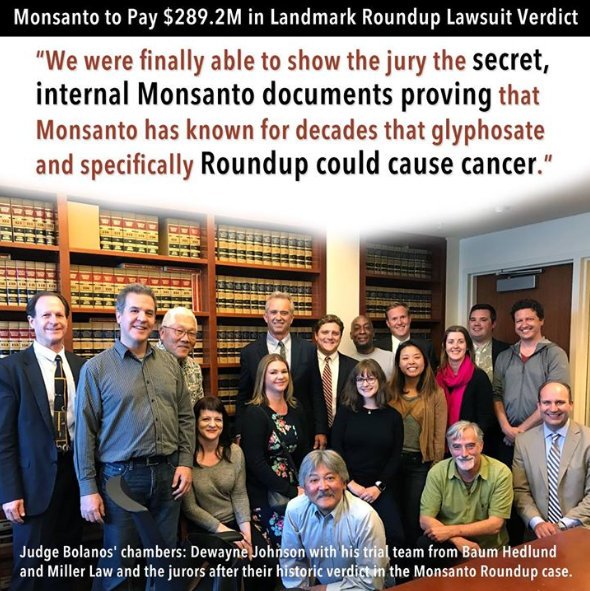

For plaintiffs, the hurdle is significant. The EPA’s 2020 interim registration review decision reaffirmed the agency’s position that there are “no risks of concern to human health” when glyphosate is used according to the product label. This regulatory finding has been the primary defense for Bayer in thousands of cases. As reported by the Reuters news agency, the Supreme Court’s refusal to intervene preserves a Ninth Circuit Court of Appeals decision that had favored the company, effectively stalling litigation strategies that rely on state-law consumer protection statutes to force label changes.
Scientific Debate and Corporate Transparency
While the legal battle has focused on regulatory preemption, a parallel debate continues regarding the underlying science used by the EPA. Critics of the agency’s assessment, including environmental advocates and some researchers, have pointed to internal Monsanto documents unearthed during litigation, which they claim suggest that the company influenced scientific studies used in the regulatory review process. These claims often cite instances where industry-funded research was presented to regulators as independent analysis.
The International Agency for Research on Cancer (IARC), a branch of the World Health Organization, reached a different conclusion than the EPA in 2015, classifying glyphosate as “probably carcinogenic to humans.” This discrepancy between the IARC’s classification and the EPA’s findings remains a focal point for plaintiffs’ attorneys. However, the U.S. judiciary has consistently prioritized the EPA’s formal regulatory determinations over the IARC’s hazard classification when deciding whether federal law preempts state tort claims.
What Happens Next for Bayer and Plaintiffs
Bayer has spent billions of dollars to settle the vast majority of the approximately 125,000 Roundup-related lawsuits filed against it in the United States. Despite these settlements, the company continues to face new litigation. Bayer maintains that the product is safe when used as directed, citing decades of studies and the ongoing support of regulatory bodies in the U.S. and abroad, including the European Food Safety Authority.
For the thousands of remaining plaintiffs, the path to recovery has become increasingly narrow. Legal experts note that since the Supreme Court’s 2022 decision, the focus has shifted toward cases that do not rely solely on the “failure to warn” theory. Plaintiffs’ counsel are now exploring alternative legal strategies, such as focusing on specific design defects or marketing practices that do not directly conflict with the EPA’s labeling mandates. The next significant milestones in this ongoing saga will likely occur in state-level courts, where judges must weigh the impact of federal preemption on a case-by-case basis. Interested parties can monitor official court dockets and the EPA’s glyphosate portal for updates on future regulatory reviews and scientific assessments.
Have you been following the legal developments surrounding herbicide regulation? Share your thoughts or questions in the comments section below.
Related reading