
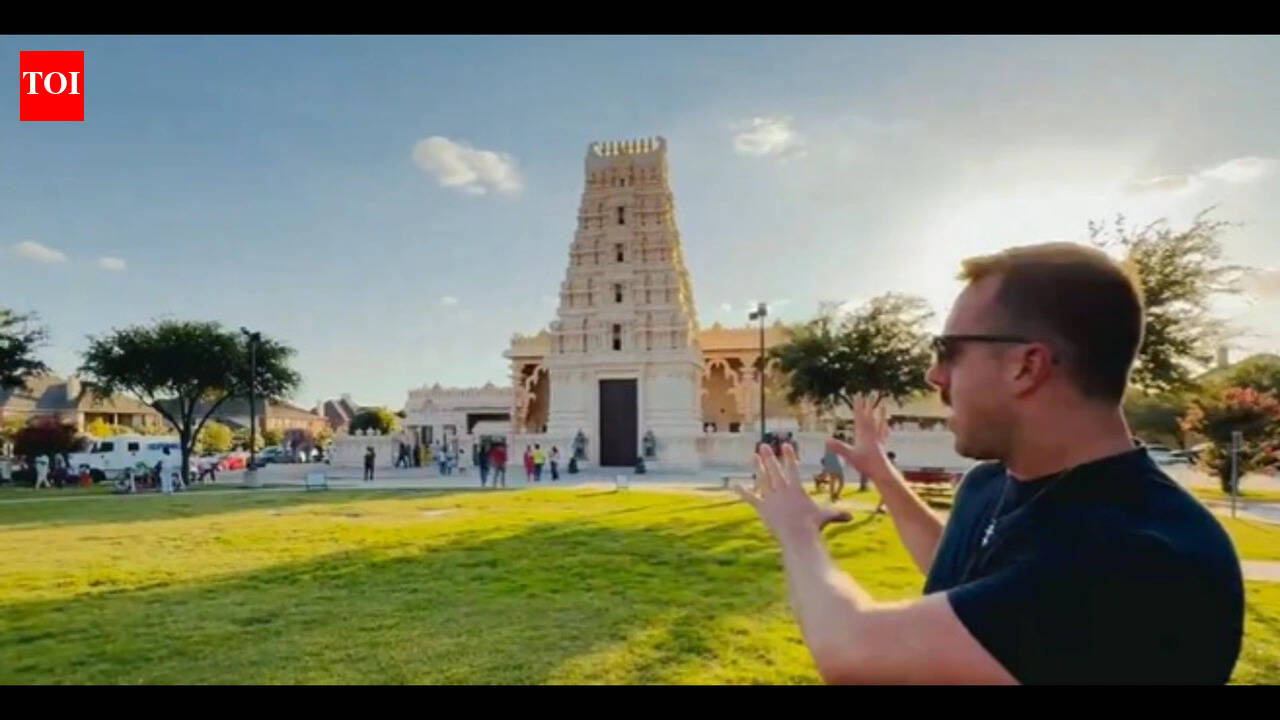
A social media video featuring children of H-1B visa holders standing outside a Hindu temple has sparked a heated public exchange regarding the nature of American identity and the legal status of immigrant families. The footage, which gained traction on social media platforms ahead of the July 4 holiday, prompted a critique from a prominent online political commentator, highlighting ongoing tensions surrounding the H-1B skilled worker visa program and its role in the United States.
The H-1B program is a non-immigrant visa category that allows U.S. employers to temporarily employ foreign workers in specialty occupations that require theoretical or technical expertise. According to the U.S. Citizenship and Immigration Services (USCIS), these visas are subject to strict annual caps and specific eligibility criteria, often serving as a pathway for highly skilled professionals in fields such as technology, engineering, and medicine. The program has remained a subject of intense legislative debate, as policymakers weigh the economic benefits of high-skilled labor against concerns over domestic job displacement.
The Debate Over National Identity and Legal Status
The controversy centers on a video clip that depicts minors, identified in reports as children of H-1B visa holders, participating in a cultural event at a Hindu temple. A political influencer associated with the “Make America Great Again” (MAGA) movement shared the video, framing the presence of these children as a point of contention regarding the definition of being “American.” The influencer’s commentary questioned the long-term status of these individuals, suggesting that their legal dependency on their parents’ work visas creates a precarious relationship with American citizenship.

The remarks prompted immediate backlash from various advocacy groups and civil rights organizations, who characterized the commentary as xenophobic and exclusionary. Critics of the influencer’s stance argue that the children of H-1B visa holders are often raised in the United States, attend local schools, and are culturally integrated, yet face significant uncertainty due to the “aging out” phenomenon. Under current U.S. immigration law, when children of H-1B holders turn 21, they lose their dependent status and must either secure their own independent visa or face the possibility of deportation, regardless of how long they have resided in the country.
Legislative Context and the H-1B Program
The discourse surrounding the video occurs against a backdrop of legislative attempts to address the backlog of green card applications for high-skilled workers. The Eagle Act, which has been debated in various forms in Congress, aims to eliminate the per-country cap for employment-based green cards. Proponents argue that this would reduce the decades-long wait times for legal permanent residency for workers from countries like India, who constitute a significant portion of the H-1B workforce.
However, the program continues to draw skepticism from those who advocate for stricter immigration controls. The Pew Research Center notes that immigration policy remains one of the most polarizing issues in American politics, with varying viewpoints on how the country should balance economic needs with national security and cultural cohesion. The intersection of religious practice and immigration status, as seen in the temple footage, highlights how cultural markers are increasingly used in digital political discourse to challenge the legitimacy of immigrant communities.
What Happens Next for Dependent Families
As the holiday week concludes, there are no immediate changes to the legal requirements for H-1B visa holders or their dependents. The Department of Homeland Security continues to process applications under existing federal guidelines. Legal experts often point to the visa bulletin as the primary indicator for families waiting for adjustment of status, a process that is frequently delayed by high application volumes and statutory limits on immigrant visas.

Public discourse regarding the video is expected to continue as political campaigns intensify leading into the next election cycle. Observers note that the use of such footage serves as an example of how personal moments are increasingly repurposed for political mobilization. Readers interested in the official status of immigration legislation or information regarding visa processing times are encouraged to monitor updates from the official USCIS website, which serves as the primary source for policy changes and regulatory guidance.
The conversation surrounding the rights of long-term residents and the children of visa holders remains a significant, if unresolved, aspect of the broader American immigration debate. We invite readers to share their perspectives on this issue in the comments section below.