Belarus and the U.S. Take Tentative Steps Towards Normalization with Prisoner Release & Sanctions Relief
Minsk, Belarus – In a significant, albeit cautious, development, Belarusian President Alexander Lukashenko has pardoned 123 prisoners in a move directly linked to the lifting of some U.S. sanctions, Belarusian state news agency Belta reported Saturday. This reciprocal action signals a nascent attempt to thaw relations between the isolated Eastern European nation and Washington, after years of strained ties fueled by concerns over human rights and Belarus’s alignment with Russia.
For over three decades, Lukashenko has maintained an iron grip on Belarus, a nation of 9.5 million people, facing consistent condemnation and sanctions from Western powers. These sanctions stemmed from both the regime’s systematic suppression of political dissent and its controversial decision to allow Russia to utilize Belarusian territory as a staging ground for the 2022 invasion of ukraine.
The recent prisoner release is part of a broader trend. Since July 2024,Belarus has released hundreds of individuals deemed political prisoners,a move widely interpreted as a strategic effort to improve its standing in the West. This latest pardon, coupled with the U.S. response, represents a tangible step towards de-escalation.
U.S. envoy Highlights “Productive” Talks
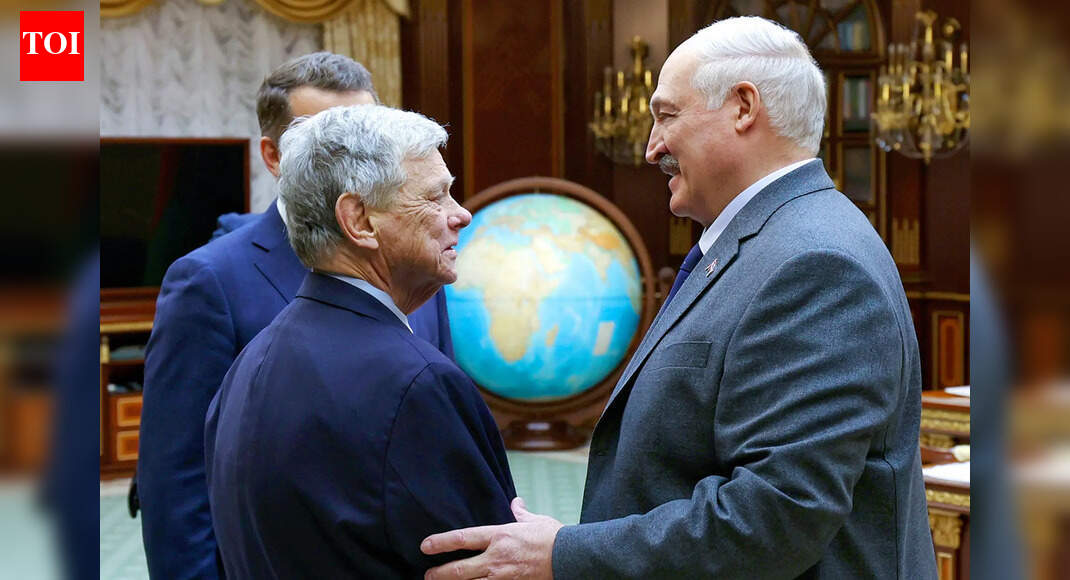
The developments follow a two-day visit to Minsk by john Coale, the U.S. Special Envoy for Belarus, who met with Lukashenko on Friday and Saturday. Coale described the discussions as “very productive,” emphasizing the mutual desire to normalize relations.
“We’re lifting sanctions, releasing prisoners. We’re constantly talking to each other,” Coale stated, according to Belta. He characterized the evolving relationship as progressing “from baby steps to more confident steps” as dialog increases.This echoes a similar easing of sanctions announced in september 2025 following the release of over 50 political prisoners to Lithuania. To date, over 430 political prisoners have been released since July 2024.
A Calculated Move by Lukashenko, Warns Opposition
While the prisoner releases are welcomed by many, the move is not without its critics. Sviatlana Tsikhanouskaya, the leading Belarusian opposition figure, acknowledges the strategic nature of Lukashenko’s actions.
“The freeing of political prisoners means that Lukashenko understands the pain of Western sanctions and is seeking to ease them,” Tsikhanouskaya told the Associated Press. However, she cautioned against naiveté, stressing that Lukashenko’s fundamental policies remain unchanged. “His crackdown continues and he keeps on supporting Russia’s war against Ukraine. That’s why we need to be extremely cautious with any talk of sanctions relief, so that we don’t reinforce Russia’s war machine and encourage continued repressions.”
Tsikhanouskaya further highlighted the disproportionate impact of European Union sanctions, notably those targeting Belarusian potash fertilizers, arguing they exert greater pressure on Minsk than U.S. measures. She advocates for the EU to maintain these sanctions to drive long-term systemic change within Belarus and ultimately contribute to ending the conflict in Ukraine.
Beyond Belarus: Discussions on Venezuela and Ukraine
The discussions between Coale and Lukashenko extended beyond bilateral relations, encompassing regional and international issues. Belta reported that the talks also touched upon the situation in Venezuela and, crucially, Russia’s ongoing invasion of Ukraine.
Interestingly, Coale revealed that Lukashenko offered “good advice” on addressing the conflict in Ukraine, leveraging his long-standing relationship with Russian President Vladimir Putin. “President putin may accept some advice and not others,” Coale conceded, acknowledging the complexities of influencing the Kremlin. this suggests the U.S. is exploring all potential avenues for de-escalation, even those involving a controversial figure like Lukashenko.
Implications and Future Outlook
This tentative rapprochement between the U.S. and Belarus is a complex development with far-reaching implications. While the release of political prisoners is a positive step, the underlying concerns regarding human rights and Belarus’s alignment with Russia remain.
The U.S. appears to be pursuing a strategy of engagement, hoping that limited sanctions relief and increased dialogue will incentivize further reforms and potentially influence Belarus’s role in the Ukraine conflict. Though, the success of this approach hinges on Lukashenko’s willingness to genuinely address the concerns of the international community and distance himself from Russia’s aggression.
The coming months will be critical in determining whether this thaw represents a genuine shift in Belarus’s trajectory or merely a tactical maneuver by a regime seeking to alleviate economic pressure. The international community, particularly the EU, will be closely watching to ensure that any concessions do not
Keep reading