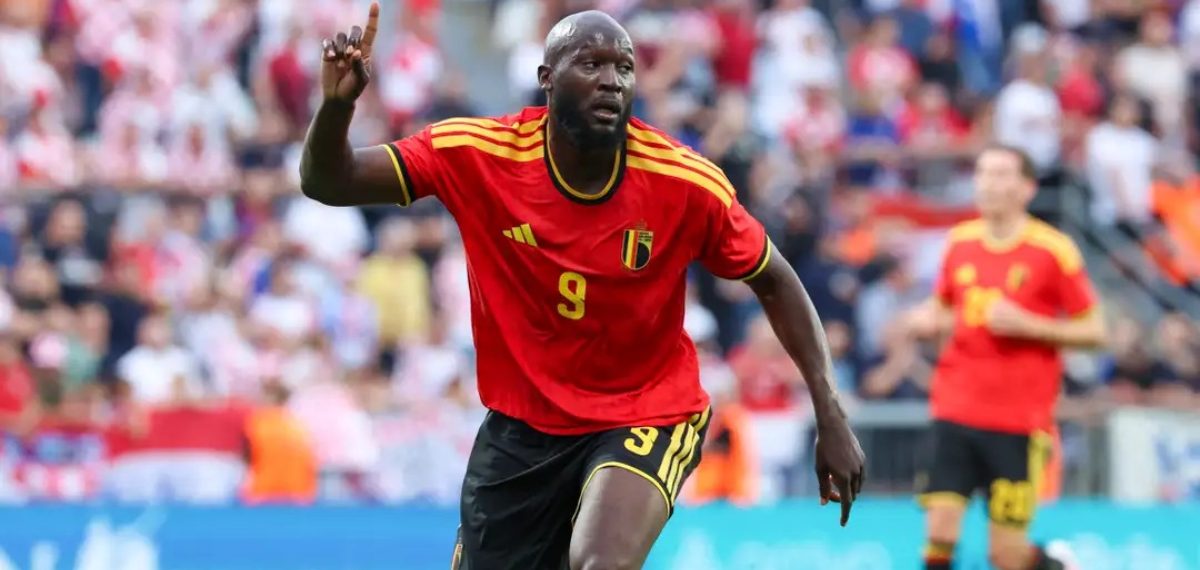
As the international football community turns its eyes toward the 2026 World Cup, the conversation surrounding tournament contenders is intensifying. While traditional powerhouses like France and Spain dominate the headlines and prediction markets, a significant portion of the discourse has shifted toward the potential for “dark horses”—teams capable of disrupting the established hierarchy. Among those frequently cited in this category are Belgium and Croatia, two nations with a history of deep tournament runs and a persistent ability to challenge the world’s elite.
For fans and analysts alike, the buildup to this summer’s tournament in North America is marked by intense speculation regarding team form. While prediction markets have shown a degree of skepticism toward Belgium, with some traders placing their odds of winning at approximately 2.0%, industry experts and handicappers often view these nations with far more optimism. This disconnect between market sentiment and on-pitch potential remains one of the most compelling narratives heading into the opening matches.
Evaluating the Contenders: Belgium and Croatia
Belgium’s status as a perennial “dark horse” is well-documented in international football. Despite the evolution of their squad, the Red Devils continue to be viewed as a side that possesses the tactical depth to overcome higher-ranked opponents. Analysts who track global betting trends have noted that Belgium and Croatia are frequently undervalued by current market metrics, often sitting behind nations like Japan or Norway in traders’ estimations. This perceived undervaluation serves as a critical point of analysis for those looking beyond the headline favorites.
Croatia, similarly, has built a reputation for resilience on the world stage. Their ability to navigate high-pressure fixtures against elite opposition has made them a consistent threat. According to recent assessments from football handicappers, there is a clear sentiment that both Belgium and Croatia are being underestimated by the broader public market, which tends to favor the high-profile rosters of France and Portugal. The tactical discipline displayed by these teams in recent friendly cycles suggests that they remain significant obstacles for any side hoping to lift the trophy this summer.
The Global Landscape: France, Spain, and Beyond
While the focus on dark horses provides a compelling angle, the top of the rankings remains firmly occupied by European giants. France, led by Kylian Mbappé, continues to demonstrate why they are considered the team to beat. Following a recent victory over Brazil, where Mbappé noted that the current squad possesses “more talent and potential than in 2022,” the French side has utilized their deep bench to secure results even in the face of personnel challenges, such as the sending-off of Dayot Upamecano during their recent 2-1 win.
Spain, meanwhile, maintains its position as a top-tier contender despite recent challenges. Following the cancellation of the Finalissima against Argentina, the European champions have focused on refining their approach through friendlies against Serbia and Egypt. While their recent 0-0 draw against Egypt saw the team struggle to convert despite 25 attempts, the underlying quality of the squad—highlighted by the play of Lamine Yamal and Mikel Oyarzabal—keeps them in the conversation for the title. The competitive dynamic between France and Spain for the top spot in power rankings suggests a tournament that will be defined by tactical adaptability as much as raw offensive power.
What to Expect as the Tournament Approaches
With 48 nations converging on North America, the 2026 tournament cycle represents a significant expansion in scale. The challenge for teams like Belgium and Croatia will be to maintain consistency across a broader field of competition. For observers, the key will be monitoring how these teams adjust to the unique travel and logistical demands of a tournament hosted across multiple nations. As noted by industry analysts, the “dark horse” label is earned not through reputation, but through the ability to secure results in the group stages and navigate the knockout rounds with sustained focus.

The upcoming weeks will provide the final opportunity for managers to finalize their tactical setups. With friendlies concluding and final rosters taking shape, the gap between market-driven predictions and on-pitch reality will begin to close. Fans are encouraged to follow official FIFA updates and team announcements as the official kickoff approaches to ensure they have the most accurate information regarding player fitness and squad selection.
As we move closer to the opening match, the excitement continues to build. Whether This proves the tactical prowess of the French, the technical precision of the Spanish, or the persistent threat posed by dark horses like Belgium and Croatia, the 2026 World Cup promises to be a defining moment in modern football. We invite you to share your thoughts on the tournament favorites and join the conversation in the comments section below as we track these developments toward the summer’s grand stage.
Worth a look