
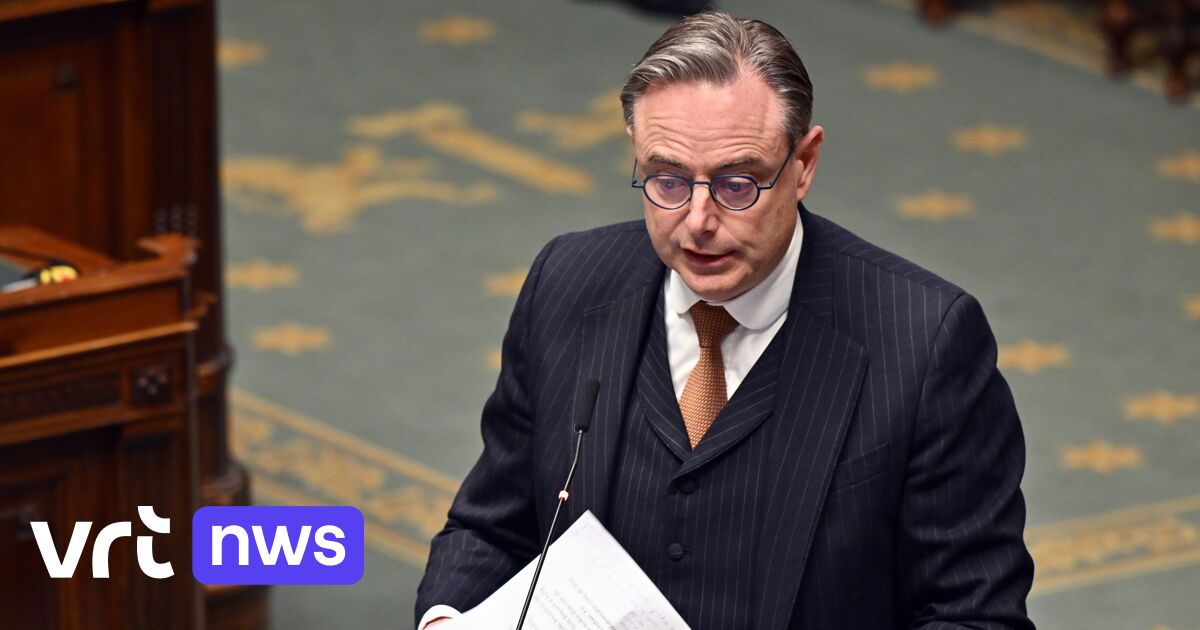
Brussels, Belgium – Political tensions are escalating in Belgium as Prime Minister Alexander De Wever’s newly formed government faces criticism over its budgetary plans. While attempting to navigate a challenging economic landscape marked by ongoing global instability, particularly in the Middle East and its impact on energy prices, De Wever’s administration is being warned by the National Bank of Belgium (NBB) that its proposed reforms and savings measures may not be sufficient to quickly restore fiscal order. This comes amidst concerns about rising deficits and public debt, and a potential vulnerability to financial market pressures. The debate highlights the delicate balance between fiscal responsibility and the need to address immediate economic concerns, particularly for citizens grappling with high energy costs.
The core of the dispute centers around differing approaches to alleviating the burden of high fuel prices. MR party chairman Georges-Louis Bouchez has been vocal in demanding immediate intervention to lower prices at the pump, even threatening to block progress on other legislative priorities if his demands are not met. However, Prime Minister De Wever has firmly rejected these calls, stating bluntly that the government cannot simply spend its way out of the problem, likening the situation to attempting to fund expenditures “from a submarine.” This clash underscores a fundamental disagreement about the appropriate response to economic challenges and the limits of government intervention.
National Bank Raises Concerns Over Belgium’s Fiscal Position
The National Bank of Belgium, in its annual report, delivered a sobering assessment of the country’s economic health. The report revealed that both the budget deficit and public debt increased in the previous year. Specifically, the deficit rose to 4.6% of Gross Domestic Product (GDP) in 2024, a 0.4 percentage point increase compared to 2023. According to VRT News, this translates to government expenditure exceeding revenue by 28 billion euros. Crucially, the NBB noted that this increase wasn’t solely attributable to temporary factors like the energy crisis, but rather reflects a structural upward trend driven by the aging population and its impact on pension and healthcare costs.

Governor Pierre Wunsch, head of the NBB, expressed particular worry about the potential for rising interest rates to further strain the national debt. He cautioned that Belgium could find itself in the crosshairs of financial markets if it fails to demonstrate a credible path towards fiscal consolidation. As reported by the Brussels Times, Wunsch fears that a new economic shock could exacerbate the situation, potentially triggering a market sell-off of Belgian government bonds.
De Wever’s Government and the Challenge of Balancing Reform
The De Wever I government, a coalition of five parties known as the “Arizona” coalition, came into office at the beginning of February 2025. The coalition has outlined ambitious plans to address structural challenges in the Belgian economy, particularly in the areas of pensions and the labor market. Governor Wunsch acknowledged the courage of the government in tackling these issues, noting that they are addressing “tightness of the labour market and the cost of ageing” with ambition. However, he also cautioned that these reforms may not be enough to quickly bring the budget under control.
The government’s approach is predicated on the belief that structural reforms are necessary to improve the long-term sustainability of public finances. These reforms are expected to boost economic growth and increase tax revenues, but their impact may capture time to materialize. In the meantime, the government faces pressure to address immediate economic concerns, such as high energy prices and the rising cost of living. This creates a difficult balancing act, requiring the government to pursue both short-term relief measures and long-term structural reforms.
Bouchez’s Demand for Fuel Price Intervention and the Coalition Tensions
Georges-Louis Bouchez, the leader of the MR party, has been a leading advocate for immediate action to lower fuel prices. He argues that high energy costs are disproportionately impacting Belgian households and businesses, and that the government has a responsibility to intervene. Bouchez has reportedly demanded specific measures, such as a temporary reduction in excise taxes on fuel, and has threatened to block other legislative initiatives if his demands are not met. VRT News reports that Bouchez is taking a firm stance, signaling a willingness to disrupt the coalition’s agenda if his concerns are not addressed.
Prime Minister De Wever, however, has rejected Bouchez’s demands, arguing that the government simply does not have the financial resources to provide significant fuel price relief. He emphasized that the government must prioritize fiscal responsibility and avoid measures that could further exacerbate the budget deficit. His “submarine” analogy – suggesting that one cannot spend money they do not have – encapsulates this position. This disagreement highlights a broader ideological divide within the coalition, with the MR party generally favoring more interventionist policies and the De Wever’s party prioritizing fiscal discipline.
The Broader Context: Energy Prices and the Economic Outlook
The debate over fuel prices is taking place against a backdrop of global economic uncertainty. The ongoing war in the Middle East is contributing to volatility in energy markets, pushing prices higher. This is exacerbating inflationary pressures and weighing on economic growth. Belgium, as a modest open economy, is particularly vulnerable to external shocks, such as fluctuations in energy prices. The NBB has warned that a prolonged period of high energy prices could significantly impact the Belgian economy, potentially leading to a recession.
the structural challenges facing the Belgian economy, such as an aging population and a high level of public debt, are making it more difficult to respond to these external shocks. The government must navigate these challenges while also addressing the immediate concerns of its citizens. This requires a delicate balancing act, and there is no straightforward solution.
Implications for the Belgian Coalition and Future Policy
The clash between De Wever and Bouchez raises questions about the stability of the “Arizona” coalition. While the coalition partners have agreed on a common program, they clearly have differing priorities and approaches to economic policy. The MR party’s threat to block other legislation if its demands on fuel prices are not met could create significant challenges for the government. It remains to be seen whether the coalition can overcome these internal divisions and maintain a united front.
Looking ahead, the government will need to present a credible plan to address Belgium’s fiscal challenges and restore confidence in the country’s economic outlook. This will require a combination of structural reforms, fiscal discipline, and targeted measures to support vulnerable households and businesses. The NBB’s warnings underscore the urgency of this task. The next key date to watch is the presentation of the government’s updated budget plan in June 2025, where the details of their fiscal strategy will be revealed.
The situation in Belgium serves as a microcosm of the broader challenges facing many European countries as they grapple with high debt levels, aging populations, and geopolitical instability. The ability of governments to navigate these challenges will be crucial for ensuring long-term economic prosperity and social stability.
What are your thoughts on the Belgian government’s approach to the current economic challenges? Share your comments below and join the discussion.