
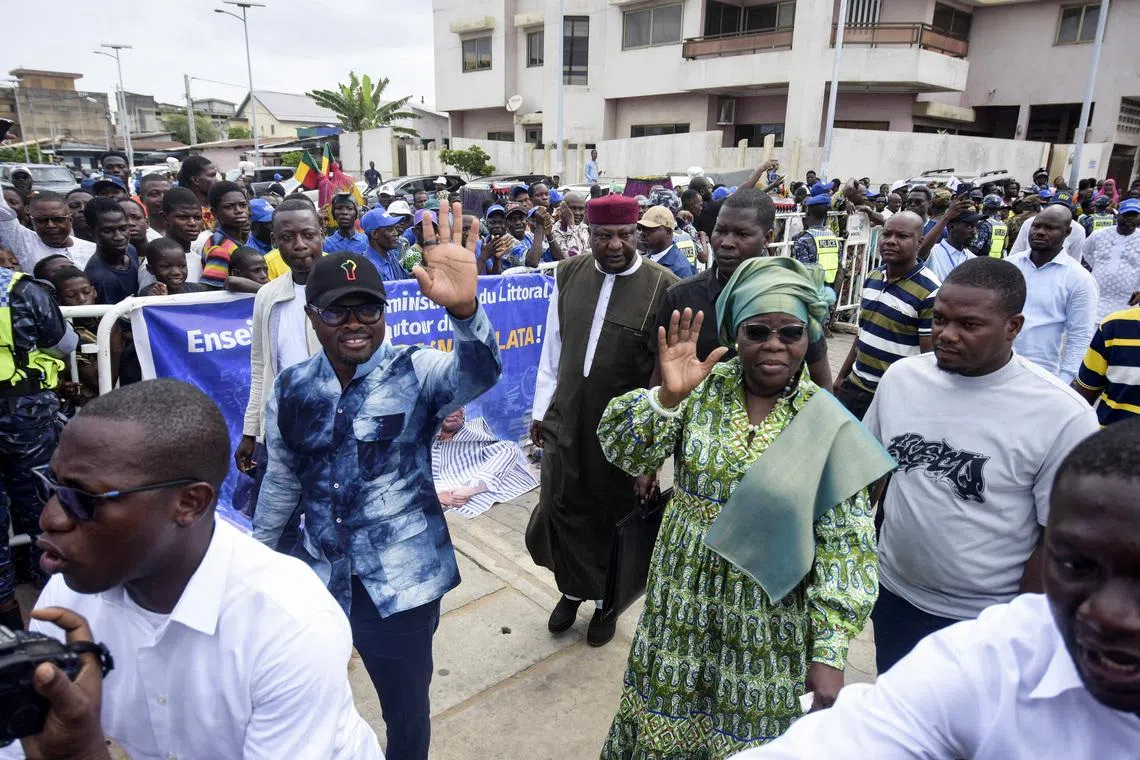
Cotonou, Benin — The political landscape in Benin is centering on the upcoming presidential election as the nation prepares to choose a successor to President Talon. Current Finance Minister Romuald Wadagni is widely expected to coast to a presidential election win this Sunday, supported by a period of strong economic growth and a lack of formidable challengers to his candidacy.
The transition of power comes at a critical juncture for the West African nation. While the economic indicators remain positive, the political atmosphere is tempered by security concerns, specifically the escalating threat posed by jihadist militants in the northern regions of the country.
For investors and global observers, the potential victory of Wadagni represents a move toward continuity in economic policy. As the long-serving finance minister, Wadagni has been a central figure in managing Benin’s fiscal strategies, and his transition from the treasury to the presidency would likely signal a steady hand for the country’s markets.
The Race to Succeed President Talon
The contest to replace President Talon has seen a few key figures emerge, though analysts suggest the field is not balanced. Romuald Wadagni and Paul Hounkpè are both in the race to succeed the current president, but the momentum appears to be heavily skewed toward the finance minister.
Wadagni’s candidacy is bolstered by his professional track record. In the eyes of many voters and international stakeholders, his tenure as finance minister has been defined by stability and growth. This economic performance serves as his primary platform, contrasting with a political environment where other challengers have struggled to gain significant traction or present a more compelling alternative to the status quo.
The absence of a “credible challenger” has led many to view the upcoming vote as a formality for Wadagni. However, the legitimacy of the transition remains a point of discussion among political analysts, as the balance between economic success and political inclusivity continues to be a theme in Beninese governance.
Economic Stability vs. Northern Security Threats
Benin’s economic trajectory has been a highlight of the current administration’s tenure. The strong growth mentioned by observers has provided a cushion for the government, allowing the finance ministry to implement policies that have kept the economy resilient. For a global audience, this stability is the primary reason why Romuald Wadagni is expected to win the presidency.
However, this economic optimism is clashing with a grim security reality. The northern borders of Benin have become increasingly volatile due to the threat of jihadist incursions. These militants, operating across the Sahel and into coastal West African states, pose a direct threat to national sovereignty and local stability.
The intersection of these two forces—economic prosperity and security fragility—will likely define the first few years of the next presidency. Any incoming leader will have to balance the maintenance of investor confidence with the urgent need to fund and execute a robust counter-terrorism strategy in the north to prevent the instability seen in neighboring states from taking a deeper hold.
What is at Stake for Benin?
Beyond the immediate result of the ballot, the election carries deeper implications for the region. the stakes in the presidential election involve more than just who occupies the office. they involve the continuity of the “Benin model” of economic management.
If Wadagni secures the presidency, the international community can expect a continuation of the current fiscal trajectory. For the citizens of Benin, the hope is that this economic growth can be translated into improved security and social services, particularly for those living in the vulnerable northern districts.
The election serves as a litmus test for the country’s democratic processes during a time of regional turmoil. While the outcome may seem predictable, the manner in which the transition occurs will influence Benin’s standing with international partners and its ability to attract further foreign direct investment.
The next confirmed checkpoint for the nation will be the official announcement of the election results following the vote this Sunday.
We invite our readers to share their perspectives on the implications of this transition in the comments below.