
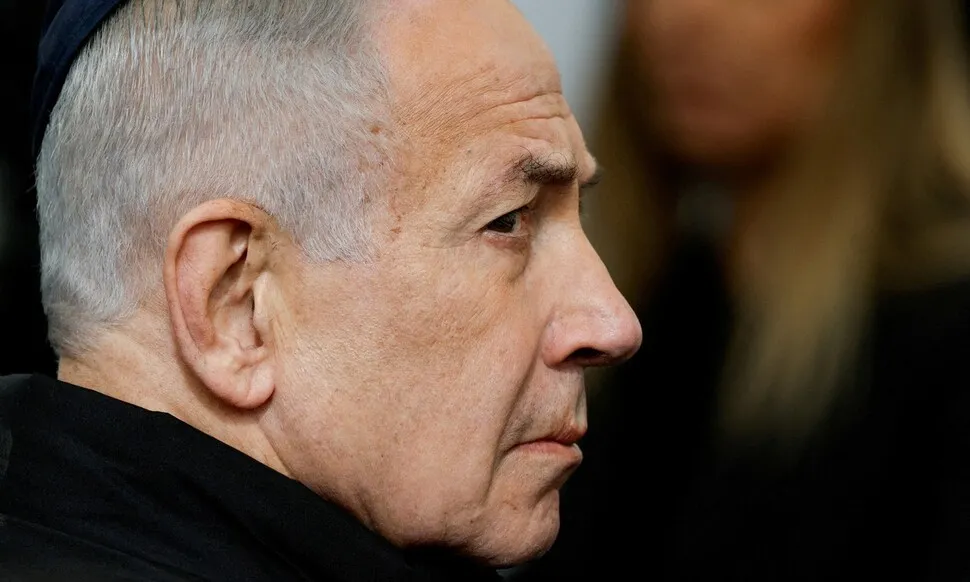
Israeli Prime Minister Benjamin Netanyahu is facing renewed legal pressure as his corruption trials resume, but a new security claim is threatening to retain him away from the witness stand. The head of Israel’s internal security agency, Shin Bet, has warned the court that the Prime Minister cannot testify due to a high risk of assassination by Iranian agents.
This development comes at a precarious moment for the region. The legal proceedings had previously been suspended following the outbreak of a war with Iran and the subsequent declaration of a national state of emergency. While the trials are now set to resume following a ceasefire agreement between the United States and Iran, the security warning suggests that the threat to the Prime Minister’s life remains acute.
The security warning was delivered by Shin Bet Director David Ginni in a letter sent to the legal advisor of the court’s administrative office on the night of April 11, 2026 according to reports. The letter explicitly stated that Iranian agents could take advantage of the Prime Minister’s public movements to carry out an attack, arguing that the exposure of the schedule and location of his testimony would pose a severe threat to his life.
Security Warnings and Judicial Delays
The timing of the security intervention has drawn significant scrutiny. A trial session was originally scheduled for the morning of April 12 at the Jerusalem District Court. However, the Prime Minister’s office first requested a two-week postponement citing “security and diplomatic reasons,” a request that was initially granted by the prosecution.
Following this postponement, the Shin Bet stepped in with a more definitive stance, submitting an opinion that the testimony itself should be canceled entirely. This move has been met with skepticism by critics who question whether security concerns are being used as a strategic tool to avoid legal accountability for the bribery and corruption charges facing the Prime Minister.
The tension between judicial requirements and national security is heightened by the volatile nature of current Israeli-Iranian relations. Netanyahu has maintained a hardline stance against Tehran, recently asserting on April 11 that his offensive against Iran is not yet finished and that “there is still more work to be done” as reported by the Times of Israel and Jerusalem Post.
The Fragile Ceasefire and Regional Instability
The legal drama unfolds against a backdrop of a fragile two-week ceasefire brokered by the United States. However, the stability of this agreement is under constant pressure. On April 8, Netanyahu expressed reservations about the ceasefire, specifically mentioning the role of Hezbollah in Lebanon according to local reports.
The Prime Minister’s actions on the ground appear to contradict the spirit of a truce. Reports indicate that Israel has conducted large-scale airstrikes in Lebanon, prompting a reaction from Iran, which has refused to open the Strait of Hormuz in response. These escalations suggest that the “security threats” cited by the Shin Bet may be rooted in a genuine cycle of retaliation, even as the legal system attempts to hold the head of government accountable.
Key Takeaways of the Current Crisis
- Legal Conflict: Benjamin Netanyahu’s bribery trial resumed after a war-induced suspension, but he is now seeking to avoid testifying.
- Security Claim: Shin Bet Director David Ginni warned the court on April 11 that Iranian agents might assassinate the Prime Minister during public court appearances.
- Geopolitical Tension: A U.S.-brokered ceasefire with Iran is currently in place, though it is strained by Israeli strikes in Lebanon and Iranian closures of the Strait of Hormuz.
- Political Narrative: Netanyahu continues to frame Iran as an “absolute evil” and asserts that military objectives against the regime have not yet been fully met.
What Which means for the Israeli Judiciary
The intervention of a security agency in a criminal trial involving a sitting Prime Minister creates a complex precedent. If the court accepts the Shin Bet’s assessment, it may signal that national security interests—or the perceived threats to a leader’s life—can supersede the requirement for a defendant to testify in a corruption case.
For the global community, this highlights the intersection of personal legal jeopardy and international geopolitics. The Prime Minister’s insistence that Israel is “protecting Europe” by standing against Iran serves as a broader strategic narrative, but domestically, the focus remains on whether the rule of law applies equally to the highest office in the land.
The situation remains fluid. The court must now weigh the intelligence provided by David Ginni against the necessity of the trial’s progression. With the ceasefire potentially “flipping in an instant,” the window for a stable judicial process is narrow.
The next critical checkpoint will be the court’s ruling on whether to accept the Shin Bet’s recommendation to cancel the testimony or to mandate an alternative, secure method for the Prime Minister to provide his evidence. We will continue to monitor the Jerusalem District Court’s filings for further updates.
Do you believe security concerns should justify the postponement of criminal trials for heads of state? Share your thoughts in the comments below.