
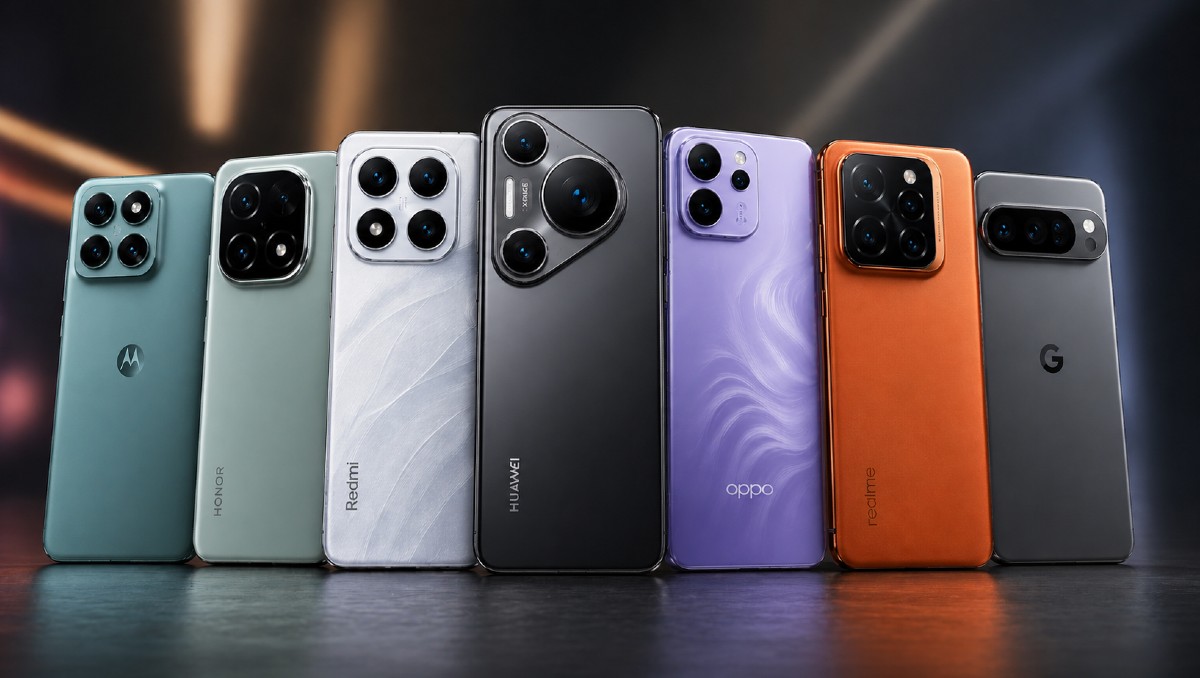
For years, the smartphone market has been dominated by a binary choice: pay a premium for the latest flagship from Apple or Samsung, or settle for a budget device that feels like a compromise. However, as we move through May 2026, the gap between “luxury” and “value” has narrowed significantly. The emergence of “premium mid-range” devices means you no longer need to spend four figures to get a high-refresh-rate OLED screen, professional-grade cameras, and cutting-edge AI integration.
The current landscape reveals a striking trend: a $700 phone now delivers roughly 90% of the experience offered by a $1,200 flagship. Even as the allure of the ultra-premium
badge remains strong, savvy consumers are increasingly pivoting toward devices that offer the same core utility—battery life, processing speed, and display quality—at a fraction of the cost. In some cases, these high-value alternatives cost up to three times less than the top-tier models from the industry’s biggest players.
As a software engineer turned journalist, I have watched the silicon ceiling lower. The processors powering mid-range phones today are often more powerful than the chips in the flagship phones of just two years ago. This democratization of hardware means the primary differences now lie in niche features—like titanium frames or periscope zoom lenses—rather than daily performance. For the average user, the financial trade-off of a flagship is becoming harder to justify.
The New Value Leaders: Premium Performance Without the Price Tag
Finding a premium smartphone without the flagship price tag requires looking beyond the most advertised models. In 2026, the “sweet spot” for value sits between $300 and $600. Devices in this bracket now routinely feature 120Hz displays and water resistance, features that were once reserved exclusively for the elite tiers.
One of the most compelling options for those seeking a balance of brand reliability and cost is the Samsung Galaxy S25 FE. Positioned as a “Fan Edition,” this device typically retails between $600 and $700, offering a significant discount compared to the S26 Ultra, which can reach $1,299 according to Kinja. The S25 FE provides the essential flagship experience—strong AI capabilities and a premium build—without the thousand-dollar barrier.
For those deeper in the budget-conscious camp, the Samsung Galaxy A37 has emerged as a strong contender, specifically targeting the €400 to €500 range. While it lacks the raw processing power of a Snapdragon 8-series chip, it handles daily multitasking and social media with ease, making it an ideal choice for users who prioritize reliability over benchmark scores.
Comparing the Cost of “Premium”
To understand why these alternatives are gaining traction, It’s helpful to look at the pricing divergence. The top-end flagships, such as the iPhone 17 Pro Max (approximately $1,199) and the Galaxy S26 Ultra ($1,299), represent the peak of mobile engineering. However, the “value premium” segment offers a different proposition.
| Device Category | Example Model | Estimated Price Range | Key Trade-off |
|---|---|---|---|
| Ultra-Flagship | Galaxy S26 Ultra | $1,200 – $1,300 | Maximum specs, highest cost |
| Standard Flagship | iPhone 17 / S26 | $799 – $900 | Balanced premium experience |
| Premium Mid-Range | Galaxy S25 FE | $600 – $700 | Slightly older chip/screen |
| Budget Premium | Galaxy A37 / Pixel 8a | $400 – $500 | Plastic frames, slower charging |
What You Sacrifice (and What You Don’t)
When choosing a device that costs significantly less than an iPhone or Samsung flagship, it is important to identify where the cost-cutting actually happens. Most of the savings approach from materials and specialized hardware, not from the user experience.
Where you save:
- Build Materials: You will see more reinforced plastics or aluminum instead of titanium or ceramic.
- Camera Versatility: While main sensors are often identical, you lose the extreme “space zoom” or professional-grade LiDAR sensors.
- Charging Speeds: Budget premium phones may seize 60 to 90 minutes to full charge, whereas flagships often hit 100% much faster.
What remains the same:
- Display Quality: High-quality AMOLED screens with 120Hz refresh rates are now standard in the $400+ range.
- Battery Life: Interestingly, mid-range phones often have better battery life due to the fact that they utilize slightly less power-hungry processors.
- AI Integration: With the rise of cloud-based AI, the ability to use advanced assistants is no longer tied to the most expensive on-device NPU (Neural Processing Unit).
Strategic Buying: The “One-Year-Old” Rule
One of the most effective ways to get a truly premium device for a fraction of the cost is to buy the previous year’s flagship. In May 2026, the iPhone 16 and Galaxy S25 series have seen significant price drops as the 17 and 26 series take over the spotlight. These devices were designed to be the best in the world 12 months ago, and their performance remains top-tier today.
The Verge’s analysis of budget smartphones suggests that you can now find high-performance devices for under $600 that include dust and water resistance and high-refresh screens. By opting for a slightly older flagship or a current “FE” model, you bypass the “innovation tax”—the extra $400 to $600 paid for the marginal improvements found in the latest release.
The Role of AI in the Value Shift
The most significant change in 2026 is how AI has shifted the value proposition. Previously, you needed the most expensive chip to run complex tasks. Now, with the integration of sophisticated AI models that lean on cloud processing, the hardware requirements for a “smart” experience have dropped. Whether you are using a $400 device or a $1,200 device, the ability to summarize documents, generate images, or translate languages in real-time is nearly identical.
Final Verdict: Is the Upgrade Worth It?
For the majority of global users, the answer is increasingly “no.” Unless you are a professional mobile photographer, a hardcore mobile gamer, or someone who requires the absolute latest in foldable technology, the diminishing returns of flagship pricing are evident. The current market allows you to acquire a device that feels, looks, and performs like a premium product without the financial strain of a luxury purchase.

The shift toward “premium value” is not just about saving money; it is about a more sustainable approach to technology. As hardware plateaus, the most logical move is to prioritize utility over prestige. In 2026, the smartest way to buy a phone is to identify the 10% of features you don’t need and save hundreds of dollars in the process.
With the next cycle of hardware updates expected to focus more on software-driven AI capabilities than raw hardware specs, the value gap is likely to widen further. We expect more official pricing adjustments and “Lite” versions of flagship models to be announced in the coming quarters as manufacturers compete for the mid-range market.
Do you prefer the prestige of a flagship or the practicality of a value-premium device? Share your thoughts in the comments below and let us know which model you’re eyeing for your next upgrade.