
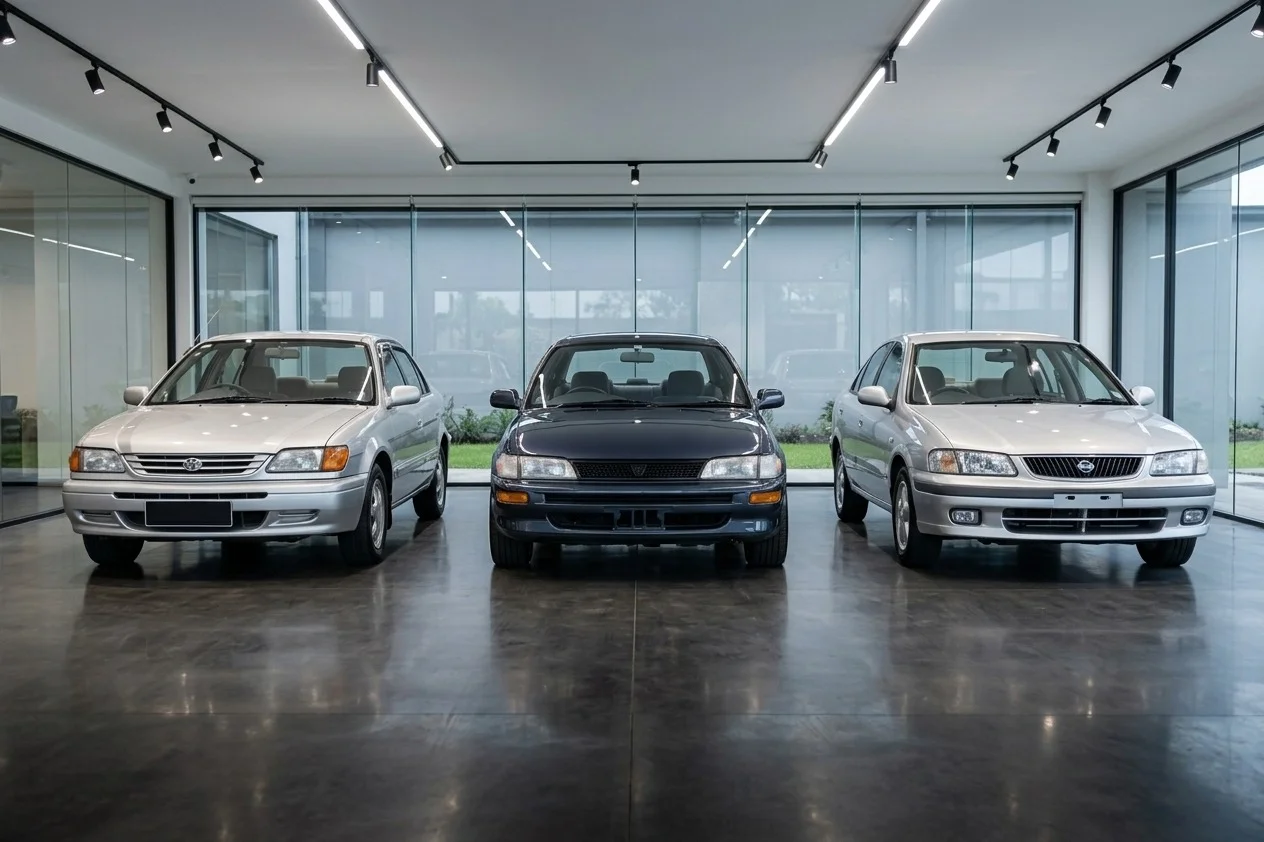
Navigating the secondhand automotive market in 2026 requires a strategic balance between initial cost and long-term operational expenses. For many buyers in Southeast Asia, particularly in Indonesia, the Rp70 million price bracket represents a critical “sweet spot”—offering a transition from two-wheeled transport to the safety and utility of a four-wheeled vehicle without incurring prohibitive debt.
As of May 2026, the demand for fuel-efficient, reliable, and low-maintenance vehicles remains high. This trend is driven by a broader economic shift where young professionals are increasingly viewing depreciation as a strategic asset play. According to recent market analysis, the used vehicle market in Indonesia expanded by 14% year-on-year, with buyers prioritizing longevity metrics and “bulletproof” engine reliability over luxury features World Today News.
For those searching for the mobil bekas Rp70 jutaan terbaik 2026, the goal is typically a “daily driver” that minimizes the risk of frequent workshop visits. In this price range, the market is dominated by Low Cost Green Cars (LCGC) and older but robust city cars that have proven their durability over a decade of road use.
Top Recommendations for Reliable Used Cars Under Rp70 Million
When filtering for vehicles that are irit (fuel-efficient), bandel (durable), and cheap to maintain, five specific models consistently emerge as the most viable options for 2026.
1. Toyota Agya (Early Generation)
The Toyota Agya remains a benchmark for first-time buyers. Its primary appeal lies in the ubiquity of spare parts and a high resale value. In the Rp70 million range, buyers can typically find well-maintained units from the early to mid-2010s. Its 1.0L and 1.2L engine variants are renowned for low fuel consumption and ease of repair, making it a top choice for urban commuting.
2. Daihatsu Ayla
As a sibling to the Agya, the Ayla offers nearly identical mechanical reliability. Often available at a slightly lower price point than the Toyota equivalent, the Ayla is highly praised for its practicality. For those prioritizing the lowest possible maintenance costs, the Ayla’s simplicity is its greatest strength.
3. Honda Brio (Early Satya Models)
While often commanding a premium, early Honda Brio Satya models can occasionally be found near the Rp70 million mark. The Brio is widely regarded as having superior driving dynamics and a more refined interior than other LCGCs. It is the ideal choice for those who want a “spirited” drive without sacrificing the fuel economy required for daily city traffic.
4. Mitsubishi Mirage
The Mirage is frequently cited as a superior alternative to standard LCGCs for those seeking better build quality. It offers a more robust feel and often comes with more comprehensive safety features. While parts are slightly less common than Toyota or Daihatsu, its reliability record is strong, and its fuel efficiency is competitive.
5. Nissan March
The Nissan March is often the “insider’s choice” in this price bracket. It provides a more spacious cabin and a more comfortable ride than the smaller city cars. While the resale value is lower than that of a Toyota, this allows buyers to acquire a higher-spec vehicle for the same Rp70 million budget.
Comparative Analysis: Which is Most ‘Worth It’?
Determining which vehicle is the most “worth it” depends entirely on the buyer’s primary pain point. For a detailed breakdown of these options, the following table compares their core strengths based on 2026 market conditions.
| Model | Primary Strength | Maintenance Cost | Fuel Efficiency | Resale Value |
|---|---|---|---|---|
| Toyota Agya | Market Liquidity | Particularly Low | High | Very High |
| Daihatsu Ayla | Affordability | Very Low | High | High |
| Honda Brio | Performance | Low | High | Very High |
| Mitsubishi Mirage | Build Quality | Moderate | High | Moderate |
| Nissan March | Interior Space | Moderate | Moderate | Low |
Critical Risks and Verification Steps for Buyers
Purchasing a vehicle in the Rp70 million range in 2026 carries inherent risks, as many of these cars are over a decade ancient. The most significant risks include hidden flood damage—particularly in urban centers—and odometer tampering.
To mitigate these risks, buyers should follow a strict verification protocol:
- Service History Audit: Prioritize vehicles with a documented service record. A gap in maintenance often signals neglected timing belts or fluid flushes.
- Chassis Inspection: Check for “welding marks” or uneven paint on the chassis, which indicate previous major accidents.
- Engine Health: Look for “milky” oil under the filler cap, a classic sign of a blown head gasket, which can be a costly repair.
- Legal Documentation: Ensure the STNK (vehicle registration) and BPKB (ownership document) are authentic and the tax is current. According to recent reports, LCGC bekas prices in April 2026 start from approximately Rp60 million, depending on the condition and year Kompas Otomotif.
Why Maintenance Costs Vary
The difference in “cheap maintenance” between a Toyota Agya and a Nissan March is not just about the price of the part, but the availability. Toyota and Daihatsu parts are available in almost every neighborhood workshop in Indonesia, whereas Nissan or Mitsubishi parts may require a trip to a specialized dealer or a larger city, increasing the “hidden cost” of ownership.
The Economic Context of the 2026 Used Market
The shift toward used cars in 2026 is partly a response to the pricing of new entry-level vehicles. For instance, a new Toyota Agya 1.2L G CVT is priced at approximately Rp197.7 million in Jakarta Oto.com. For a buyer with a budget of Rp70 million, the gap is significant, making the used market the only viable entry point for car ownership.
the rise of “anti-flood” city cars with higher ground clearance has become a specific niche in the used market. Buyers are now looking for vehicles that can handle the unpredictable urban drainage systems of major Indonesian cities, leading to a slight price premium for models with modified or naturally higher clearances.
For those who find the Rp70 million bracket too restrictive, there is a secondary market for “budget sedans” starting from Rp40 million, though these typically reach with higher fuel consumption and more complex engine maintenance requirements compared to the LCGC segment.
The next major influence on this market will be the continued rollout of electric vehicle (EV) subsidies and the subsequent trickle-down effect on used internal combustion engine (ICE) prices. As more new buyers shift toward EVs, the supply of high-quality used ICE city cars is expected to increase, potentially lowering prices further by late 2026.
We want to hear from you: Are you prioritizing fuel economy or long-term durability in your next vehicle purchase? Share your experiences with used city cars in the comments below.