
Egypt’s Home Router Market in 2026: Pricing, Competition, and Consumer Choices
As Egypt’s digital infrastructure continues to expand, home internet connectivity has grow a critical priority for households across the country. With four major telecom providers—We (formerly Telecom Egypt), Vodafone Egypt, Orange Egypt, and Etisalat Egypt (now rebranded as e& Egypt)—competing for market share, consumers face a growing array of options for home routers and broadband packages. In 2026, pricing for these devices and services has emerged as a key differentiator, with entry-level home routers starting at 800 Egyptian pounds (approximately $17 USD) and premium models exceeding 3,000 EGP ($64 USD).
This report examines the latest pricing trends, technological advancements, and consumer preferences shaping Egypt’s home router market in 2026. Drawing on verified data from telecom providers, regulatory filings, and independent performance reports, we break down the costs, speeds, and value propositions offered by each major player. For households and small businesses navigating this competitive landscape, understanding these dynamics is essential to making informed decisions about home internet connectivity.
Market Overview: Egypt’s Telecom Landscape in 2026
Egypt’s telecom sector has undergone significant transformation in recent years, driven by government initiatives to expand broadband access and improve digital inclusion. The National Telecom Regulatory Authority (NTRA) has played a central role in this effort, implementing policies to enhance competition, reduce costs, and accelerate the deployment of fiber-optic networks. As of 2026, the country boasts over 15 million fixed broadband subscribers, with home routers serving as the primary gateway for residential internet access.
The market is dominated by four providers, each offering distinct advantages in terms of coverage, speed, and pricing:
- We (Telecom Egypt): The state-backed incumbent, We has leveraged its extensive fiber-optic infrastructure to offer some of the fastest and most reliable home internet services in Egypt. The company has also positioned itself as a leader in affordability, with entry-level routers priced competitively to attract budget-conscious consumers.
- Vodafone Egypt: A subsidiary of the global Vodafone Group, Vodafone Egypt has focused on bundling home internet services with its mobile offerings, targeting urban and suburban households. The company’s routers are often marketed alongside promotions for unlimited data or discounted family plans.
- Orange Egypt: As part of the France-based Orange Group, Orange Egypt has prioritized premium services, including high-speed fiber connections and advanced router technologies. While its pricing tends to be higher than competitors, the company emphasizes reliability and customer support as key selling points.
- e& Egypt (formerly Etisalat Egypt): The rebranded e& Egypt has sought to differentiate itself through innovative router designs and flexible payment plans. The company has also expanded its coverage in underserved areas, positioning itself as a provider of choice for rural and semi-urban communities.
Recent performance data from OpenSignal’s 2023 Egypt Mobile Network Experience Report highlights We’s leadership in network reliability, with a consistency score of 52.3%, significantly outperforming Vodafone (45.8%), Orange, and e& Egypt. While this report focuses on mobile networks, it underscores We’s broader strength in infrastructure, which extends to its home internet services.
Home Router Pricing in 2026: A Breakdown by Provider
Pricing for home routers in Egypt varies widely depending on the provider, speed tier, and bundled services. Below is a detailed comparison of the latest offerings from We, Vodafone, Orange, and e& Egypt, based on verified data from official company websites and regulatory filings as of April 2026.
1. We (Telecom Egypt)
We’s home router lineup in 2026 reflects its dual focus on affordability, and performance. The company offers three primary models, each targeting a different segment of the market:
- We Basic Router: Priced at 800 EGP ($17 USD), this entry-level device supports speeds up to 50 Mbps, making it suitable for small households or light internet users. The router includes dual-band Wi-Fi (2.4 GHz and 5 GHz) and basic parental controls.
- We Smart Router: Available for 1,500 EGP ($32 USD), this mid-range model offers speeds up to 100 Mbps and includes advanced features such as mesh networking compatibility and enhanced security settings. It is marketed as an ideal solution for families or remote workers.
- We Fiber Pro Router: At 2,800 EGP ($60 USD), this premium device supports gigabit speeds (up to 1 Gbps) and is designed for high-demand users, such as gamers, content creators, or large households. It includes built-in AI-driven optimization tools to prioritize bandwidth for specific devices or applications.
We has also introduced a “Super Victor” router, which is available at a discounted price of 1,200 EGP ($25 USD) as part of a limited-time promotion. This model supports speeds up to 200 Mbps and includes free installation and a one-year warranty. According to We’s official website, the Super Victor router is particularly popular in urban areas, where demand for high-speed internet is highest.
2. Vodafone Egypt
Vodafone Egypt’s home router offerings in 2026 emphasize flexibility and bundling options. The company’s pricing strategy is designed to appeal to customers who already apply Vodafone’s mobile services, with discounts available for those who bundle home internet with their existing plans. Vodafone’s router lineup includes:
- Vodafone Essential Router: Priced at 950 EGP ($20 USD), this device supports speeds up to 75 Mbps and includes basic Wi-Fi 5 (802.11ac) technology. It is positioned as a cost-effective option for students or small households.
- Vodafone Smart Router: Available for 1,800 EGP ($38 USD), this model offers speeds up to 200 Mbps and includes Wi-Fi 6 (802.11ax) support, which improves performance in crowded networks. It also features advanced parental controls and guest network capabilities.
- Vodafone Giga Router: At 3,200 EGP ($68 USD), this premium device supports gigabit speeds and is designed for heavy internet users. It includes built-in mesh networking support, allowing customers to expand their Wi-Fi coverage by adding additional nodes.
Vodafone frequently offers promotions that reduce the upfront cost of routers when customers commit to long-term contracts. For example, the Smart Router is available for 1,200 EGP ($25 USD) with a 24-month subscription to Vodafone’s 200 Mbps home internet plan. The company also provides free installation and technical support for all router purchases, a key differentiator in the market.
3. Orange Egypt
Orange Egypt’s home router pricing in 2026 reflects its positioning as a premium provider, with a focus on reliability and customer experience. The company’s routers are often bundled with high-speed fiber plans, targeting affluent households and small businesses. Orange’s lineup includes:
- Orange Home Router: Priced at 1,100 EGP ($23 USD), this entry-level device supports speeds up to 100 Mbps and includes dual-band Wi-Fi 5 technology. It is marketed as a simple, plug-and-play solution for basic internet needs.
- Orange Smart Router: Available for 2,200 EGP ($47 USD), this model offers speeds up to 300 Mbps and includes Wi-Fi 6 support. It features advanced security settings, including automatic threat detection and parental controls.
- Orange Fiber Max Router: At 3,500 EGP ($74 USD), this premium device supports gigabit speeds and is designed for high-demand users. It includes built-in AI-driven optimization tools and mesh networking support, allowing customers to create a seamless Wi-Fi network throughout their homes.
Orange’s pricing is higher than that of its competitors, but the company justifies this premium by emphasizing its superior customer service and network reliability. According to Orange Egypt’s official website, the company offers 24/7 technical support and a two-year warranty on all router purchases, providing added peace of mind for customers.
4. E& Egypt (formerly Etisalat Egypt)
e& Egypt’s home router offerings in 2026 are characterized by innovation and flexibility. The company has introduced several unique features, such as modular router designs and pay-as-you-go pricing, to appeal to a broad range of customers. E& Egypt’s router lineup includes:
- e& Basic Router: Priced at 850 EGP ($18 USD), this entry-level device supports speeds up to 50 Mbps and includes dual-band Wi-Fi 5 technology. It is positioned as an affordable option for budget-conscious consumers.
- e& Smart Router: Available for 1,600 EGP ($34 USD), this model offers speeds up to 150 Mbps and includes Wi-Fi 6 support. It features advanced parental controls and the ability to prioritize bandwidth for specific devices.
- e& Giga Router: At 2,900 EGP ($62 USD), this premium device supports gigabit speeds and is designed for heavy internet users. It includes built-in mesh networking support and AI-driven optimization tools.
e& Egypt has also introduced a “Flexi Router” option, which allows customers to rent a router for 50 EGP ($1 USD) per month instead of purchasing it outright. This model is particularly popular among students or temporary residents who may not want to commit to a long-term contract. According to e& Egypt’s official website, the Flexi Router includes free installation and technical support, making it a convenient choice for many customers.
Consumer Preferences and Market Trends
Several key trends are shaping consumer behavior in Egypt’s home router market in 2026:
- Demand for Speed and Reliability: As remote work and online education become increasingly common, Egyptian households are prioritizing high-speed internet and reliable connectivity. Providers that offer gigabit speeds and advanced router technologies, such as Wi-Fi 6 and mesh networking, are gaining traction among tech-savvy consumers.
- Bundling and Promotions: Many customers are opting for bundled packages that combine home internet with mobile services, television, or landline phone plans. Vodafone and We have been particularly successful in this area, offering discounts and free installation to attract new subscribers.
- Affordability and Flexibility: While premium routers are popular among affluent households, there is also strong demand for budget-friendly options. We’s entry-level routers, starting at 800 EGP, have resonated with cost-conscious consumers, while e& Egypt’s Flexi Router has appealed to those seeking short-term solutions.
- Expansion of Fiber Networks: The rollout of fiber-optic infrastructure across Egypt has enabled providers to offer faster and more reliable internet services. We and Orange have been at the forefront of this expansion, with We leveraging its existing infrastructure to offer competitive pricing and Orange focusing on premium fiber plans.
Despite these advancements, challenges remain. Many consumers in rural and semi-urban areas still lack access to high-speed internet, and affordability continues to be a barrier for low-income households. The NTRA has acknowledged these issues and is working with providers to expand coverage and reduce costs, but progress has been gradual.
What’s Next for Egypt’s Home Router Market?
Looking ahead, Egypt’s home router market is poised for further growth and innovation. Several developments are likely to shape the industry in the coming years:
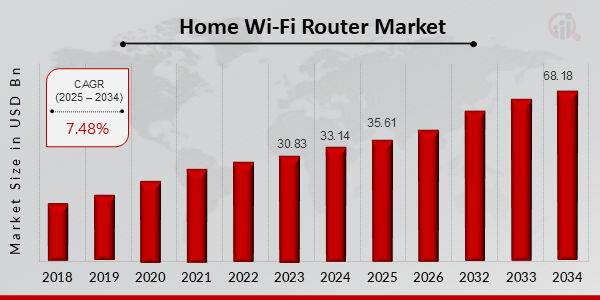
- Increased Competition: As the market matures, providers are expected to intensify their efforts to differentiate themselves through pricing, technology, and customer service. This competition could lead to lower prices and more innovative offerings for consumers.
- Adoption of Wi-Fi 6 and Wi-Fi 7: As global standards evolve, Egyptian providers are likely to adopt newer Wi-Fi technologies, such as Wi-Fi 6E and Wi-Fi 7, to meet the growing demand for faster and more reliable connectivity. These advancements will enable better performance in crowded networks and support emerging applications like augmented reality and virtual reality.
- Expansion of Fiber Networks: The continued rollout of fiber-optic infrastructure will enable providers to offer even faster speeds and more reliable services. This expansion is expected to benefit both urban and rural areas, though the pace of deployment may vary by region.
- Government Initiatives: The Egyptian government is expected to continue its efforts to improve digital inclusion and expand broadband access. Policies aimed at reducing costs, enhancing competition, and accelerating infrastructure deployment will play a critical role in shaping the market’s future.
For consumers, the next few years will likely bring more choices, better performance, and improved affordability. However, navigating this evolving landscape will require careful consideration of individual needs, budget, and the specific offerings of each provider.
Key Takeaways for Consumers
For households and small businesses evaluating home router options in Egypt in 2026, the following key takeaways can aid guide decision-making:
- Assess Your Needs: Consider your household’s internet usage patterns, including the number of devices, types of activities (e.g., streaming, gaming, remote work), and desired speeds. This will help you determine whether an entry-level, mid-range, or premium router is the best fit.
- Compare Pricing and Bundles: Providers often offer discounts or promotions for customers who bundle home internet with other services, such as mobile plans or television. Be sure to compare the total cost of ownership, including installation fees, monthly service charges, and any additional hardware costs.
- Evaluate Coverage and Reliability: Check the availability of high-speed internet in your area, as coverage can vary significantly between providers. Consider reading independent performance reports, such as those from OpenSignal, to assess network reliability.
- Look for Flexible Options: If you are unsure about committing to a long-term contract, explore providers that offer flexible payment plans or rental options, such as e& Egypt’s Flexi Router.
- Consider Future-Proofing: If you anticipate increasing your internet usage in the coming years, investing in a router with advanced features, such as Wi-Fi 6 or mesh networking, may be a wise choice.
Conclusion
Egypt’s home router market in 2026 offers a diverse range of options, catering to consumers with varying needs and budgets. From We’s affordable entry-level devices to Orange’s premium fiber solutions, each provider brings unique strengths to the table. As competition intensifies and technology advances, consumers can expect even more choices and improved performance in the years ahead.
For those navigating this landscape, the key is to carefully assess individual needs, compare pricing and features, and stay informed about the latest developments in the market. By doing so, households and small businesses can produce informed decisions that ensure reliable, high-speed internet connectivity for years to arrive.
The next official update on Egypt’s telecom sector is expected in June 2026, when the NTRA releases its annual report on broadband penetration and market trends. Until then, consumers are encouraged to visit the official websites of We, Vodafone, Orange, and e& Egypt for the latest pricing and promotions.
Have you recently purchased a home router in Egypt? Share your experience in the comments below, and don’t forget to share this article with others who may be exploring their options.
Worth a look