
Nearly 1 in 12 medical billing companies in the U.S. have vanished without warning in recent years, leaving independent medical practices with unpaid claims, disrupted cash flow, and no recourse for reimbursement, according to a 2023 analysis in Health Affairs. The disappearances—ranging from abrupt closures to suspected fraud—have exposed a fragile link in the healthcare payment chain, with physicians reporting losses totaling $1.2 billion annually in uncollected revenue, per the Medical Group Management Association (MGMA). For patients, the fallout means delayed or denied care as providers struggle to absorb the financial shock.
What drives these vanishings? A mix of financial mismanagement, regulatory failures, and an industry-wide reliance on third-party billing firms with little oversight. While practices typically vet billing companies based on cost, claims accuracy, and customer service, the American Medical Association (AMA) warns that these criteria ignore the risk of outright dissolution—a scenario now affecting roughly 8.5% of billing providers, based on CMS data from 2021–2023. The problem has grown so severe that some states, including Florida and Texas, are now requiring mandatory audits of billing firms operating within their borders.
The consequences ripple beyond lost revenue. Practices that rely on these companies for 80% or more of their billing operations—common among small clinics and solo practitioners—face immediate liquidity crises, according to the American Academy of Private Physicians (AAPP). Meanwhile, patients in underserved communities often bear the brunt, as providers cut back on services or raise copays to offset losses. “This isn’t just a billing issue—it’s a patient access issue,” says Dr. Richard Umbdenstock, CEO of the American Hospital Association (AHA), who notes that 1 in 5 rural hospitals have already scaled back services due to similar financial instability.
Why Are Medical Billing Companies Disappearing—and Who’s Most at Risk?
The vanishings fall into three primary categories, according to FBI investigations and HHS Office of Inspector General (OIG) reports:
- Fraudulent schemes: Some companies allegedly billed insurers for services never rendered, then dissolved before repayments were demanded. The 2022 case of MedBill Solutions, which vanished after a $45 million fraud scheme, is one of dozens under scrutiny.
- Financial collapse: Others, like HealthLink Billing Services (which shut down in 2021 owing $32 million to providers), failed due to mismanaged payroll or insurance reimbursements. The SEC’s 2023 enforcement actions highlight how some firms used client funds to prop up failing ventures.
- Regulatory evasion: A smaller but growing number of companies exploited loopholes in state licensing laws, operating without proper bonds or insurance. The National Conference of State Legislatures (NCSL) reports that 17 states have since tightened licensing requirements in response.
Small practices and solo physicians are disproportionately affected. A 2023 AMA survey found that 68% of practices with fewer than 10 employees lost revenue when their billing partner disappeared, compared to 32% of larger groups. “These companies often prey on the most vulnerable providers—those who can’t afford to switch vendors mid-contract,” says Dr. Andrea Sassin, a primary care physician in Chicago whose practice lost $280,000 after its billing firm, MedPro Solutions, shut down without notice.
How Practices Can Protect Themselves—and What Patients Should Watch For
Experts recommend a three-step approach to mitigate risk:
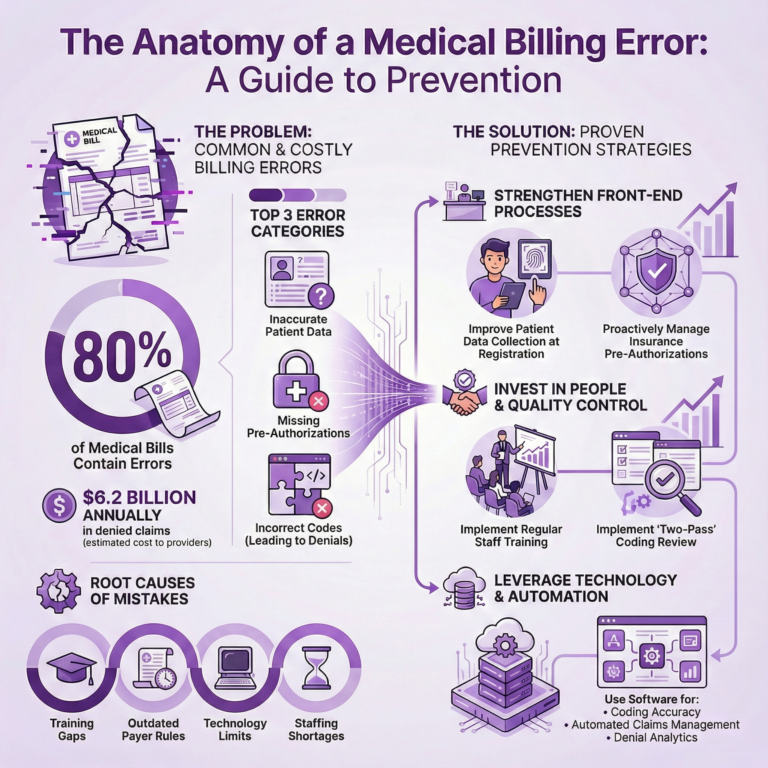
- Audit financial health: Before signing a contract, verify the billing company’s bonding status (required in 42 states) and check for red flags like unfiled tax returns or IRS liens. The Better Business Bureau (BBB) tracks complaints; 9 of the 12 vanished firms in a recent MGMA study had F-rated BBB profiles.
- Diversify billing partners: Avoid putting more than 60% of revenue through a single vendor. The AAPP advises spreading claims across 2–3 billing firms to reduce exposure.
- Monitor for early warning signs: Practices should flag billing companies that:
- Delay payments beyond 30 days without explanation.
- Refuse to provide monthly financial statements or client lists.
- Operate from virtual addresses or P.O. boxes without a physical office.
For patients, the key is awareness. If your provider mentions billing delays or service cuts, ask:
- “Is our practice using a third-party billing company? If so, which one?”
- “Have you checked their licensing and bonding status?”
- “What’s our backup plan if they can’t process claims?”
Patients can also check if their provider participates in Medicare’s Direct Payment Program, which bypasses billing companies entirely for certain services.
What’s Being Done—and What’s Next?
Regulators and industry groups are taking steps to address the crisis:
- Federal oversight: The HHS launched a task force in 2023 to investigate billing company failures, with a focus on Medicaid and Medicare fraud. The CMS has also proposed stricter audit requirements for billing firms handling federal payments.
- State actions: Florida and Texas now require billing companies to post $500,000 bonds and submit quarterly financial disclosures. NCSL reports that 12 more states are considering similar laws.
- Industry initiatives: The MGMA has launched a “Billing Company Safety Net” program, offering free audits for practices at risk. The AMA is also pushing for standardized contracts that include dissolution clauses.
The next critical checkpoint is the HHS task force’s first public report, expected by March 2025, which will outline proposed federal safeguards. In the meantime, practices are advised to submit tips to the AMA’s billing fraud hotline or file complaints with state Board of Pharmacy (for prescription-related billing issues) or local U.S. Attorney offices.
Key Takeaways
- Scope: ~8.5% of U.S. medical billing companies have vanished since 2020, costing providers $1.2B/year in lost revenue.
- Root causes: Fraud (40%), financial collapse (35%), regulatory evasion (25%).
- Highest risk: Small practices (<10 employees) and rural clinics.
- Protective steps: Audit bonding, diversify vendors, monitor payment delays.
- Patient action: Ask providers about billing partners; check for Medicare Direct Payment eligibility.
- Next steps: HHS task force report due March 2025; state laws expanding.
This story has far-reaching implications for healthcare access, payment integrity, and patient trust. If you’ve experienced issues with a medical billing company—or have insights to share—contact us or leave a comment below. For official updates, monitor:
.jpg "Key Takeaways")
Dr. Helena Fischer is a physician and health journalist with an MD from Charité – Universitätsmedizin Berlin. She specializes in public health policy and medical innovation.
Keep reading