
The Group of Twenty (G20) is not just another international forum—it is the world’s most consequential economic governance mechanism, precisely because it was designed to prevent any single nation from dominating global affairs. As the U.S. Prepares to host the 2026 G20 summit in Miami under President Donald Trump’s leadership, the underlying tension remains clear: America and China cannot dominate the G20, nor can they exclude each other from shaping its outcomes. The forum’s very existence depends on this delicate equilibrium.
With 19 sovereign countries, the European Union, and the African Union as members, the G20 accounts for 85% of global GDP and 78.9% of the world’s population[1]. Its mandate—addressing financial stability, climate change, and sustainable development—is only possible because no single bloc can unilaterally dictate policy. Yet, as the two largest economies in the world, the U.S. And China hold outsized influence, making their relationship the most critical variable in the G20’s success or failure.
This year’s summit, themed around “Driving Economic Growth and Innovation,” will test whether the G20 can maintain its core mission: fostering cooperation without surrendering sovereignty. The stakes could not be higher. With geopolitical tensions simmering and economic interdependence deeper than ever, the question is no longer whether the U.S. And China will compete—but how the G20 will navigate their rivalry without fracturing.
Why the G20 Exists: A Structure Built to Prevent Domination
The G20 was born in 1999 in response to global financial crises, but its architecture reflects a fundamental truth: no economy can thrive in isolation. The forum’s consensus-based decision-making ensures that even the most powerful members—like the U.S. Or China—cannot impose unilateral solutions. Instead, agreements emerge through negotiation, compromise, and the recognition that global challenges demand collective action.
Take climate change, for example. The G20 is responsible for 83.9% of global CO₂ emissions[1], yet no single nation can unilaterally reduce emissions to meet Paris Agreement targets. Similarly, financial stability requires cooperation between the world’s largest central banks, including the U.S. Federal Reserve and China’s People’s Bank of China. The G20’s survival depends on maintaining this balance—one where influence is shared, not seized.
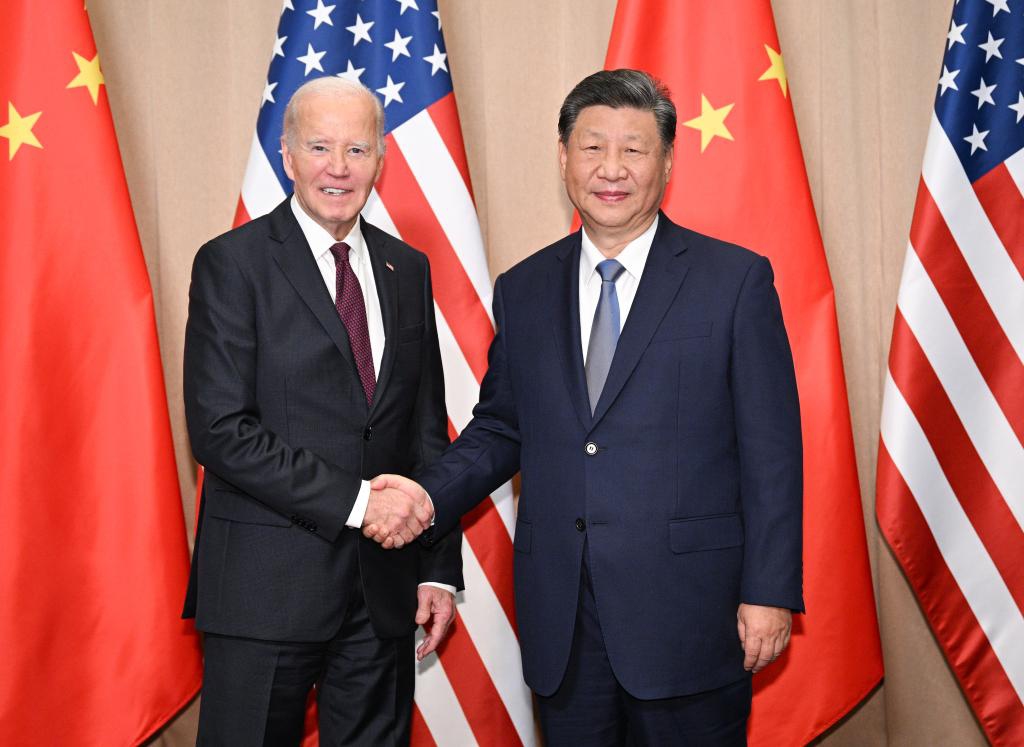
Yet, the forum’s effectiveness hinges on whether its members can agree on solutions. When the U.S. And China clash—whether over trade, technology, or geopolitical influence—the G20 risks paralysis. The 2024 Lima meeting between Presidents Xi Jinping and Joe Biden offered a glimpse of how this dynamic plays out. While the two leaders agreed to restart more than 20 communication mechanisms[2], their public statements revealed deep divisions over strategic perception and economic competition.
“The Thucydides’s Trap is not a historical inevitability. A new Cold War should not be fought and cannot be won.”
Xi’s remarks underscored a reality: the U.S. And China are locked in a rivalry where neither can afford to exclude the other from global economic governance. The G20’s structure—with its rotating presidency and inclusive membership—ensures that even when bilateral relations deteriorate, the forum remains a platform for dialogue.
The U.S.-China Dilemma: Cooperation or Confrontation?
The 2026 G20 summit in Miami will be the first under a Trump administration, raising questions about whether the U.S. Will pursue a more confrontational approach toward China. Historically, the G20 has thrived when its members treat each other as equals, but Trump’s rhetoric—including calls to “unleash American innovation” and “strengthen partnerships”—could signal a shift toward a more assertive U.S. Stance.

China, meanwhile, has long framed its engagement with the U.S. In terms of mutual respect and non-interference. Xi’s 2024 remarks in Lima highlighted three key principles for stabilizing relations:
- Avoiding the Thucydides Trap: The idea that rising powers and established ones are destined for conflict.
- Credibility over rhetoric: China has emphasized that trust is built on consistent action, not empty promises.
- Equality in development: Neither nation should seek to reshape the other.
Yet, the challenge for the G20 is that these principles are easier to state than to implement. The forum’s history shows that when U.S.-China tensions spike—such as during trade wars or tech bans—the G20’s ability to produce meaningful agreements weakens. For example, the 2019 Osaka summit saw limited progress on digital taxation and climate finance due to bilateral disputes.
This year, the agenda includes AI governance, supply chain resilience, and debt sustainability—all areas where U.S. And Chinese interests collide. If the two nations cannot find common ground, the G20 risks becoming little more than a symbolic gathering, unable to deliver on its promise of global economic leadership.
What’s at Stake: The Future of Global Governance
The G20’s relevance depends on whether it can adapt to a world where economic interdependence is at odds with geopolitical rivalry. With the U.S. Pushing for policies that favor domestic industries and China expanding its Belt and Road Initiative, the forum faces a critical test: Can it remain a neutral space for dialogue, or will it become another battleground for great-power competition?
One potential bright spot is the African Union’s inclusion in the G20. As the continent’s economic influence grows, its voice in global forums like the G20 could help mediate between the U.S. And China, offering a third perspective on issues like infrastructure financing and climate adaptation.
However, the biggest wildcard remains the U.S. Presidency. Trump’s approach to the G20—whether he will prioritize bilateral deals over multilateral agreements—could reshape the forum’s dynamics. If the U.S. Pushes for exclusionary policies (such as targeting Chinese tech firms or restricting investment), China may respond by seeking alternative alliances, further fragmenting the G20’s unity.
Key Takeaways: What the 2026 G20 Summit Must Achieve
- The U.S. And China cannot dominate the G20. The forum’s consensus-based structure ensures that no single nation can impose its will.
- Exclusion is self-defeating. Both economies are too interconnected to isolate each other without severe global consequences.
- Climate and trade remain the biggest flashpoints. Without cooperation on these issues, the G20’s credibility will erode.
- The African Union’s role is growing. Its inclusion could provide a balancing force in U.S.-China disputes.
- The 2026 Miami summit will test Trump’s multilateral approach. If the U.S. Prioritizes bilateral deals, the G20’s effectiveness could decline.
What Happens Next: Watch for These Developments
The next critical checkpoint will be the G20 Leaders’ Summit in Miami, September 2026. Key watch items include:
- Whether the U.S. And China can reach a compromise on AI regulations, given their competing visions for global tech governance.
- Progress on debt relief for developing nations, where the G20 has historically struggled to align.
- Any shifts in the African Union’s engagement, particularly on climate financing and infrastructure.

The G20’s ability to navigate U.S.-China tensions will determine whether it remains the world’s most effective economic governance body—or if its influence fades into irrelevance. For now, the balance holds, but the coming months will reveal whether cooperation or confrontation will define the next chapter.
What do you think? Will the G20 survive as a neutral forum, or is its future tied to the fate of U.S.-China relations? Share your thoughts in the comments below.
Worth a look