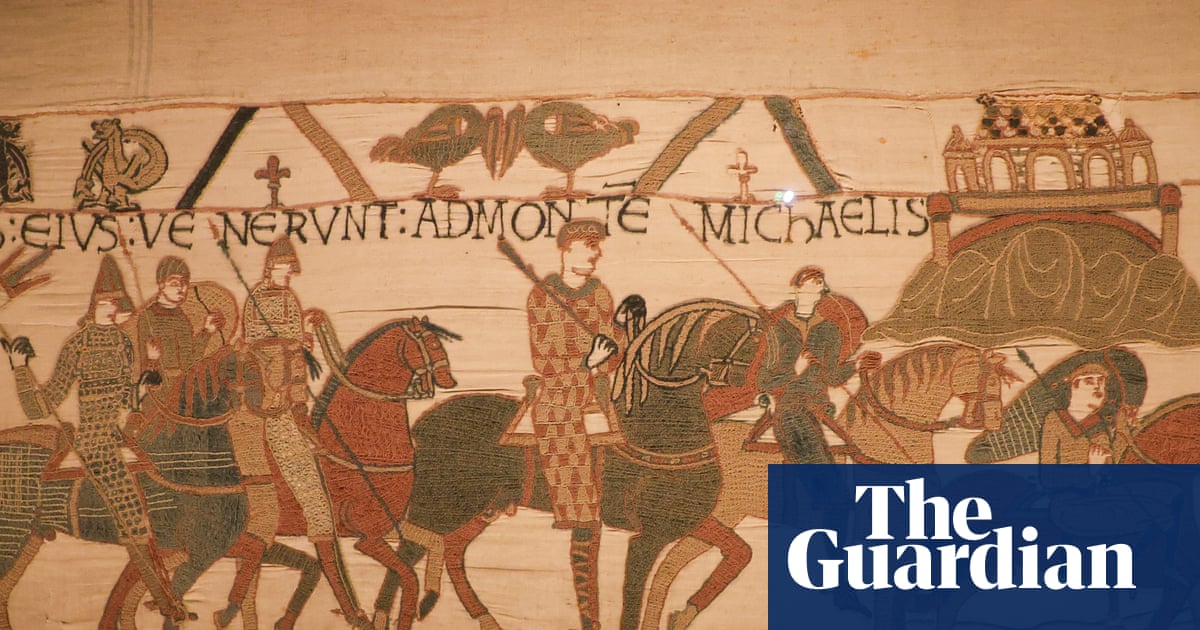
The Bayeux Tapestry stands as a record of the 1066 Norman Conquest, yet it represents a portion of the medieval artistry present in Britain. While the tapestry is associated with Odo of Bayeux, the craftsmanship behind the work—and the broader tradition of medieval visual culture in the British Isles—is rooted in Anglo-Saxon artistic practices that predated the arrival of the Normans.
Recent discussions among historians and enthusiasts highlight that the artistic contributions of the Anglo-Saxon period, particularly in textiles, were highly regarded across Europe. The term Opus Anglicanum, or “English work,” specifically referred to the quality of English embroidery that earned a reputation for excellence long before the Norman victory at the Battle of Hastings.
The Origins of Opus Anglicanum
English needlework was a prized commodity. Opus Anglicanum was often called English work. The creators of the Bayeux tapestry were probably forced by Odo of Bayeux to create it by the sort of compulsion that often characterised Norman rule in England. These women were almost certainly Anglo-Saxon, and their husbands may well have died at Hastings.
.JPG "The Origins of Opus Anglicanum")
The Bayeux Tapestry itself is believed by some to have been embroidered by Kent women. Given the established infrastructure of professional embroidery, historians often posit that the commission was fulfilled by local craftspeople. The theory that these artisans were based in Kent is cited in academic discourse, noting that the region was a center for production during the 11th century.
Beyond the Tapestry: Medieval Architectural Legacies
While textiles represent a history, the impact of the Norman period is visibly preserved in stone. Following the 1066 transition of power, the Norman administration initiated a program of building, which altered the British landscape. The introduction of the Romanesque style—characterized by rounded arches, massive masonry, and geometric ornamentation—replaced many existing Anglo-Saxon structures.

Prominent examples of this architectural shift include the construction of major cathedrals and fortifications. These stone structures remain a way for the public to engage with medieval heritage.
The Cultural Synthesis of the 11th Century
The transition from the Anglo-Saxon period to the Norman era was not a total erasure of local culture but rather a complex synthesis. While the Norman ruling class imposed new political systems and architectural standards, they simultaneously relied upon the existing labor force and artistic traditions of the Anglo-Saxon population. The Bayeux Tapestry serves as a case study for this interaction; it is a Norman story told with the distinct artistic vocabulary of English needleworkers.
For those interested in exploring this era, the physical evidence is distributed across the country. Beyond the tapestry, the British Library holds a collection of illuminated manuscripts that document the artistic continuity between the pre- and post-Conquest periods. These manuscripts remain essential for understanding the transition in visual language that defined the 11th century.
Connecting with Medieval Heritage
Public access to these historical sites has expanded, with many institutions offering digital archives of medieval art. The British Library’s online collection provides access to manuscripts, allowing researchers and the public to examine the details of medieval illumination that were previously only available to those visiting in person. Similarly, the National Archives provides context for the administrative records that governed medieval life.

As academic research continues to reassess the role of Anglo-Saxon artisans in the creation of Norman-commissioned works, the narrative of medieval art in Britain is becoming increasingly nuanced. The focus has shifted from viewing the Norman Conquest as a point of cultural origin to recognizing it as a period of intense artistic exchange.
The study of this period remains an active area of historical inquiry. Whether through the study of surviving textiles or the preservation of Romanesque cathedrals, the legacy of the 11th century continues to shape the understanding of British heritage. Readers are invited to share their thoughts on the interplay between Norman administration and local Anglo-Saxon craftsmanship in the comments section below.