
Hundreds of workers are set to down tools at BHP’s Port Hedland export terminal today, marking the first protected industrial action in the company’s iron ore division in more than 25 years. The strike, involving approximately 200 members of a coalition of unions, is expected to last eight hours and could cost the mining giant up to $50 million.
Union Demands and the Shift in Industrial Relations
The strike involves the Combined Ports Unions, which includes members from the Electrical Trades Union (ETU), the Australian Manufacturing Workers’ Union (AMWU), and the Western Mine Workers Alliance. The workers are protesting against BHP’s long-standing model of “direct engagement,” a system implemented after the company de-unionised in 1999. Under this model, BHP negotiates individual contracts with staff, which unions argue leads to pay discrepancies where workers performing the same tasks receive different salaries. According to the unions, the current industrial action is intended to secure an enterprise agreement that includes: * Guarantees of equal pay for equal work. * Transparent career progression processes based on skills and qualifications. * Working conditions formally set out within an enterprise agreement. Adam Woodage of the ETU Western Australia stated that members are seeking an “equal playing field” and are frustrated by existing pay disparities. He emphasized that the planned action would be “friendly” and “inviting,” contrasting it with the last major strike in the iron ore division in 2000, which involved violent clashes with police and multiple arrests.
Economic Stakes for BHP
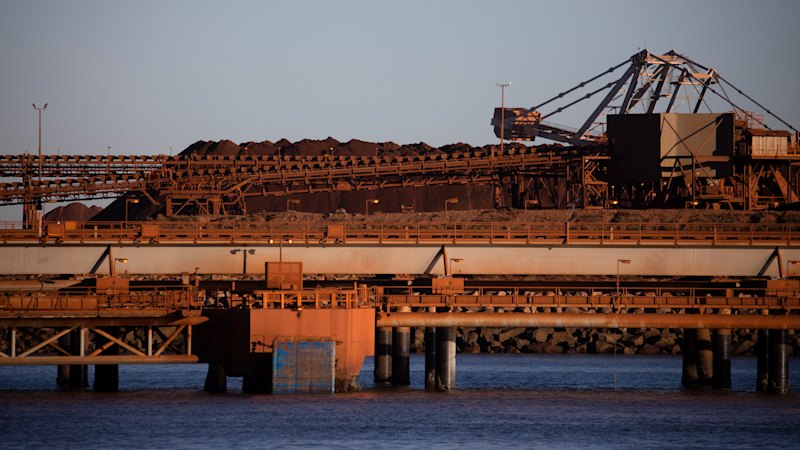
Port Hedland serves as the world’s largest bulk export port, and BHP’s operations there are a critical component of its business. Last year, the company shipped 290 million tonnes of iron ore through the site. While estimates vary regarding the precise financial impact of the work stoppage, some reports suggest a full shutdown could cost the company up to $120 million per day, while the eight-hour strike is estimated to cost between $40 million and $50 million. BHP has expressed disappointment that industrial action is proceeding but stated that it has contingency plans in place to maintain operations at the terminal. The company currently employs about 450 staff at the site, with 200 participating in the walk-off.
Broader Political and Industry Context
The strike has drawn national attention, with union members in Queensland and the Northern Territory planning to rally outside BHP’s Brisbane headquarters in solidarity with the Port Hedland workers. Dr. Alexis Vassiley, a lecturer in work and employment relations at Edith Cowan University, noted that the action could provide leverage for broader negotiations. He suggested that if the Port Hedland workers succeed, employees at other mining sites and companies may consider similar collective actions. The political response in Western Australia has been divided. Premier Roger Cook expressed disappointment that mediation efforts by the Fair Work Commission failed to produce an agreement, though he noted that workers deserve fair compensation. Conversely, WA Opposition Leader Basil Zempilas voiced strong concern, describing the strike as an “emboldening” of the union movement. Zempilas expressed worry that if doing business in Western Australia becomes too difficult due to such disputes, companies might eventually look to relocate operations elsewhere. As the strike commences, the outcome of this dispute is being closely watched as a potential turning point for labor relations in the Pilbara region, which has operated primarily under non-union terms for over two decades.
Find more reporting in our Business section.
Related reading