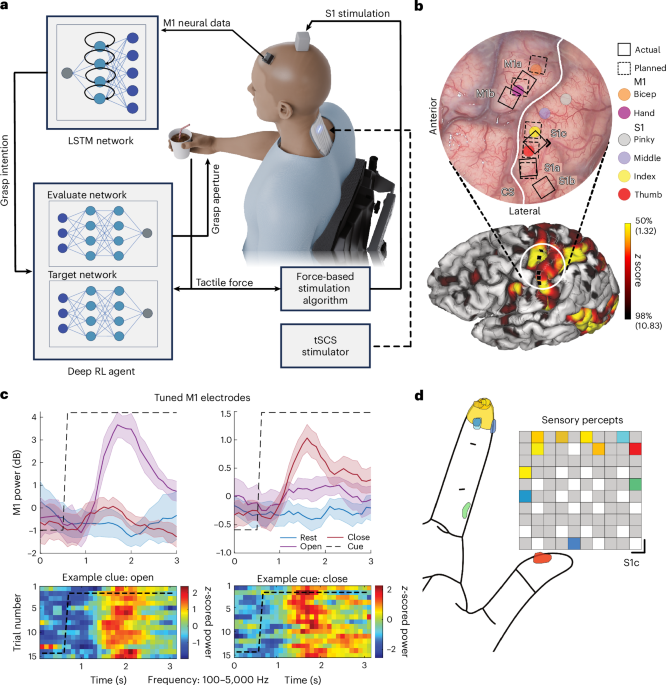
A new bidirectional sensorimotor neuroprosthetic system has demonstrated the ability to restore both movement and sensation. By decoding brain signals associated with the intent to move while simultaneously providing patterned neuromodulation to the spinal cord and cortex, the device enables long-term recovery of hand motor and sensory function, according to research published in Nature Medicine on 16 July 2026. This clinical development represents a significant step in neurotechnology, as the functional improvements persisted even when the system was powered off.
This latest approach moves beyond simple motor control, aiming to bridge the gap between intent and physical execution through a closed-loop system.
Decoding Intention and Providing Sensory Feedback
The system functions by bridging the communication gap between the brain and the peripheral nervous system. The neuroprosthetic system records these neural patterns using implanted arrays and decodes them in real-time to translate intent into action.
The “bidirectional” aspect of the technology is critical. While the system decodes motor commands, it also delivers patterned neuromodulation back to the spinal cord and sensory cortex.
Long-Term Recovery and Off-Device Function
One of the most compelling findings in the recent data is the persistence of function when the device is inactive.
Clinical Implications and Future Research
What are your thoughts on the integration of sensory feedback in neuroprosthetics? Join the conversation in the comments section below to share your perspective on the future of medical technology.
Related reading