
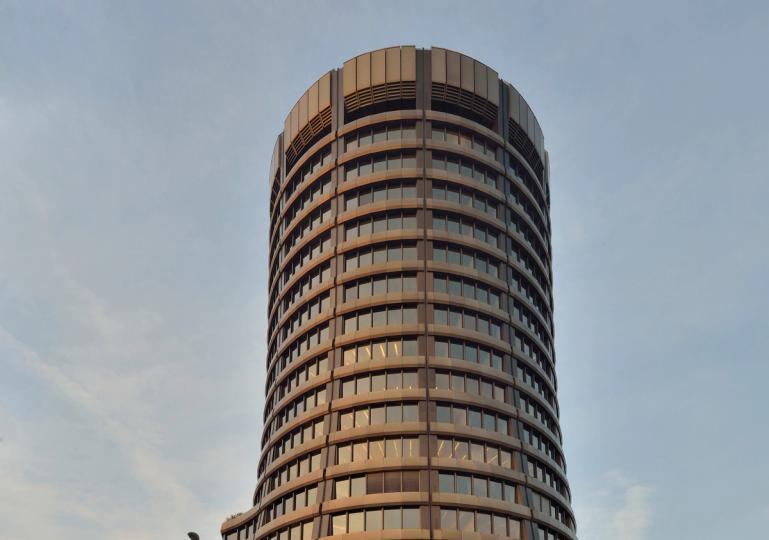
The Bank for International Settlements (BIS) has concluded that stablecoins—despite their name—function more like exchange-traded funds (ETFs) than traditional money, according to its latest report. This reclassification challenges the widely held assumption that stablecoins are stable, reliable digital currencies pegged to fiat assets like the US dollar, and signals a potential shift in how regulators and financial institutions view these assets.
The BIS, often described as the “central bank for central banks,” published its findings in a working paper released in April 2024. The report argues that stablecoins exhibit characteristics of investment instruments rather than a medium of exchange, a distinction that could have significant implications for financial stability, consumer protection, and regulatory oversight. “Stablecoins are not money in the traditional sense,” the report states. “Their behavior aligns more closely with that of ETFs, particularly in how they are issued, traded, and redeemed.”
This assessment comes as stablecoins—led by giants like Tether (USDT) and USD Coin (USDC)—have grown to a combined market capitalization exceeding $130 billion, according to CoinGecko. Yet their stability has been repeatedly questioned, with episodes like the 2022 Terra/LUNA collapse and the 2023 Circle-USDC reserve review exposing vulnerabilities. The BIS’s stance suggests that stablecoins may need to be treated under securities law rather than as payment instruments, a move that could reshape their operational frameworks.
Why Does the BIS Compare Stablecoins to ETFs?
The BIS’s comparison hinges on three key factors: issuance mechanisms, trading dynamics, and redemption processes. Unlike traditional money, which is issued by central banks and backed by sovereign guarantees, stablecoins are typically issued by private entities and rely on reserve assets—often a mix of cash, short-term debt, and other financial instruments. This structure mirrors how ETFs are created and managed by authorized participants (APs) rather than by a central authority.
Additionally, stablecoins are frequently traded on secondary markets, where their prices diverge from their pegged value—a hallmark of ETF-like behavior. The BIS report notes that stablecoin arbitrage, where traders exploit price discrepancies, resembles the creation and redemption mechanisms of ETFs. “The lack of a fixed supply and the ability to trade at a premium or discount to the pegged value are red flags,” the report explains.
Regulators worldwide have already begun to scrutinize stablecoins under securities frameworks. In the U.S., the Securities and Exchange Commission (SEC) has taken aggressive steps, including lawsuits against major stablecoin issuers like Paxos and Coinbase for allegedly violating securities laws. Meanwhile, the European Union’s Markets in Crypto-Assets (MiCA) regulation, set to take effect in 2024, imposes stricter rules on stablecoin issuers, treating them as electronic money rather than securities. The BIS’s latest analysis could accelerate this trend globally.
What This Means for Investors and Consumers
For investors, the BIS’s classification could introduce greater transparency—but also higher risks. If stablecoins are reclassified as securities, they may face stricter disclosure requirements, including regular audits of reserves and clearer information on how redemptions are handled. This could reduce the opacity that has plagued stablecoins in the past, but it may also limit their use as a seamless payment tool.
Consumers, however, may face fewer protections. Unlike traditional bank deposits, which are insured up to legal limits, stablecoins are not subject to the same safeguards. The BIS report highlights that stablecoin holders lack recourse if an issuer fails to maintain its peg or if reserves are mismanaged. “The absence of a lender of last resort for stablecoins poses systemic risks,” the report warns.
For businesses relying on stablecoins—such as cross-border payment processors, DeFi platforms, and crypto exchanges—the implications are mixed. On one hand, clearer regulatory frameworks could reduce legal uncertainty. On the other, stricter rules could increase compliance costs and limit innovation. “The industry will need to adapt quickly,” said Nic Carter, partner at Castle Island Ventures, in a recent interview. “If stablecoins are treated as securities, issuers will have to rethink their business models entirely.”
How Regulators Are Responding
The BIS’s findings align with growing regulatory skepticism toward stablecoins. In the U.S., the SEC has repeatedly signaled that stablecoins may fall under its jurisdiction, particularly if they are deemed investment contracts under the Howey Test. The agency’s lawsuit against Paxos, which accused the company of selling unregistered securities, set a precedent that could be applied more broadly.
Internationally, central banks are also taking action. The Bank of England and the European Central Bank (ECB) have both issued warnings about stablecoins, emphasizing their potential to disrupt financial stability. The ECB’s 2023 report on stablecoins concluded that they pose “significant risks to monetary sovereignty and financial stability,” urging stricter oversight.
Meanwhile, some stablecoin issuers are proactively adjusting their strategies. Tether, the world’s largest stablecoin by market cap, has faced repeated scrutiny over its reserves and has begun publishing more detailed transparency reports. Circle, the issuer of USDC, has also taken steps to improve auditing and compliance, though its recent reserve review in 2023 revealed a shortfall in high-quality assets.
What Happens Next?
The BIS’s report is likely to influence global regulatory discussions in the coming months. Key developments to watch include:
- U.S. SEC actions: The agency is expected to issue further guidance on stablecoin classification, potentially leading to enforcement actions against major issuers.
- EU MiCA implementation: The European Union’s crypto regulations will take full effect in late 2024, imposing stricter rules on stablecoin issuers and traders.
- Central bank digital currencies (CBDCs): As central banks accelerate CBDC pilots, stablecoins may face increased competition, particularly in cross-border payments.
- Industry self-regulation: Stablecoin associations, such as the Stablecoin Council, may push for voluntary standards to preempt stricter regulations.
The next major checkpoint will be the SEC’s upcoming enforcement priorities for 2025, where stablecoins are expected to be a focal point. Additionally, the BIS’s annual report, due in June 2025, may provide further insights into how central banks plan to address stablecoin risks.
Key Takeaways
- The BIS’s latest report reclassifies stablecoins as resembling ETFs more than traditional money, raising questions about their regulatory treatment.
- This shift could lead to stricter oversight, including securities regulations and enhanced transparency requirements for issuers.
- Investors may gain better protections but could face higher risks, while consumers may see fewer safeguards against issuer failures.
- Regulators in the U.S., EU, and beyond are already taking steps to align stablecoin frameworks with the BIS’s findings.
- The next 12 months will be critical, with major regulatory decisions expected from the SEC, ECB, and other global financial authorities.
As the debate over stablecoins intensifies, one thing is clear: the days of treating them as a straightforward alternative to cash are over. The BIS’s analysis marks a turning point—one that could redefine not just stablecoins, but the entire landscape of digital finance.
What do you think about the BIS’s reclassification? Will stablecoins survive under stricter regulations, or is this the beginning of the end for their current form? Share your thoughts in the comments below.