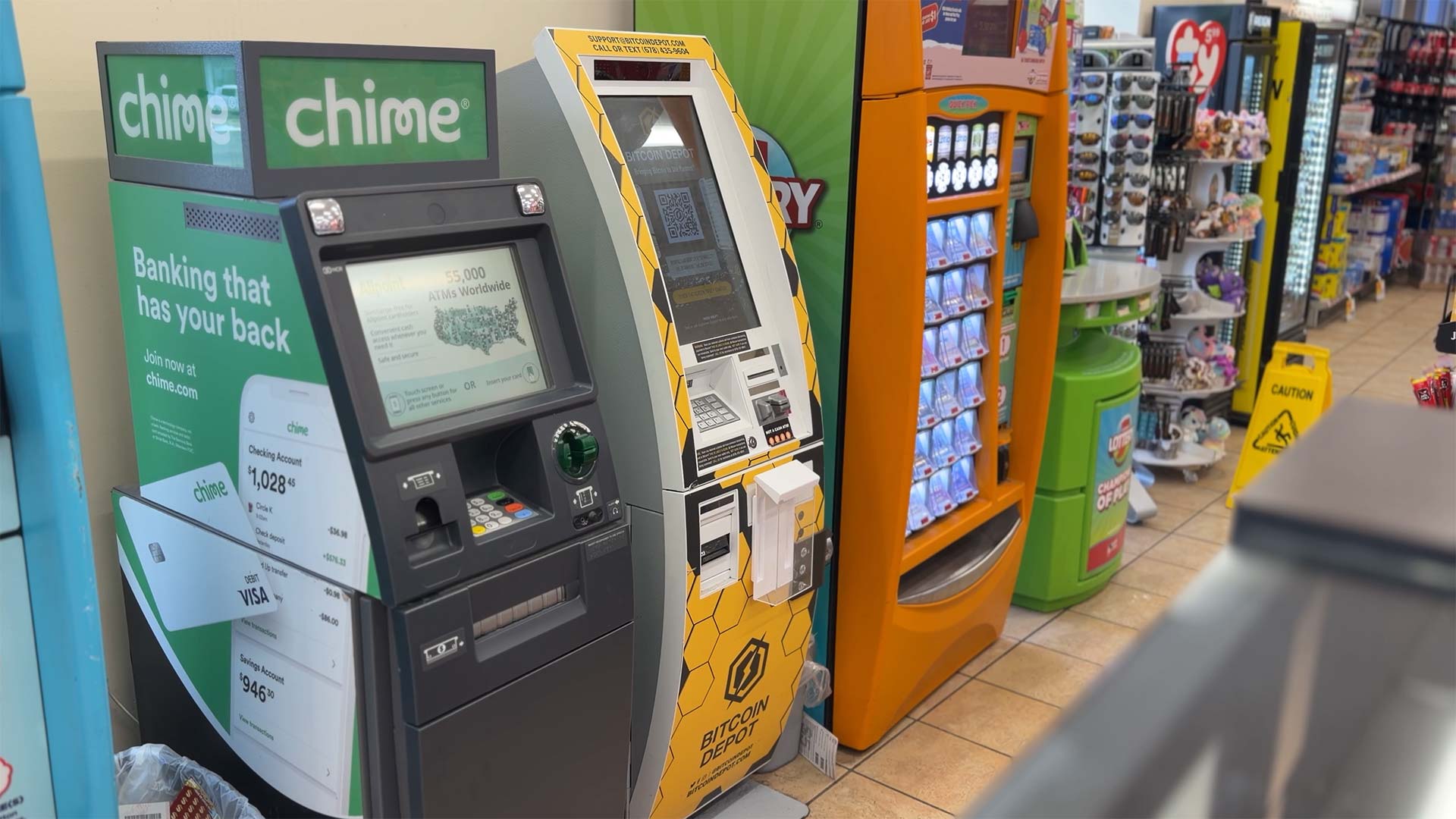
Massachusetts Attorney General Sues Bitcoin Depot Over Alleged Facilitation of Crypto Scams
Boston, Massachusetts – The Massachusetts Attorney General’s office has filed a civil lawsuit against Bitcoin Depot, one of the largest operators of cryptocurrency ATMs in the United States, alleging the company knowingly facilitated crypto scams that defrauded Massachusetts residents of over $10 million. The suit, filed on February 3, 2026, claims Bitcoin Depot employed misleading sales tactics and failed to adequately protect consumers from fraudulent transactions. This action marks a significant escalation in scrutiny surrounding the rapidly growing, and increasingly controversial, crypto ATM industry, which has turn into a favored tool for scammers targeting vulnerable individuals.
Attorney General Andrea Joy Campbell stated, “We’re alleging that instead of handling consumers’ money in excellent faith, Bitcoin Depot used misleading sales tactics to overcharge its customers and knowingly facilitated crypto scams that robbed Massachusetts consumers of more than $10 million dollars.” The lawsuit alleges that the company was aware of the high rate of scam-related activity occurring through its kiosks but continued to operate in a manner that enabled the fraud to flourish. The case highlights a growing concern among law enforcement officials that crypto ATMs provide a convenient and largely unregulated avenue for criminals to launder money and exploit unsuspecting victims.
The rise of crypto ATMs has coincided with a surge in cryptocurrency-related fraud. In 2024, the Federal Bureau of Investigation (FBI) received nearly 11,000 complaints related to crypto ATM fraud, a staggering 99% increase from the previous year. These complaints represented approximately $247 million in reported losses. The trend continued into 2025, with preliminary data indicating around $333 million lost to similar scams between January and November, according to the FBI. International Consortium of Investigative Journalists reported on the increasing scrutiny of Bitcoin Depot’s business practices.
The Growing Problem of Crypto ATM Fraud
Crypto ATMs, which allow users to exchange cash for cryptocurrencies like Bitcoin without needing a traditional bank account or exchange, have proliferated across the United States, often located in convenience stores, gas stations, and liquor stores. While proponents argue they offer convenient access to digital assets, law enforcement agencies contend they have become a magnet for fraudsters. Scammers frequently target vulnerable individuals, particularly the elderly, through schemes like romance scams, imposter scams, and investment fraud, often directing victims to use crypto ATMs to send funds.
The ease with which cash can be converted to cryptocurrency, and the relative anonymity offered by digital assets, makes it difficult for law enforcement to track and recover stolen funds. Once the money is transferred, it can be quickly moved across borders, making it nearly impossible to retrieve. This has prompted calls for stricter regulation of the crypto ATM industry, including mandatory customer identification and transaction limits. Bitcoin Depot’s recent announcement requiring identity verification for every transaction, made on Tuesday, February 25, 2026, is a direct response to mounting pressure from regulators and law enforcement.
Allegations Against Bitcoin Depot: Internal Warnings Ignored
The Massachusetts lawsuit alleges that Bitcoin Depot was aware of the high volume of scam-related transactions occurring through its kiosks. According to the complaint, an internal analysis conducted by the company’s due diligence team in 2021 revealed that approximately 90% of customers they interacted with were likely victims of scams. One employee reportedly warned a top Bitcoin Depot executive that the kiosks were “facilitating money laundering at an ‘extreme volume.’” Despite these internal warnings, the lawsuit claims Bitcoin Depot subsequently made changes to its compliance measures that “facilitated more fraud.”
Further, the complaint details instances of suspicious transactions that should have raised red flags, such as customers using multiple kiosks on the same day and providing fictitious names like “John Wick” and “The Chosen One.” The company also allegedly allowed customers to send funds to foreign cryptocurrency exchanges that do not accept U.S. Customers, raising concerns about money laundering and illicit financial activity. Between March and September 2023, the company’s own internal metrics reportedly showed that between 13% and 16% of all money processed through its machines was linked to scams.
Circle K’s Role in Facilitating Fraud
An investigation by the International Consortium of Investigative Journalists (ICIJ) and CNN, published in 2025, revealed a concerning partnership between Bitcoin Depot and Circle K convenience stores. The investigation found that Bitcoin Depot machines installed in hundreds of Circle K locations facilitated at least $1.5 million in scam transactions. Circle K reportedly received millions of dollars in rental fees from the partnership, while Bitcoin Depot profited from a commission of between 15% and 50% on each transaction. The investigation also alleged that Circle K management was aware of the fraudulent activity but continued to renew its contract with Bitcoin Depot.
Other States Take Action
Massachusetts is not the only state taking action against Bitcoin Depot. In December 2025, Missouri Attorney General Catherine Hanaway sent letters to Bitcoin Depot and four of its competitors, demanding they provide evidence related to potential violations of state consumer protection laws. Hanaway stated the investigations were prompted by “devastating fresh scams involving the use of Bitcoin ATMs to prey on Missourians.” Similarly, Iowa’s Attorney General filed a lawsuit against Bitcoin Depot in 2025, with an analysis concluding that over 50% of the company’s transactions in the state between October 2021 and July 2024 appeared to involve scams.
The District of Columbia’s Attorney General has also pursued legal action against crypto ATM operators, reflecting a growing national trend towards increased regulation and enforcement. These legal challenges underscore the urgent need for greater oversight of the crypto ATM industry to protect consumers from fraud and illicit financial activity. The increasing number of lawsuits and investigations suggests a broader crackdown on companies that facilitate cryptocurrency-related scams.
Bitcoin Depot’s Response
In a statement provided to the ICIJ, Bitcoin Depot strongly disagreed with the characterization that it facilitates scams or misleads users. The company asserted that it has “built our business around compliance and consumer protection,” and actively works with law enforcement to address criminal activity on its machines. The company also highlighted its recent implementation of mandatory identity verification for all transactions as a demonstration of its commitment to protecting customers. However, critics argue that these measures are reactive and insufficient to address the systemic problems that have allowed fraud to flourish.
What’s Next?
The Massachusetts lawsuit is still in its early stages, and a court date has not yet been set. Further legal proceedings are expected to reveal more details about Bitcoin Depot’s internal practices and its knowledge of the fraudulent activity occurring through its kiosks. The outcome of this case, along with similar lawsuits in other states, could have significant implications for the future of the crypto ATM industry and the regulation of cryptocurrency transactions. Missouri Attorney General Catherine Hanaway is expected to announce further developments in her state’s investigation in March 2026.
As the legal battles unfold, consumers are urged to exercise extreme caution when using crypto ATMs and to be aware of the risks of cryptocurrency-related scams. If you believe you have been a victim of a crypto ATM scam, Try to immediately report it to your local law enforcement agency and the Federal Trade Commission (FTC).
Do you have information about crypto ATM scams? Share your experiences and insights in the comments below. Please also share this article with your network to raise awareness about this growing threat.
Related reading