
Cryptocurrency Market Shows Fundamental Strength as Bitcoin Nears $80,000
San Francisco — The cryptocurrency market is sending its strongest signals yet of a structural recovery, with Bitcoin surging toward $80,000 and institutional investors adopting new strategies to accumulate digital assets. Analysts at Bernstein Research have identified what they describe as “improved and fundamentally strengthened” market dynamics, driven by a convergence of corporate treasury models and the growing influence of spot Bitcoin exchange-traded funds (ETFs).
This shift comes as MicroStrategy—now operating under its Nasdaq-listed subsidiary, Stratety (NASDAQ: MSTR)—has reclaimed its position as the world’s largest single corporate holder of Bitcoin, surpassing BlackRock’s iShares Bitcoin Trust (IBIT) for the first time in nearly two years. The move underscores a broader trend: institutions are no longer relying solely on ETFs as a proxy for Bitcoin exposure but are increasingly holding the asset directly on-chain.
Bitcoin’s price has climbed steadily since finding a clear bottom near $60,000 earlier this year, according to data from CoinDesk. As of Monday, April 27, 2026, the cryptocurrency was trading at approximately $73,400, up more than 20% from its mid-April lows and approaching its all-time high of $80,000 set in late 2025. The rally has been fueled by a combination of macroeconomic tailwinds, including expectations of Federal Reserve rate cuts, and a renewed appetite for risk assets among institutional players.
Stratety’s Aggressive Accumulation Strategy
Stratety, the enterprise software firm turned Bitcoin accumulation vehicle, has once again become the largest single holder of Bitcoin among publicly traded entities. According to CoinDesk reporting on April 21, 2026, the company purchased an additional 34,164 Bitcoin last week, bringing its total holdings to 815,061 Bitcoin—approximately 4.1% of the total circulating supply. This marks the third-largest weekly purchase in Stratety’s history and surpasses BlackRock’s IBIT, which holds 802,824 Bitcoin as of the same date.
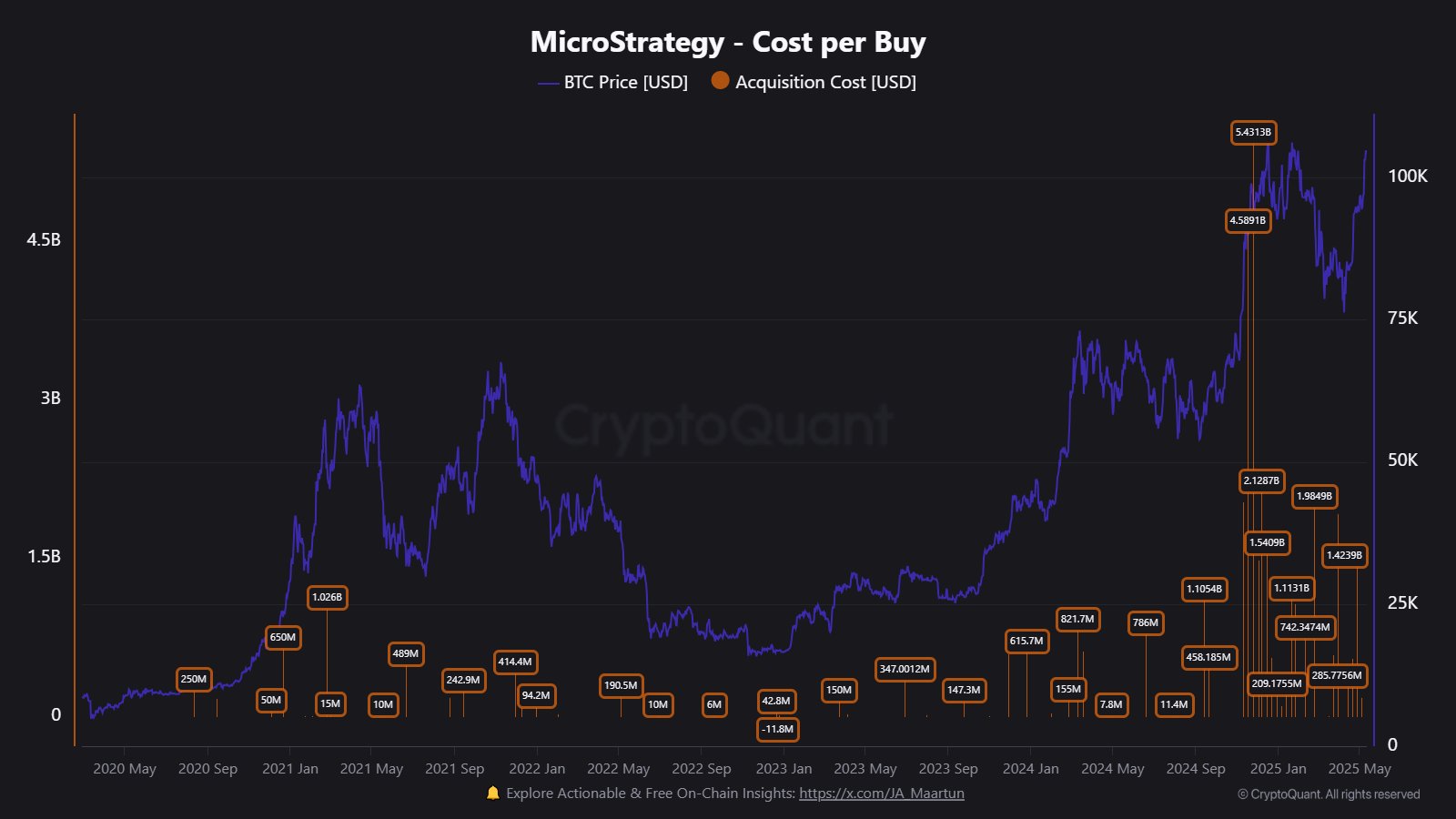
Stratety’s strategy differs fundamentally from that of Bitcoin ETFs. While ETFs like IBIT offer investors exposure to Bitcoin’s price movements without direct ownership, Stratety employs a leveraged approach, using financial instruments such as convertible bonds, equity offerings, and perpetual preferred stock to fund its purchases. This model allows the company to amplify its Bitcoin holdings but also introduces additional risk, including dilution for existing shareholders and exposure to market volatility.
In its most recent move, Stratety raised $1 billion through the sale of senior convertible notes, which it used to acquire Bitcoin at an average price of $71,000 per coin, according to a filing with the U.S. Securities and Exchange Commission (SEC). The company has consistently doubled down on its Bitcoin treasury strategy, even during periods of market downturns, arguing that Bitcoin represents a superior store of value compared to traditional fiat currencies.
BlackRock’s Dual Strategy: ETFs and Direct On-Chain Holdings
While Stratety has reclaimed the top spot in corporate Bitcoin holdings, BlackRock—the world’s largest asset manager—continues to play a pivotal role in the institutional adoption of cryptocurrency. BlackRock’s iShares Bitcoin Trust (IBIT) remains the largest Bitcoin ETF by assets under management, with over $20 billion in inflows since its launch in early 2024. However, recent data suggests BlackRock is also diversifying its approach by accumulating Bitcoin directly.
On April 22, 2026, BlackRock withdrew 2,004 Bitcoin—worth approximately $144.8 million at the time—from Coinbase in just seven hours, according to on-chain analytics firm Glassnode. This move coincided with a $291.1 million net outflow from U.S. Spot Bitcoin ETFs, including a $229.2 million outflow from Fidelity’s FBTC. Analysts interpret this as a sign that institutions are shifting from ETF-based exposure to direct ownership, a trend that could have significant implications for Bitcoin’s liquidity and price stability.
“The simultaneous outflow from ETFs and direct accumulation by major players like BlackRock suggests a structural shift in how institutions are engaging with Bitcoin,” said Gautam Chhugani, senior analyst at Bernstein Research, in a client note published last week. “ETFs remain a critical on-ramp for traditional investors, but we’re now seeing a maturation of the market where large players are moving beyond indirect exposure to hold the asset directly.”
Why the Market’s Strength Is More Than Just Price
The recent rally in Bitcoin’s price is underpinned by several fundamental improvements in the cryptocurrency market, according to Bernstein’s analysis. These include:

- Increased Institutional Participation: The entry of traditional financial institutions into the Bitcoin market has brought greater liquidity and reduced volatility. ETFs have played a key role in this, with over $30 billion in assets under management across U.S. Spot Bitcoin ETFs as of April 2026.
- Improved Regulatory Clarity: The U.S. SEC’s approval of spot Bitcoin ETFs in 2024 marked a turning point for the industry, providing a regulated pathway for institutional investors to gain exposure to the asset. Since then, regulatory frameworks in Europe, Hong Kong, and other jurisdictions have further legitimized Bitcoin as an investable asset class.
- Macroeconomic Tailwinds: With inflation cooling and the Federal Reserve signaling potential rate cuts in late 2026, risk assets like Bitcoin have become more attractive to investors seeking higher returns. Bitcoin’s fixed supply of 21 million coins also positions it as a hedge against inflation, a narrative that has gained traction among corporate treasurers and sovereign wealth funds.
- Technological Advancements: The Bitcoin network has seen significant upgrades in recent years, including the adoption of the Taproot upgrade in 2021, which improved privacy and smart contract functionality. The Lightning Network—a second-layer solution for faster and cheaper transactions—has seen increased adoption, making Bitcoin more viable for everyday use.
Bernstein’s analysts also highlight the growing convergence between corporate treasury strategies and Bitcoin accumulation. Stratety’s model, which leverages financial engineering to acquire Bitcoin, is being closely watched by other publicly traded companies. While few have adopted such an aggressive approach, the success of Stratety’s strategy has sparked discussions about Bitcoin’s role in corporate balance sheets.
What’s Next for Bitcoin and Institutional Investors?
As Bitcoin approaches the $80,000 mark, the focus is shifting to whether the market can sustain its momentum. Several key developments are worth watching in the coming weeks:

- Federal Reserve Policy: The Fed’s next interest rate decision, expected in June 2026, could have a significant impact on Bitcoin’s price. A rate cut would likely boost risk assets, while a hawkish stance could trigger a pullback.
- ETF Flows: While ETFs have seen net outflows in recent weeks, analysts are closely monitoring whether this trend reverses. A return of institutional capital to ETFs could signal renewed confidence in the asset class.
- Corporate Adoption: Stratety’s success may encourage other companies to explore Bitcoin as a treasury reserve asset. Any announcements from major corporations about Bitcoin holdings could serve as a catalyst for further price appreciation.
- Regulatory Developments: The SEC’s ongoing review of Ether ETF applications could set the stage for broader crypto ETF approvals. A positive decision could attract additional institutional capital to the space.
For now, the market’s fundamentals appear stronger than ever. The combination of direct institutional accumulation, ETF inflows, and macroeconomic tailwinds has created a more resilient and mature Bitcoin ecosystem. While volatility remains a hallmark of the cryptocurrency market, the current trend suggests that Bitcoin is increasingly being viewed as a long-term store of value rather than a speculative asset.
Key Takeaways
- Stratety Overtakes BlackRock’s IBIT: Stratety (NASDAQ: MSTR) has reclaimed its position as the world’s largest single corporate holder of Bitcoin, with 815,061 Bitcoin as of April 2026, surpassing BlackRock’s iShares Bitcoin Trust (IBIT), which holds 802,824 Bitcoin.
- Institutions Shift to Direct Ownership: BlackRock and other major players are increasingly withdrawing Bitcoin from exchanges to hold directly on-chain, signaling a shift away from ETF-based exposure.
- Bitcoin Nears $80,000: After finding support near $60,000 earlier this year, Bitcoin has rallied to approximately $73,400, approaching its all-time high.
- Fundamental Strength: Bernstein Research highlights improved market dynamics, including increased institutional participation, regulatory clarity, and macroeconomic tailwinds, as key drivers of Bitcoin’s resilience.
- Stratety’s Leveraged Model: Unlike Bitcoin ETFs, Stratety uses financial engineering, such as convertible bonds and equity offerings, to fund its Bitcoin purchases, amplifying both potential gains and risks.
As the cryptocurrency market continues to evolve, one thing is clear: Bitcoin is no longer a fringe asset. With institutional adoption at an all-time high and market fundamentals stronger than ever, the stage is set for the next phase of growth. For investors and observers alike, the coming months will be critical in determining whether Bitcoin can break through its all-time high and establish a new price floor.
What do you think about the future of Bitcoin and institutional adoption? Share your thoughts in the comments below and join the conversation.