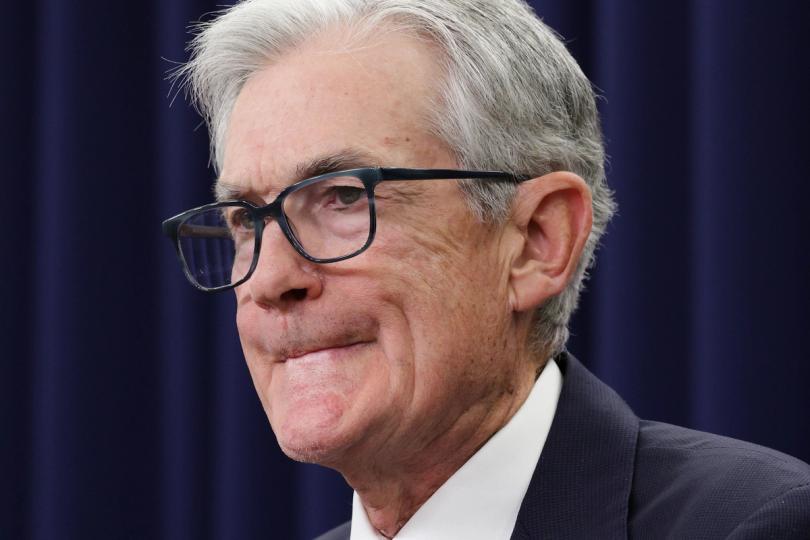
The cryptocurrency market experienced a pause in its recent rally on Tuesday, ahead of the Federal Reserve’s pivotal meeting on Wednesday. Bitcoin, after briefly surpassing $76,000, retreated to around $74,000 during U.S. Trading hours, still registering a slight gain over the past 24 hours. This fluctuation comes as investors brace for signals regarding the future of monetary policy, with particular attention focused on the Fed’s stance on potential interest rate cuts and its assessment of rising global economic pressures.
The broader market saw moderate gains in crypto-related stocks, with Circle, a stablecoin provider, and Bitdeer, a Bitcoin mining company, leading the way with increases of 5% and 12% respectively. Traditional markets also showed positive momentum, with the Nasdaq Composite closing up 0.5% and the S&P 500 rising by 0.25%. However, the prevailing sentiment remains cautious as traders await clarity from the Federal Reserve. The current environment underscores the delicate balance between the potential for economic growth and the persistent threat of inflation, particularly as geopolitical tensions continue to impact commodity prices.
The Federal Reserve’s Federal Open Market Committee (FOMC) meeting is widely expected to result in no change to the current interest rate range of 3.50%–3.75%. Reuters reports that the primary focus will be on Chairman Jerome Powell’s communication and the committee’s forward guidance. Rising oil prices, exacerbated by geopolitical instability – specifically, concerns surrounding the conflict in the Middle East – are adding complexity to the Fed’s decision-making process, potentially influencing inflation trajectories. The market is keenly awaiting insights into how the Fed views these developments and whether they will alter the anticipated path of monetary policy.
The Pivotal Question: Rate Cuts in 2026?
Analysts at Bitfinex suggest the critical question is whether the Fed will continue to signal potential rate cuts in 2026, or if it will shift towards a more hawkish stance, indicating a pause or even a reversal of monetary easing. A more restrictive outcome, they argue, could negatively impact risk assets and strengthen the U.S. Dollar. This assessment reflects a growing concern that the Fed may be forced to maintain higher interest rates for longer than previously anticipated to combat inflationary pressures. The potential for “stagflation” – a combination of slow economic growth and rising prices – is also a key consideration, as it could limit the Fed’s flexibility in responding to economic challenges.
Powell’s commentary on the recent surge in oil prices will be particularly scrutinized. If the Fed views this increase as a temporary shock, it could provide some reassurance to the markets. However, a more pessimistic assessment, suggesting a sustained rise in energy costs, could fuel fears of stagflation and prompt a more cautious approach to monetary policy. The price of Brent crude oil has been volatile in recent weeks, influenced by geopolitical events and supply concerns.