The global financial landscape is currently witnessing a stark divergence in momentum. While the primary U.S. Stock indices are soaring to unprecedented heights, the leading cryptocurrency is finding itself locked in a battle with a stubborn psychological ceiling. This current Bitcoin price action vs US stock market trend highlights a complex “risk-on” environment where traditional equities are outperforming digital assets in the short term.
As of mid-April 2026, the Nasdaq and the S&P 500 have both breached latest record peaks, driven by investor resilience and a willingness to overlook geopolitical instability. In contrast, Bitcoin has struggled to maintain a decisive breakout, repeatedly stalling as it attempts to clear the $75,000 threshold. This gap in performance suggests that while appetite for risk is high, the drivers for equity growth are currently more potent than those pushing Bitcoin toward new all-time highs.
The current market mood is characterized by a surprising degree of optimism. Despite ongoing conflict in the Middle East and tensions involving Iran, investors have leaned heavily into U.S. Tech and large-cap stocks. This appetite for risk has extended to crypto-related equities, which are rallying even as the underlying asset, Bitcoin, remains in a consolidation phase.
The Nasdaq and S&P 500 Reach New Heights
The U.S. Equity markets have demonstrated remarkable strength over the last two weeks. The Nasdaq has logged an impressive 11-day winning streak, gaining 1.6% in its most recent session to close at a new record high above 24,000 according to market data. This surge reflects a broader trend of investors looking past regional conflicts to focus on growth and corporate earnings.
Parallel to the Nasdaq’s run, the S&P 500—which tracks the 500 largest companies in the United States as defined by its index methodology—also touched a new record, closing above 7,000 after adding 0.8% in a single session per recent reports. The ability of these indices to set new peaks amidst a volatile geopolitical climate underscores a powerful bullish sentiment in the traditional financial sector.
Bitcoin’s Struggle at the $75,000 Ceiling
While equities are flying, Bitcoin is playing a game of catch-up. The cryptocurrency has turned more positive recently, but its trajectory remains capped. Though it has traded around $75,134 and saw a 24-hour increase of 1.45% based on CoinDesk data, it has repeatedly failed to sustain a breakout from its two-month range.

Market analysts and traders are closely watching the $72,000 level. This figure is viewed as a critical support line; if Bitcoin holds above $72,000, it may sustain a breakout. However, a dip below this level could risk pushing the asset back into a low-volatility consolidation range according to trader sentiment. The rally from February lows has been described as “meek,” especially as attempts to return to the $80,000 mark have been quickly rejected.
This current stagnation follows a sharp decline in February, when Bitcoin dropped to $60,000 as reported in market summaries. While the asset has recovered significantly since then, the momentum has not matched the vertical climb seen in the Nasdaq and S&P 500.
Crypto-Linked Equities Ride the Risk-On Wave
Interestingly, the “risk-on” mood that is propelling the S&P 500 is also benefiting companies with heavy exposure to the digital asset market. Even though Bitcoin itself is stalling, crypto-related stocks have rallied significantly. This suggests that investors are betting on the broader ecosystem’s growth or the eventual breakout of Bitcoin, regardless of the asset’s current price plateau.
Recent gains in the sector include:
- Robinhood (HOOD): Jumped more than 10% per market data.
- Coinbase (COIN): Rose 6.2% per market data.
- MicroStrategy (MSTR): Gained 4.4% per market data.
These movements indicate that equity investors are currently more aggressive in their crypto-adjacent bets than they are in purchasing the underlying Bitcoin asset itself.
A History of Divergence: Bitcoin vs. S&P 500
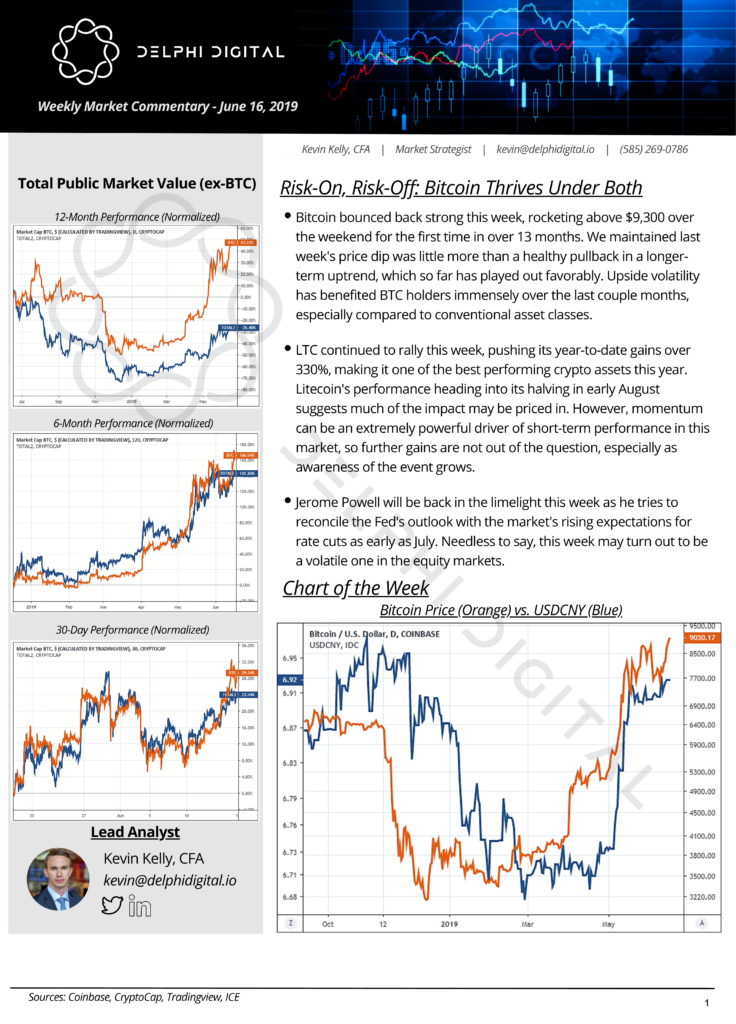
To understand the current Bitcoin price action vs US stock market dynamic, it is helpful to look at the historical volatility and performance of these two asset classes. Bitcoin has historically offered the potential for astronomical gains, but with significantly higher risk and volatility compared to the S&P 500.
| Year | Bitcoin Return | S&P 500 Return |
|---|---|---|
| 2021 | 72.70% | 39.44% |
| 2020 | 270.28% | 8.39% |
| 2019 | 97.82% | 34.01% |
| 2018 | -72.13% | 0.15% |
Source: Curvo Backtest Data
The data illustrates a recurring pattern: when Bitcoin grows, it often dwarfs the S&P 500, as seen in 2020. However, the crashes are equally severe, as evidenced by the 72.13% drop in 2018 while the S&P 500 remained virtually flat according to historical records. This volatility is reflected in 1-year volatility metrics, where Bitcoin has shown a volatility of 37.72% compared to the S&P 500’s 13.06% per justETF data.
Key Takeaways for Investors
- Equity Dominance: The Nasdaq and S&P 500 are currently in a strong bullish phase, reaching record highs despite geopolitical tensions.
- Bitcoin Resistance: Bitcoin is facing significant resistance at $75,000, needing to maintain $72,000 to avoid further consolidation.
- Proxy Gains: Crypto-linked stocks like Coinbase and Robinhood are benefiting from the general risk-on mood even while BTC stalls.
- Risk Profile: Historical data confirms that Bitcoin remains a high-volatility asset compared to the relative stability of the S&P 500.
As the market continues to navigate the complexities of the Iran war and broader economic policies, the next critical checkpoint for investors will be whether Bitcoin can decisively break and hold above the $75,000 mark or if the U.S. Indices will continue to widen the performance gap. We will continue to monitor daily closing figures and institutional flow into crypto-linked equities for further signals.
What are your thoughts on the current divergence between tech stocks and digital assets? Share your analysis in the comments below or share this article with your network.
Related reading