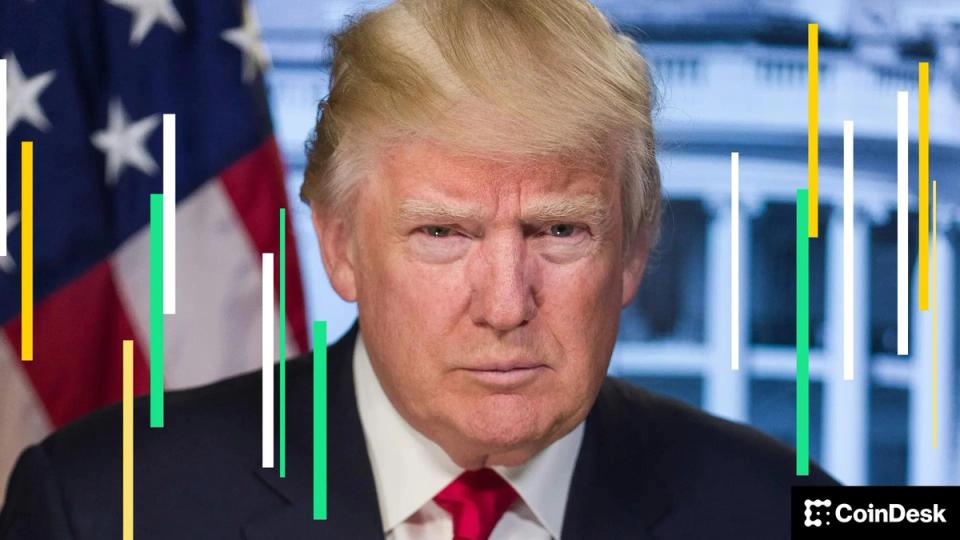
The cryptocurrency market continued its upward trajectory on Tuesday, with Bitcoin surpassing $71,000, gaining over 3% since midnight UTC, while Ether reclaimed its position above $2,000. This surge in crypto values coincided with gains in U.S. Stocks and precious metals following comments from former U.S. President Donald Trump suggesting a potential near-term conclude to the conflict in Iran. Conversely, the dollar and oil prices experienced a pullback from gains seen last week, signaling a complex interplay of geopolitical factors and investor sentiment.
The recent rally in Bitcoin and other cryptocurrencies highlights a growing perception of these assets as a potential safe haven, particularly amidst global uncertainty. This is a notable shift, as cryptocurrencies have historically been viewed as a risk-on asset class. The inverse correlation between the dollar and Bitcoin is also becoming increasingly apparent, with analysts suggesting further gains for Bitcoin if the dollar continues to weaken. The strength of the dollar is often measured by the U.S. Dollar Index (DXY), which briefly reached 99.7 on Monday before falling back to 98.5, according to market data.
Bitcoin Surges Amid Easing Iran Tensions and Dollar Weakness
The initial catalyst for the market’s positive movement appears to be a perceived de-escalation of tensions in the Middle East. Donald Trump’s statement that the war in Iran would be ending “very soon” sparked a wave of optimism across global markets. Yet, it’s crucial to note that the situation remains fluid and subject to change. The impact of geopolitical events on financial markets is often complex and unpredictable. The dollar’s decline, coupled with the easing of war fears, created a favorable environment for Bitcoin, which has benefited from its perceived independence from traditional financial systems.
The resilience demonstrated by the cryptocurrency market during the recent period of heightened geopolitical risk is a significant development. Since the beginning of the conflict in the Middle East, Bitcoin has outperformed both stocks and precious metals, potentially rebuilding its reputation as a store of value. This performance suggests that investors are increasingly viewing Bitcoin as a viable alternative to traditional assets during times of uncertainty. However, it’s important to remember that Bitcoin’s price remains volatile and subject to significant fluctuations.
Derivatives Market Positioning
Activity in the derivatives market provides further insight into current investor sentiment. According to data from Coinglass, open interest (OI) on futures contracts linked to HYPE, a token that has seen strong performance recently, increased by 14% to $1.41 billion. This increase suggests growing interest in the token, although the OI remains near recent lows. For both Bitcoin and Ether, open interest rose by over 5%, exceeding the gains in spot prices, indicating new capital inflows as markets advance.
Conversely, open interest in Tether Gold (XAUT) futures continued to decline, falling below 110,000 XAUT, suggesting investors are withdrawing funds from gold-backed assets. Perpetual funding rates for most tokens remain slightly positive, indicating a slight dominance of bullish bets, while tokens like ZEC and SUI show negative rates. Most major cryptocurrencies, excluding Bitcoin Cash (BCH), Monero (XMR), and Tether Gold (XAUT), have experienced aggressive bidding, as evidenced by their cumulative volume deltas adjusted for OI.
Volatility indices for Bitcoin and Ether, BVIV and EVIV, have fallen by over 4%, suggesting traders are dismissing uncertainty following the decline in oil prices below $100 per barrel. However, on Deribit, put options on Bitcoin and Ether remain more expensive than call options across all expirations, indicating that market makers are positioning for potential increased volatility should the price of Bitcoin rise above $75,000. Block flows highlight demand for Bitcoin straddles, a bet on volatility, as well as call spreads, a bullish strategy. For Ether, traders favored risk reversals.
Token Performance and Market Trends
The altcoin market has also shown significant dynamism, with Jupiter (JUP), a decentralized exchange (DEX) token based on Solana, experiencing double-digit gains since midnight UTC. ETHFI, a restaking token, also progressed, increasing by 6.5% to reach its highest level since January 29th. HYPE, the native token of the HyperLiquid derivatives platform, showed more modest gains, rising only 0.5% since midnight, despite a call from BitMEX founder Arthur Hayes for record highs of $150 in a blog post on Monday. Hayes’s analysis suggests a potential for significant upside, but HYPE currently trades at $34.8, with much of its 24-hour gain occurring earlier on Monday, before Trump’s comments on the war.
The CoinDesk Indices have also shown positive performance. The CoinDesk 5 (CD5) and CoinDesk 10 (CD10) indices, heavily weighted towards Bitcoin and Ether, both rose by 4.3% over the past 24 hours, while the DeFi Select (DFX) index followed closely with a 4% increase. The CoinDesk Memecoin Index (CDMEME) lagged behind, with a more modest gain of 2.6%.
The broader market trend remains cautiously optimistic, but a downtrend has been in place since early October, characterized by a series of lower highs and lower lows. To break this trend, Bitcoin needs to return to a price level near $98,000, establishing support levels along the way. This suggests that while the recent gains are encouraging, further upside is needed to confirm a sustained bullish reversal.
The Role of Geopolitics and Macroeconomic Factors
The recent surge in Bitcoin’s price is inextricably linked to the evolving geopolitical landscape and broader macroeconomic conditions. The potential for a de-escalation of conflict in the Middle East has alleviated some of the risk aversion that had been weighing on global markets. This, coupled with a weakening dollar, has created a favorable environment for Bitcoin, which is often seen as an alternative asset to traditional currencies. The dollar’s decline can be attributed to several factors, including expectations of future interest rate cuts by the Federal Reserve and concerns about the U.S. National debt.
The relationship between Bitcoin and the dollar is complex and multifaceted. As a decentralized currency, Bitcoin is not subject to the same monetary policies as traditional currencies. This can make it an attractive option for investors seeking to hedge against inflation or currency devaluation. However, Bitcoin’s price is also influenced by supply and demand dynamics, regulatory developments, and investor sentiment.
The ongoing conflict in Ukraine also continues to exert influence on global markets. While the immediate focus has shifted to the Middle East, the war in Ukraine remains a significant source of geopolitical risk. The economic sanctions imposed on Russia have disrupted global supply chains and contributed to inflationary pressures. These factors have, in turn, increased demand for safe-haven assets, including Bitcoin.
Looking ahead, several key events will likely shape the future trajectory of the cryptocurrency market. The Federal Reserve’s monetary policy decisions, the outcome of the U.S. Presidential election in November, and any further developments in the geopolitical arena will all play a crucial role. Investors will also be closely watching for regulatory developments, as governments around the world grapple with how to regulate the rapidly evolving cryptocurrency industry.
Key Takeaways
- Bitcoin surpassed $71,000, driven by easing geopolitical tensions and a weakening dollar.
- The cryptocurrency market is increasingly viewed as a potential safe haven asset.
- Derivatives market data suggests growing investor interest in Bitcoin and Ether.
- Altcoins, particularly those on the Solana blockchain, have also experienced significant gains.
- The long-term trend for Bitcoin remains uncertain, with a need to break above $98,000 to confirm a bullish reversal.
The cryptocurrency market remains dynamic and subject to rapid change. Investors should exercise caution and conduct thorough research before making any investment decisions. The next key event to watch will be the release of the U.S. Consumer Price Index (CPI) data on April 10th, which will provide further insights into the state of the U.S. Economy and potential future monetary policy decisions. Stay informed and continue to monitor developments in this evolving space.
Worth a look