
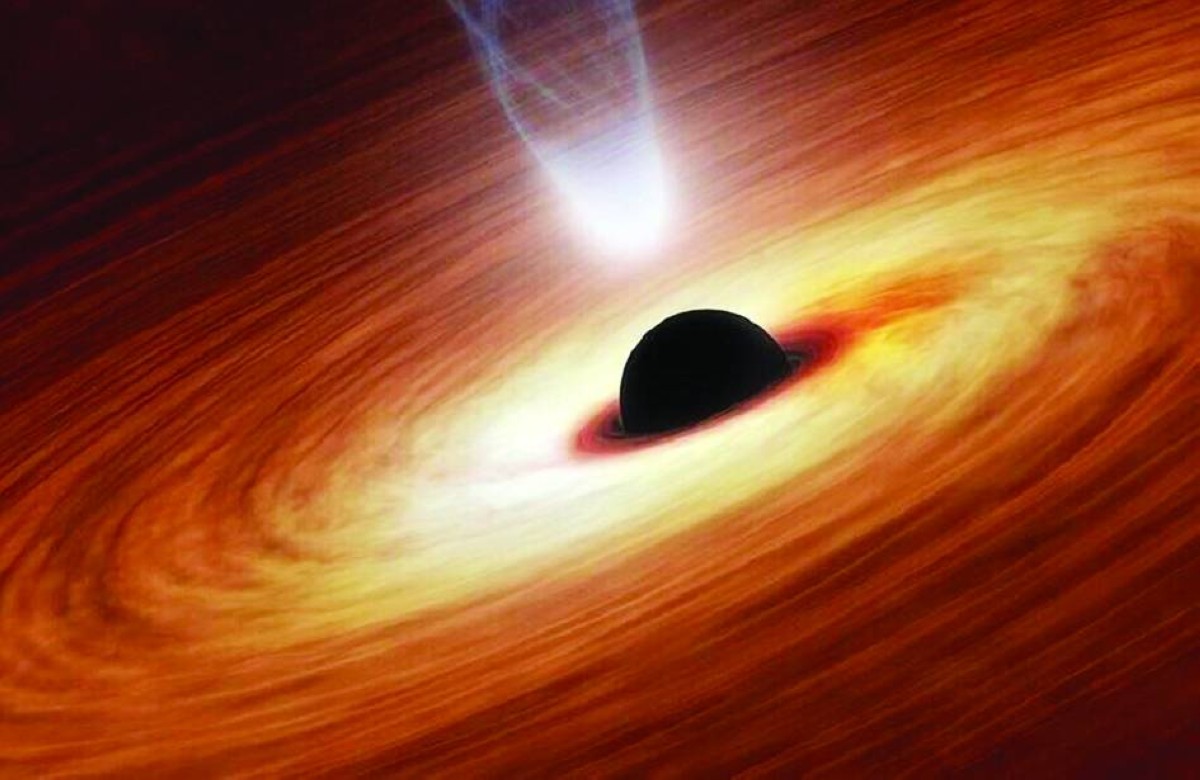
Recent breakthroughs in observational cosmology have reignited a fundamental debate regarding the evolution of the early universe: did supermassive black holes emerge as a byproduct of galaxy formation, or did they serve as the catalysts for the galaxies we observe today? For decades, the prevailing scientific consensus suggested that galaxies grew first, eventually hosting black holes at their centers. However, new data from the James Webb Space Telescope (JWST) is challenging this “chicken-and-egg” cosmic mystery, providing evidence that some supermassive black holes formed well before their host galaxies.
As a technology editor who has spent years tracking the intersection of computational modeling and astrophysical research, I find these findings particularly compelling. The capacity to peer back into the “cosmic dawn”—the period shortly after the Big Bang—is transforming our understanding of gravitational physics. Researchers are now analyzing data from the James Webb Space Telescope to determine how these massive objects reached such significant scales in such a short cosmological timeframe.
Challenging the Standard Model of Galaxy Evolution
Historically, the standard model of cosmology posited that black holes grew through the gradual accretion of gas and the mergers of smaller stellar bodies over billions of years. Under this framework, a galaxy would have to reach a certain mass and maturity before it could harbor a supermassive black hole at its core. Yet, the detection of luminous objects in the early universe, specifically those identified as active galactic nuclei (AGN), suggests that these black holes were already remarkably massive when the universe was only a few hundred million years old.
The Nature journal has published peer-reviewed findings indicating that the mass ratios between early black holes and their host galaxies do not align with local universe observations. In the local universe, the mass of a supermassive black hole is typically a tiny fraction of the mass of its host galaxy’s central bulge. In contrast, the early-universe candidates observed by the JWST appear to be “overmassive,” suggesting that the black hole growth outpaced the formation of the stars surrounding them.
The Role of Direct Collapse
One of the most intriguing hypotheses gaining traction among astrophysicists is the “direct collapse” model. This theory proposes that in the early universe, massive clouds of pristine gas—composed primarily of hydrogen and helium—collapsed directly into black holes without first forming stars. This process would allow for the rapid creation of “seed” black holes that were already thousands or millions of times the mass of the Sun.
According to research supported by NASA’s ongoing observation programs, these massive seeds would have provided the gravitational foundation necessary to pull in surrounding matter, effectively acting as the “anchors” around which galaxies formed. This inversion of the classic timeline—where the black hole acts as the primary architect of the galaxy rather than its passenger—offers a potential solution to the speed at which these massive structures appeared in the early cosmos.
Key Takeaways on Early Cosmic Structures
- Temporal Discrepancy: Observations show supermassive black holes existing at stages of the universe when galaxy formation should still have been in its infancy.
- Mass Ratios: Early black holes appear disproportionately large compared to their host galaxies, contradicting models based on modern galactic evolution.
- Direct Collapse Theory: The rapid formation of black holes from gas clouds may explain how these objects reached such extreme masses so quickly.
- Technological Catalyst: The high infrared sensitivity of the James Webb Space Telescope is the primary instrument enabling these deep-field observations.
What Happens Next?
The scientific community remains in a state of active investigation. While the evidence for “early” black holes is strong, the interpretation of this data requires further validation through spectroscopic analysis. Astrophysicists are currently scheduling follow-up observations to better distinguish between the light emitted by an active black hole and the light from the surrounding stars in these distant, nascent galaxies.
We are currently awaiting further data releases from the JWST mission archives, which will provide higher-resolution imagery of these high-redshift objects. These forthcoming datasets are expected to refine our models of how dark matter and baryonic matter interacted during the first 500 million years after the Big Bang. As we continue to process this information, the “chicken-and-egg” debate will likely shift from whether black holes formed first, to exactly how the feedback loops between these black holes and their host galaxies regulated the star-formation rates that define the universe we inhabit today.
What are your thoughts on the implications of these cosmic findings? Join the conversation in the comments section below and share this article with your network to keep the discussion on space exploration going.