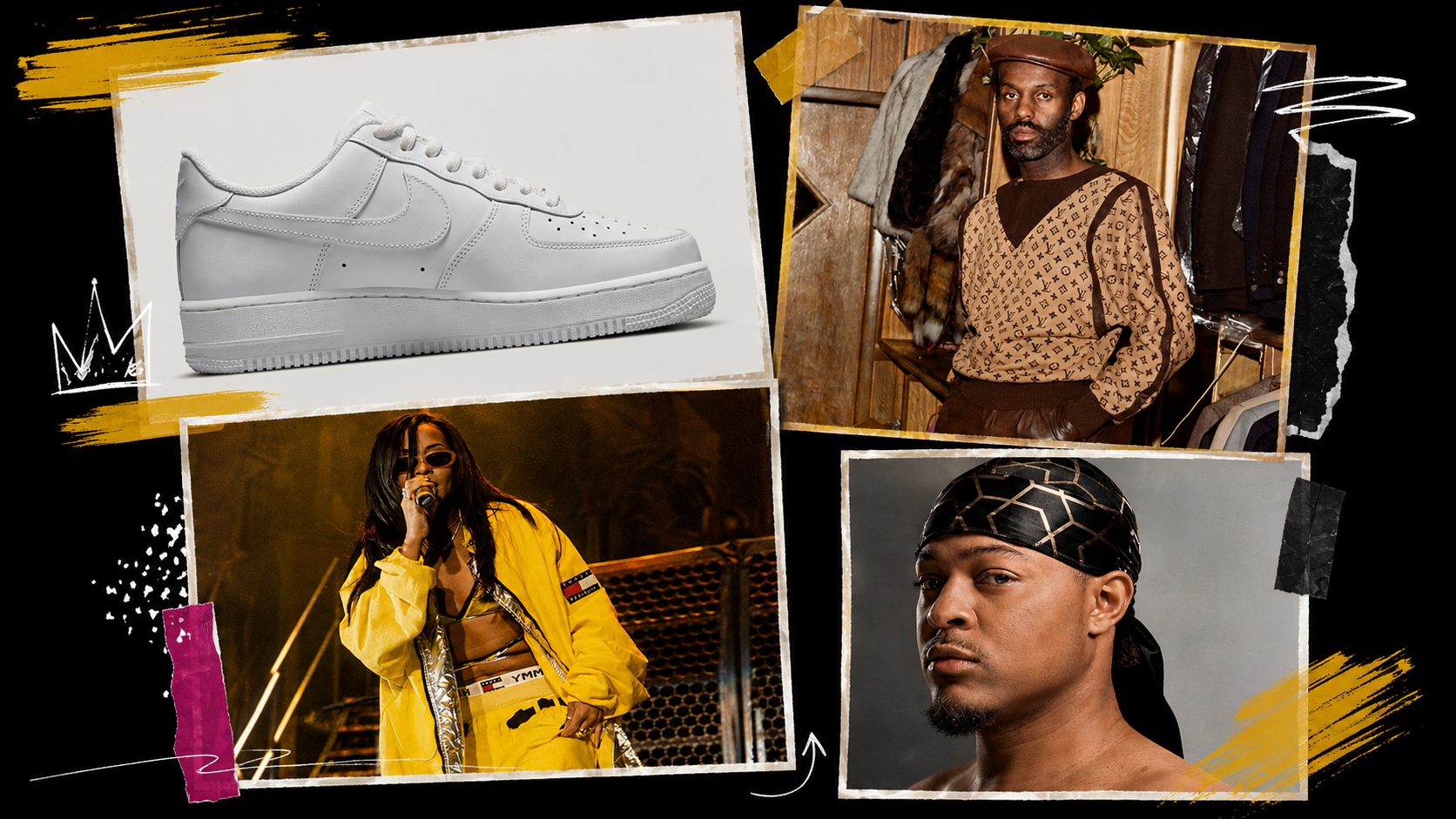
Between 1980 and 2014, Black fashion and beauty aesthetics evolved from regional community expressions into the primary blueprint for global style. By the end of this period, Black creativity had fundamentally reshaped the luxury market, retail consumption, and visual media, transforming hip-hop culture into the dominant language of modern American aesthetics. This shift moved Black style from the periphery of pop culture to the center of the global marketplace.
The transition was not merely a change in trends but a structural reorganization of how fashion was produced and consumed. As Black designers and artists exerted influence over luxury houses and heritage brands, they established a new standard for cultural currency. This era, which concluded in 2014, set the stage for a subsequent shift toward ownership and independent leadership within the creative industries.
LL Cool J. Credit: Ron Galella Collection for Getty
Aaliyah. Credit: Jeffrey Mayer/WireImage for Getty
Regional Roots and the Rise of Streetwear
Black aesthetics developed through distinct regional identities that collectively redefined the American fashion landscape. In New York, designers such as Dapper Dan pioneered the luxury remix, taking the logos of high-fashion houses and repurposing them for an urban, aspirational market. This period saw the rise of labels like FUBU, Karl Kani, Cross Colours, Pelle Pelle, and Phat Farm. These brands proved that Black entrepreneurs could successfully navigate and shape the retail marketplace on their own terms, challenging the traditional exclusivity of the fashion industry.

On the West Coast, the aesthetic was defined by the relaxed, functional uniform associated with the rise of gangsta rap. This included khakis, flannel shirts, Raiders caps, and Chuck Taylors. Simultaneously, influential figures like Snoop Dogg helped popularize specific grooming standards, such as silk presses and finger waves, which became essential elements of masculine style alongside gold jewelry and lowrider culture. According to historical accounts of the era, these regional looks were not just clothing choices but markers of community pride that eventually captured the attention of international luxury houses.
Dapper Dan. Credit: CFDA
Dem Franchize Boyz (L-R): Pimpin’ (Jamal Willingham), Parlae (Maurice Gleaton), Buddie (Gerald Tiller), guest, and Jizzal Man (Bernard Leverette). Credit: Julia Beverly for Getty
The Transformation of Heritage Labels and Footwear
The influence of Black culture extended to established heritage brands, which found renewed relevance through their adoption in Black communities. Labels like Tommy Hilfiger, Timberland, and Clarks were transformed into cultural icons as they were integrated into the daily wardrobes of influential urban centers. In the South, oversized white tees, Air Force 1s, and elaborate grills became symbols of regional identity before migrating into mainstream fashion.
Perhaps no development was more significant than the evolution of the footwear economy. Michael Jordan’s signature sneaker line created a new paradigm for commerce, linking professional sports with high-fashion status and secondary-market collectibility. This shift fundamentally altered the relationship between athletics, fashion, and consumer behavior, establishing a model that persists in today’s sneaker culture.
Beauty Standards and Media Representation
The era also saw a radical reimagining of beauty standards. Public figures such as Halle Berry, Nia Long, Toni Braxton, and Monica challenged conventional ideas of femininity through short, cropped hairstyles. Meanwhile, Aaliyah introduced a distinct “tomboy luxury” aesthetic, characterized by oversized silhouettes and dark sunglasses, which provided a new blueprint for youth culture.

Television played a critical role in documenting and amplifying these trends. Shows like Sister, Sister, Moesha, The Fresh Prince of Bel-Air, and Girlfriends served as weekly style guides for millions. Furthermore, the music industry influenced social behavior; Destiny’s Child popularized the concept of coordinated group dressing, creating a visual language for social gatherings that persisted for a generation.
Nia Long. Credit: Corbis for Getty
Destiny’s Child. Credit: Vinnie Zuffante for Getty
The Digital Shift and the Natural Hair Renaissance
Beauty as an industry underwent a profound shift as Black consumers demanded products that centered their specific needs. Iman Cosmetics was an early, significant player in proving that luxury makeup could successfully cater to Black consumers long before the term “inclusivity” became a standard corporate marketing strategy. The Bronner Bros. Hair Show emerged as a premier venue for artistic innovation, where stylists showcased techniques that pushed the boundaries of traditional hair care.

The rise of the internet accelerated these changes. The natural hair renaissance found a global audience on YouTube, where creators like Jackie Aina, Alyssa Ashley, and Patricia Bright democratized beauty expertise. By providing tutorials on foundation matching, protective styles, and product reviews, these creators bypassed the traditional gatekeepers of print media and beauty counters. This digital shift empowered consumers and provided a direct pathway for Black-owned brands to reach their target audiences.
Credit: Rick Diamond for Getty for Roadside Attraction
Bow Wow. Credit: Red by Kiss
Looking Ahead: From Influence to Ownership
By 2014, the influence of Black fashion and beauty had reached a saturation point where it functioned as the primary blueprint for American style. The groundwork laid by the designers, entertainers, and entrepreneurs of the previous three decades provided the foundation for the current era. The focus has since shifted from merely influencing industry trends to securing institutional ownership.
The next phase of this evolution, spanning 2015 to the present, explores how visionaries like Virgil Abloh, Kerby Jean-Raymond, Aurora James, and Rihanna have moved into boardrooms and executive suites. This transition marks a shift where Black creatives are no longer just the source of inspiration for luxury houses but are the primary architects of the industry’s future. As initiatives like the Fifteen Percent Pledge and the Black Fashion Council continue to gain traction, the focus remains on the structural transformation of luxury fashion and beauty aisles.
The ongoing narrative of Black cultural power continues to evolve through new collections and corporate leadership shifts. Readers interested in the latest updates on these industry changes can follow official reports from the Council of Fashion Designers of America (CFDA) or monitor the latest developments from major fashion conglomerates. Share your thoughts on this era of fashion history in the comments below.