Beyond the Screen: How Blackbox is Redefining Spatial Puzzles for Apple Vision Pro
Ryan McLeod, the creator of the critically acclaimed puzzle game Blackbox, isn’t just porting an existing experience to Apple’s new spatial computing platform. He’s fundamentally reimagining it. This isn’t simply about adapting a mobile game for a new device; it’s about exploring the untapped potential of spatial puzzles and crafting an experience uniquely suited to the immersive world of Apple Vision Pro.
Before Vision Pro even existed, McLeod was already known for liberating his puzzles from traditional device screens. Bringing Blackbox to this new platform presented a captivating, and complex, challenge. How do you translate a familiar iOS/iPadOS experience to a device most people haven’t encountered? And, crucially, how do you innovate on a canvas that seemingly has no boundaries?
Embracing the Freedom of Spatial Computing
“I do love a good constraint,” McLeod explains, “but it has been fun to explore the lifting of that restraint.” He’s focused on understanding what makes Blackbox compelling on iOS and then translating – and sometimes breaking – those rules for visionOS. This approach isn’t about replicating the past, but about forging a new path.
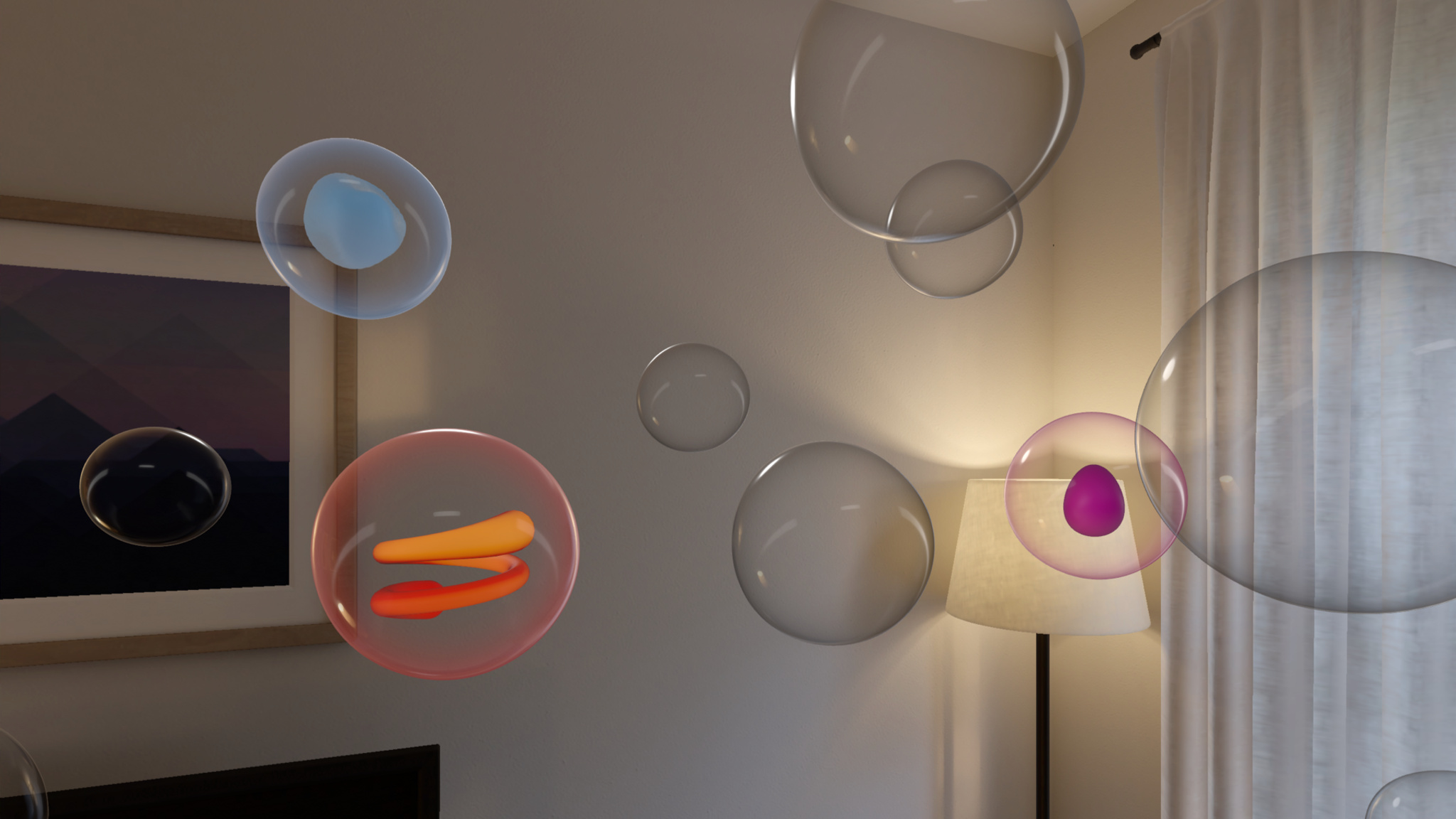
The result is a visionOS experience that leverages the spatial canvas from the moment you select a level. McLeod opted for a design aesthetic he describes as “floaty and magical, but still grounded in reality.” he landed on bubbles – specifically, soap bubbles – as the perfect visual metaphor.
Thes aren’t just any bubbles. They possess a hyper-realistic gloss and move in a way that feels intuitively familiar. A clever shader pulls reflections of yoru actual surroundings into the bubbles, creating an intriguing and believable effect.
A Puzzle Experience designed for Immersion
Blackbox on visionOS isn’t designed for casual play during commutes. McLeod intentionally crafted an experience that demands your full attention. “It had to be designed differently,” he states. “No matter how exciting the background is,or how pretty the sound effects are,it’s not fun to just stare at something,even if it’s bobbing around really nicely.”
So, what will you be doing? Expect to actively engage with the space around you and rely on all your senses. Here’s a glimpse of what awaits:
* Physical Movement: Some puzzles require you to move your body in specific ways.
* Auditory Clues: Sound,and even silence,play a critical role in solving challenges. Imagine a blob of molten gold floating before you, accompanied by immersive Spatial Audio.
* Decoding Challenges: Morse code features as one of the puzzle elements.
* Dynamic Environments: Solving puzzles can dramatically alter the scene, even causing portions to collapse into portals.
McLeod emphasizes that Blackbox is still evolving.He’s essentially building the plane while flying it, and he views this as a meaningful advantage. “There’s an advantage to not knowing expected or common patterns,” he says. “There’s just so much possibility.”
Why Blackbox Matters for Spatial Computing
Blackbox isn’t just a game; it’s an experiment. It’s a exhibition of how puzzle design can be fundamentally transformed by spatial computing. McLeod’s willingness to challenge conventions and embrace the unique capabilities of Apple vision Pro is paving the way for a new generation of immersive experiences.
This isn’t about simply adding 3D elements to a 2D game. It’s about rethinking the core mechanics of puzzle-solving and creating something truly innovative.
Ready to experience the future of puzzles?
Download Blackbox for Vision from the app Store