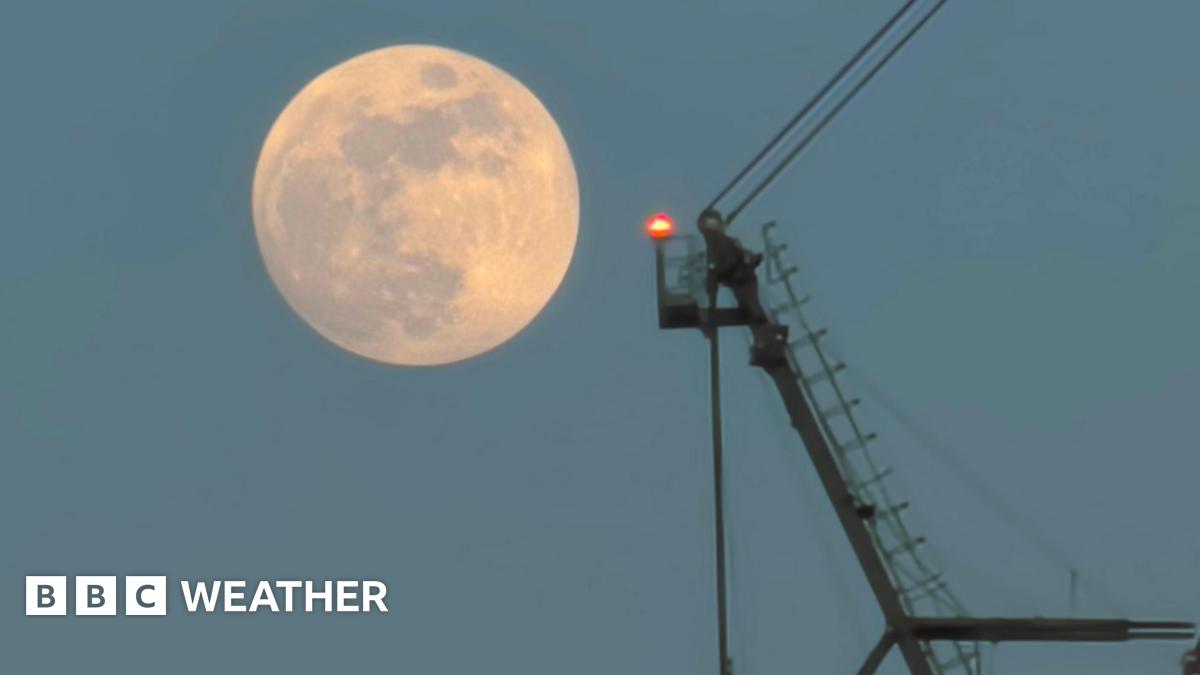
Blood Moon 2026: Total Lunar Eclipse to Grace Skies Across Multiple Continents
A captivating celestial event is unfolding today, March 3, 2026, as a total lunar eclipse transforms the full moon into a striking “blood moon” visible to an estimated three billion people across the globe. This phenomenon, occurring when the Earth passes directly between the Sun and the Moon, casts a shadow on the lunar surface, often resulting in a reddish hue. While not visible from all locations, observers in parts of North and South America, Australia, and New Zealand are particularly well-positioned to witness the spectacle. The event offers a rare opportunity for stargazers and casual observers alike to connect with the wonders of the cosmos.
The term “blood moon” originates from the reddish tint the moon takes on during a total lunar eclipse. This coloration isn’t due to the moon itself changing, but rather the result of sunlight being refracted and filtered through the Earth’s atmosphere. Shorter wavelengths of light, like blue and violet, are scattered away, while longer wavelengths, such as red and orange, are bent towards the moon, giving it that distinctive crimson glow. This effect is similar to why sunsets appear red. Understanding this atmospheric interaction is key to appreciating the beauty and science behind the blood moon.
What Causes a Lunar Eclipse?
A lunar eclipse is a fascinating demonstration of celestial mechanics. It happens when the Sun, Earth, and Moon align in a nearly straight line, with the Earth positioned directly between the Sun and the Moon. This alignment causes the Earth to cast a shadow onto the Moon. We find different types of lunar eclipses, depending on how much of the Moon passes into the Earth’s shadow. A total lunar eclipse, like the one occurring today, means the entire Moon moves into the darkest part of the Earth’s shadow, called the umbra. Partial lunar eclipses occur when only a portion of the Moon enters the umbra, while penumbral eclipses happen when the Moon passes through the Earth’s outer, fainter shadow, the penumbra, and are often less noticeable.
Timing and Visibility of the March 3rd Eclipse
According to verified reports, the total phase of the lunar eclipse began at 11:04 GMT on Tuesday, March 3, 2026, and concluded at 12:02 GMT. Space.com reports that this eclipse is particularly significant due to the large number of people who will have the opportunity to view it. However, visibility is dependent on weather conditions and the observer’s location. Those in areas with clear skies will have the best chance of witnessing the full spectacle. South Carolina stargazers, for example, are expected to have a good viewing opportunity, as reported by Greenville Online.
The “Worm Moon” and its Cultural Significance
This full moon is also known as the “worm moon,” a name originating from Native American traditions. According to the Star Walk website, the name reflects the time of year when the ground begins to thaw, and earthworms reappear, signaling the arrival of spring. Different cultures have assigned various names to full moons based on seasonal changes and agricultural practices. The cultural significance of the full moon extends beyond its astronomical properties, often featuring prominently in folklore, mythology, and religious ceremonies.
Impact on Scientific Research
Lunar eclipses aren’t just visually stunning events; they also provide valuable opportunities for scientific research. Scientists can study the Earth’s atmosphere by analyzing how it filters sunlight during an eclipse. The color and brightness of the eclipsed moon can reveal information about the amount of dust and aerosols present in the atmosphere. Lunar eclipses can be used to refine our understanding of the Moon’s orbit and its interaction with the Earth. Data collected during these events contributes to a broader understanding of our solar system and the dynamic processes that shape it.
Understanding the Visibility Map
While a significant portion of the world’s population will be able to witness the blood moon, the exact visibility varies depending on geographic location. A visibility map, such as the one provided by Star Walk, illustrates the regions where the eclipse will be visible, either in its totality or as a partial eclipse. Factors such as cloud cover and local time zones also play a crucial role in determining whether an observer will be able to see the event. Those planning to view the eclipse should consult a local astronomy resource or weather forecast to determine their chances of a clear view.
Key Takeaways
- A total lunar eclipse, resulting in a “blood moon,” is occurring on March 3, 2026.
- The eclipse is visible to an estimated three billion people across North and South America, Australia, and New Zealand.
- The reddish hue of the moon is caused by sunlight being filtered through the Earth’s atmosphere.
- This full moon is traditionally known as the “worm moon,” signifying the arrival of spring.
- Lunar eclipses provide opportunities for scientific research, particularly in studying the Earth’s atmosphere.
As the Earth continues its orbit around the Sun and the Moon circles our planet, celestial events like this blood moon serve as a reminder of the vastness and beauty of the universe. The next significant astronomical event to watch for will be the Perseid meteor shower in August 2026. Keep an eye on space news outlets for updates and viewing opportunities.
Do you plan to observe the blood moon tonight? Share your viewing experiences and photos in the comments below. And don’t forget to share this article with fellow astronomy enthusiasts!
Worth a look