
revolutionary Microneedle Patch Offers Painless, On-Demand Biomarker Monitoring
For years, frequent blood tests have been the gold standard for tracking health biomarkers like cortisol and identifying potential issues. But what if you could monitor thes crucial indicators without the needles, pain, and lab visits? Researchers at North Carolina State University have developed a groundbreaking microneedle patch poised to revolutionize how we approach health monitoring. This innovative technology offers a painless, convenient, and potentially more accessible way to gain insights into your body’s health.
how Does This Microneedle Patch Work?
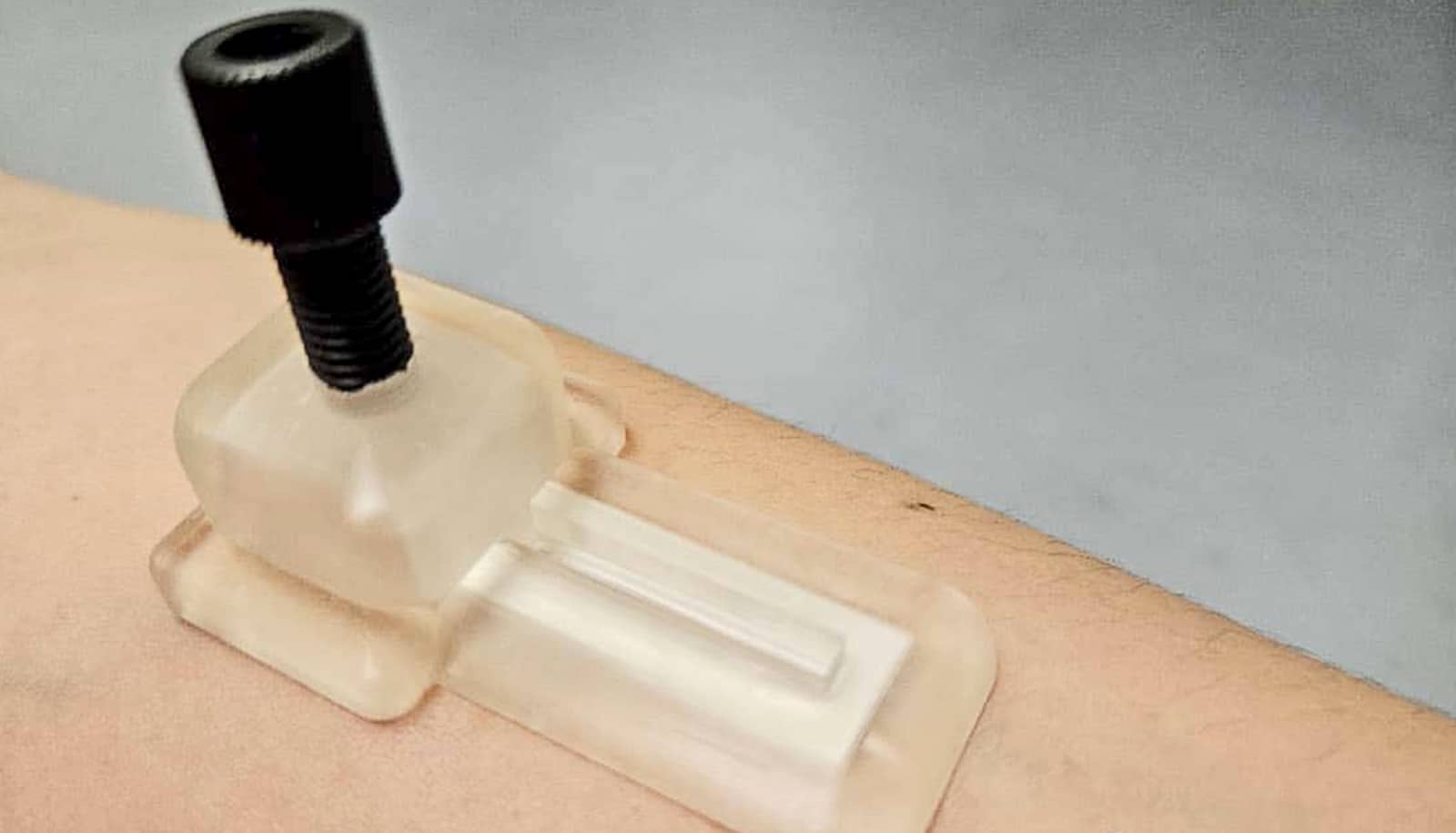
This isn’t your typical bandage. The patch utilizes a clever design to extract and store interstitial fluid (ISF) – the fluid between your cells – for analysis. Here’s a breakdown of the four key layers and the process:
Polymer Housing: This is the visible layer of the patch, providing a comfortable and secure request.
Gel Layer: A glycerol-rich gel plays a critical role in drawing fluid from your body.
Paper Layer: This acts as the storage reservoir for the collected ISF.
Microneedles: These tiny, virtually painless needles are the entry point for ISF collection.
The process is remarkably efficient. When applied to the skin, the microneedles gently interact with the ISF. the needles themselves are designed to swell upon contact, encouraging the fluid to wick through them – much like water absorbed by a paper towel.Once the ISF reaches the paper layer, a fascinating osmotic process begins. The gel’s high glycerol concentration creates a pressure imbalance, actively pulling more ISF through the paper until it’s fully saturated. This ensures a sufficient sample for accurate analysis.
As explained by researcher Daniele, “The paper is where the ISF is stored. When you take the patch off, you remove the paper strip and analyse the sample.”
Proven Performance & Versatility
Initial testing on synthetic skin models has yielded promising results. The patches consistently collected measurable biomarker samples in as little as 15 minutes, and importantly, could preserve those samples for at least 24 hours.
The initial proof-of-concept focused on cortisol, a key biomarker for stress that fluctuates throughout the day. This makes the patch particularly appealing for individuals needing frequent monitoring without the inconvenience of repeated blood draws.
However, the potential extends far beyond cortisol. Researchers beleive the patch can be adapted to detect a wide range of biomarkers present in ISF, opening doors for monitoring various health conditions.
Cost-Effective & Accessible Healthcare
One of the most exciting aspects of this technology is its potential for affordability. While manufacturing the microneedles represents the largest cost, daniele anticipates the overall price will be competitive with traditional blood testing.
Consider the expenses associated with a typical blood test: vials, needles, and the cost of a phlebotomist. The microneedle patch eliminates these requirements, potentially making regular biomarker monitoring more accessible to a wider population.
Current Progress & future Outlook
The research team is already conducting human trials and developing electronic “readers” to analyze the paper strips directly.They’ve successfully created a device capable of reading cortisol levels, and are actively working on a device for othre biomarkers.
Looking ahead, the team is actively seeking industry partnerships to:
Explore additional diagnostic applications for the patch.
Scale up production for wider availability.This technology represents a important step toward personalized, proactive healthcare.
Where to Find More facts
Original Research: The study was published in the journal Lab on a Chip: https://doi.org/10.1039/D5LC00590F
NC State News Release: https://news.ncsu.edu/2025/08/microneedle-patch-biomarkers/
Related Research: Learn more about microneedles and biomarkers:
[https://www.futurity.org/liver-





