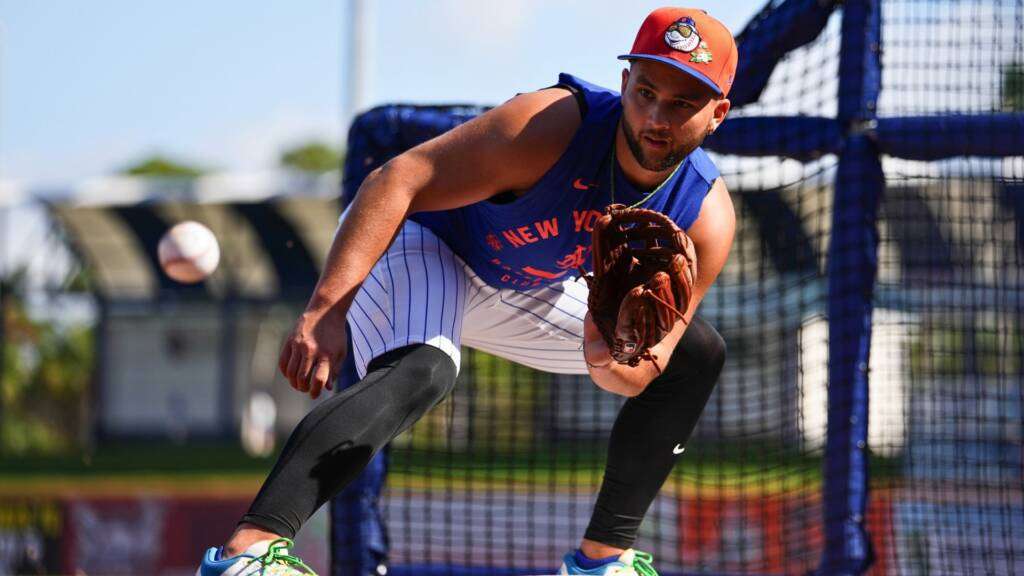
FLUSHING, NY – The New York Mets’ splashy offseason continued to draw scrutiny this week, but not for the blockbuster signing of shortstop Bo Bichette. Instead, the focus has shifted to the two-time All-Star’s defensive capabilities as he transitions to a new position – third base – and adjusts to his new team. While Bichette’s offensive prowess is undeniable, early reports from spring training suggest his defense is already becoming a point of concern for fans and analysts alike.
Bichette, who signed a three-year, $126 million contract with the Mets on January 16, 2026, according to MLB.com, is expected to play third base, shifting the infield alignment with Francisco Lindor at shortstop and Marcus Semien at second. The move comes after a 2025 season where Bichette posted a .311 batting average with 18 home runs in 139 regular season games for the Toronto Blue Jays, playing a pivotal role in their run to the World Series, despite missing the first two rounds of the playoffs due to a knee injury. He ultimately contributed eight hits and a key home run in the Blue Jays’ seven-game loss to the Los Angeles Dodgers.
Defensive Questions Arise in Early Spring Training
The transition to third base hasn’t been seamless. Reports and social media posts indicate that Bichette’s arm strength and accuracy are being questioned, particularly in comparison to his previous position at shortstop. While the Mets acknowledged the adjustment period, the early returns have fueled a debate among baseball observers. The New York Post noted the consensus that the Mets “went 1-for-2” in their pursuit of free agents, successfully landing Bichette but missing out on Kyle Tucker, but the defensive concerns are adding another layer to the narrative.
Videos circulating on social media, including posts from accounts like @JacobBSpeaks and @TalkinBaseball_, highlight instances of errant throws during preseason games. One such play, during a game against the Miami Marlins on Saturday, saw Bichette throw wide of the target, potentially costing the Mets an out. While some observers suggest a different first baseman might have made the play, the error quickly became fodder for discussion. These early missteps have prompted some fans to express concern, while others maintain that it’s too early to draw definitive conclusions.
Bo Bichette with a rough throw to first. Still early in camp, but the arm strength is a concern. pic.twitter.com/9qJqXq9z8W
— Jacob Benignus (@JacobBSpeaks) February 17, 2026
The Mets are aware of the situation and acknowledge that both Bichette and first baseman Jorge Polanco are adjusting to new positions. Lindor and Semien are expected to anchor the middle infield, providing stability while the new additions settle in. The team is urging patience, emphasizing that it’s too early to “crucify” Bichette for his defensive performance.
Bichette’s Contract and Future with the Mets
The $126 million deal that brought Bichette to Queens includes opt-out clauses after each of the first two seasons, as reported by USA Today. This allows the 28-year-old to re-enter free agency sooner rather than later, potentially testing the market again without draft-pick compensation. This structure adds another dimension to the scrutiny surrounding his performance, as his defensive struggles could impact his decision to exercise those options.
The Mets’ pursuit of Bichette came after they were unsuccessful in signing Kyle Tucker, who ultimately chose a four-year, $160 million deal with the Dodgers. Losing out on Tucker, after offering $220 million, stung the Mets, particularly after also losing closer Edwin Díaz to the Dodgers a month prior. The signing of Bichette was seen as a way to inject excitement and offensive firepower into the lineup, but the defensive questions are now a prominent part of the conversation.
The Importance of Third Base Defense
Third base is widely considered one of the most demanding defensive positions in baseball, requiring quick reflexes, a strong arm and the ability to make difficult plays in close proximity to the batter. A strong defensive third baseman can save runs and provide a significant advantage to their team. The Mets will be closely monitoring Bichette’s progress throughout spring training and the regular season to determine if he can meet the defensive expectations of the position.
Adjusting to a New League and Position
Beyond the physical adjustments, Bichette is also adapting to a new league, a new team, and a new set of teammates. Building chemistry and developing a rapport with his fellow infielders will be crucial to his success. The Mets’ coaching staff will play a key role in helping him refine his technique and make the necessary adjustments to excel at third base. The team will likely focus on drills designed to improve his arm strength, accuracy, and reaction time.
The Mets’ infield now features a dynamic mix of talent, with Bichette, Lindor, and Semien all capable of making significant contributions on both offense and defense. However, the success of this infield will depend on how quickly Bichette can adapt to his new position and address the concerns surrounding his defensive abilities. The team’s ability to contend in the competitive National League East may hinge on his performance at the hot corner.
Bo Bichette’s throw is off to first base. Not a good look. pic.twitter.com/q9q9q99999
— Talkin’ Baseball (@TalkinBaseball_) February 17, 2026
Looking Ahead
The Mets’ spring training schedule continues, providing ample opportunity for Bichette to work on his defense and build confidence. The team’s first regular season game is scheduled for March 28th against the Atlanta Braves. Fans and analysts will be closely watching Bichette’s performance in the coming weeks to see if he can silence the critics and establish himself as a reliable defender at third base. The team’s success in 2026 may well depend on it.
The early spring training observations are just that – observations. It’s a long season, and players often need time to adjust to new roles and environments. However, the scrutiny on Bichette’s defense is a reminder of the high expectations that come with playing for a team with championship aspirations. The Mets will need Bichette to be a complete player – a dynamic offensive force and a dependable defender – if they hope to contend for a World Series title.
The Mets will continue to evaluate Bichette’s progress throughout spring training and the regular season. The next key date for observation will be the team’s exhibition games against other MLB teams, starting February 26th. Fans are encouraged to follow the team’s official website, MLB.com/mets, for updates and further information.
What are your thoughts on Bo Bichette’s transition to third base? Share your opinions in the comments below, and don’t forget to share this article with your fellow baseball fans!
Keep reading