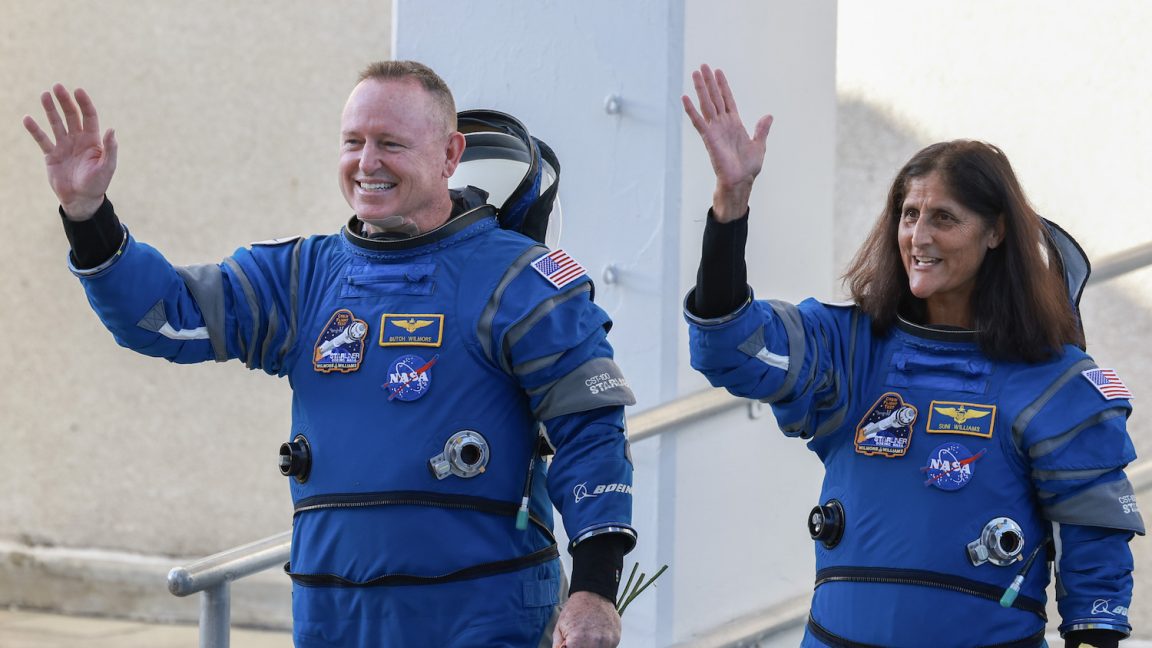
The Boeing Starliner’s inaugural crewed flight to the International Space Station (ISS), initially hailed as a success, has been officially classified as a “Type A” mishap by NASA, the agency’s most serious designation for a spaceflight anomaly. The decision, announced February 20, 2026, follows a comprehensive review of the mission, which saw astronauts Barry “Butch” Wilmore and Suni Williams spend nearly ten months aboard the ISS due to a series of technical issues with the Starliner capsule. NASA Administrator Bill Nelson acknowledged that mistakes were made in the program’s development and oversight, signaling a critical juncture for the future of commercial crew partnerships.
The Starliner mission, launched June 5, 2024, was intended as a demonstration of Boeing’s capability to safely transport astronauts to and from low Earth orbit, a key component of NASA’s Commercial Crew Program. However, the flight was immediately beset by problems, beginning with anomalies during ascent and continuing with issues affecting the spacecraft’s propulsion, thermal control, and life support systems. While Wilmore and Williams ultimately reached the ISS and safely returned to Earth on March 18, 2025, aboard a SpaceX Dragon capsule, the journey was far from smooth, and the incident raised serious questions about Boeing’s quality control and NASA’s oversight of the project. The extended stay in space, initially planned as an eight-day mission, underscored the risks inherent in space travel and the critical need for robust safety measures.
A Harrowing Return to Earth
The true extent of the challenges faced by Wilmore and Williams during the Starliner mission wasn’t fully revealed until after their return. In a detailed interview with Ars Technica, Wilmore recounted the terrifying moments when multiple Starliner thrusters began to fail during the approach to the ISS. According to Wilmore, he faced a critical decision: attempt to dock with the station despite the failing thrusters, or abort the mission and attempt an immediate return to Earth, a maneuver that carried its own significant risks. “I don’t know that we can come back to Earth at that point,” Wilmore reportedly said, contemplating the possibility of being stranded in orbit. “I don’t know if we can. And matter of fact, I’m thinking we probably can’t.”
The situation was compounded by the loss of “6DOF control” – the ability to control the spacecraft’s position and orientation in all six degrees of freedom – and the failure of four aft thrusters. Wilmore described visualizing orbital mechanics, realizing that the ISS was moving faster than the crippled Starliner, potentially causing them to drift further away. The astronauts were forced to rely on their training and ingenuity to restart the thrusters and safely dock with the ISS, a feat accomplished with assistance from Mission Control. The incident highlighted the critical role of astronaut expertise and the importance of redundancy in spacecraft systems.
NASA’s Assessment and the “Type A” Mishap Designation
Following the return of Wilmore and Williams, NASA initiated a comprehensive investigation into the Starliner mission, led by an independent engineering investigation team. The investigation identified a complex web of technical failures, design flaws, and procedural shortcomings that contributed to the problems experienced during the flight. The “Type A” mishap designation signifies that the incident posed a significant risk of loss of life or serious injury to the astronauts, and triggered a rigorous review of the entire Starliner program. As reported by NBC News, Suni Williams retired from NASA on January 20, 2026, after 27 years of service, including her extended stay aboard the ISS due to the Starliner issues.
NASA’s report detailed issues with Starliner’s reaction control system (RCS), which is responsible for controlling the spacecraft’s attitude and maneuvering. The failure of multiple thrusters was attributed to a combination of factors, including faulty wiring, software glitches, and inadequate testing. The investigation also revealed problems with the Starliner’s life support systems, which experienced fluctuations in temperature and pressure, and with the spacecraft’s communication systems, which suffered intermittent outages. Administrator Nelson stated that NASA accepted full responsibility for its role in the failures, acknowledging that the agency had not adequately scrutinized Boeing’s work and had allowed the program to proceed despite known risks.
Boeing’s Response and Future Implications
Boeing has expressed regret for the issues experienced during the Starliner mission and has pledged to cooperate fully with NASA’s investigation. The company has implemented a series of corrective actions, including redesigning key components, improving testing procedures, and enhancing quality control measures. However, the “Type A” mishap designation and the resulting scrutiny have cast a shadow over Boeing’s future in the commercial space sector. The company’s reputation has been damaged, and its ability to secure future NASA contracts may be jeopardized.
The Starliner saga also has broader implications for the Commercial Crew Program, which relies on partnerships between NASA and private companies to provide access to space. The incident has raised questions about the balance between fostering innovation and ensuring safety, and about the level of oversight that NASA should exercise over its commercial partners. The agency is now reviewing its contracting procedures and safety protocols to prevent similar incidents from occurring in the future. The program’s success is vital for maintaining U.S. Access to the ISS and for supporting future space exploration initiatives, including the planned return to the Moon under the Artemis program.
Barry Wilmore, a veteran of three spaceflights, including the troubled Starliner mission, retired from NASA in August 2025, according to his Wikipedia profile. His experience underscores the inherent risks of space travel and the dedication of astronauts who push the boundaries of human exploration. The lessons learned from the Starliner mission will be crucial for ensuring the safety and success of future crewed spaceflights.
Looking ahead, NASA is focused on completing the Boeing Crew Flight Test/SpaceX Crew-9 mission, which is currently underway aboard the ISS. The agency is also working with Boeing to address the remaining issues with the Starliner capsule and to prepare for a potential second uncrewed flight test. The future of the Starliner program remains uncertain, but NASA is committed to working with Boeing to resolve the problems and to ensure that the spacecraft can safely and reliably transport astronauts to and from space.
The next major milestone for the Commercial Crew Program is the anticipated launch of the Crew-10 mission, currently scheduled for late 2026. This mission will carry a new crew of astronauts to the ISS, continuing the vital research and exploration activities conducted in low Earth orbit. NASA will continue to provide updates on the progress of the Starliner program and the Commercial Crew Program as they turn into available.
Key Takeaways:
- NASA has classified the Boeing Starliner’s inaugural crewed flight as a “Type A” mishap, the agency’s most serious designation for a spaceflight anomaly.
- The mission was plagued by technical issues, including failures in the spacecraft’s propulsion, thermal control, and life support systems.
- Astronauts Barry Wilmore and Suni Williams spent nearly ten months aboard the ISS due to the problems with the Starliner capsule.
- NASA has acknowledged that mistakes were made in the program’s development and oversight and is implementing corrective actions.
- The incident has raised questions about the future of commercial crew partnerships and the balance between innovation and safety.
What are your thoughts on the future of commercial space travel? Share your comments below, and be sure to share this article with your network.