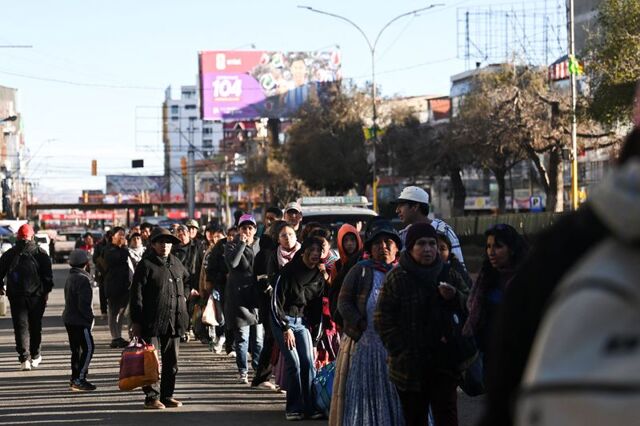
The United States has expressed growing concern regarding the political stability of Bolivia, as intensifying internal conflicts within the ruling party and widespread social unrest threaten the country’s democratic institutions. Diplomatic observers and U.S. officials have signaled that the deepening rift between the administration of President Luis Arce and supporters of former President Evo Morales, compounded by severe economic pressures, creates a volatile environment for the nation’s constitutional order.
The current instability stems from a high-stakes power struggle within the Movement for Socialism (MAS) party, which has historically dominated Bolivian politics. As the country approaches the 2025 general elections, the fragmentation of the ruling coalition has led to increased street protests, legal battles over candidate eligibility, and a growing sense of uncertainty regarding the rule of law.
While the U.S. State Department has historically maintained a policy of supporting democratic processes and judicial independence in the region, recent developments in La Paz have prompted renewed calls for stability. The friction is not merely political but is increasingly tied to the country’s economic fragility, including acute shortages of fuel and foreign currency, which have become primary drivers of public discontent.
The Escalating Rift Within the MAS Party
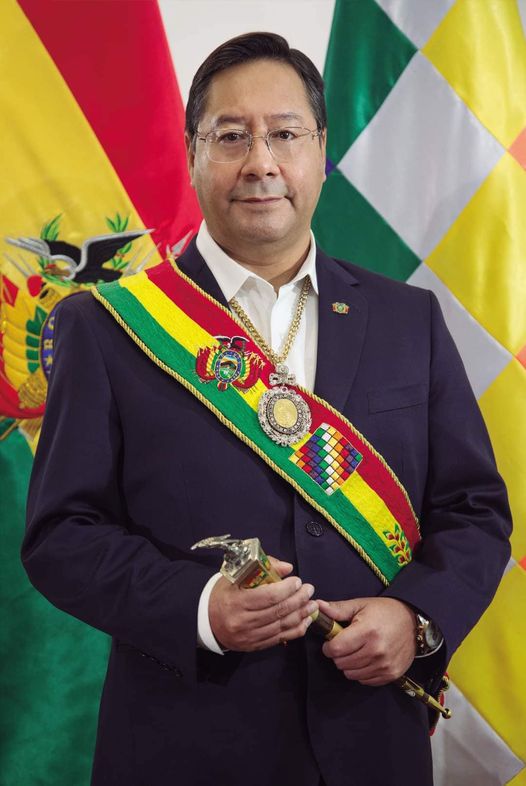
The core of Bolivia’s political crisis lies in the fracturing of the Movement for Socialism (MAS), the party that has held power for much of the last two decades. What was once a unified front under the leadership of Evo Morales has split into two distinct factions: those aligned with the current President, Luis Arce, and those loyal to Morales.
This division has moved from political rhetoric to formal legal and institutional confrontations. According to reports on the internal party struggle, the Arce administration has sought to consolidate power through institutional channels, while Morales’s supporters have accused the government of using the judiciary to disqualify Morales from running in the upcoming elections. This legal warfare has created a perception of political instrumentalization of the courts, a development that international observers have flagged as a risk to democratic norms.
The tension reached a critical point following judicial rulings regarding the eligibility of candidates. Supporters of Morales have organized various demonstrations in La Paz and other major cities, arguing that the legal hurdles placed before the former president are a direct attempt to subvert the will of the people. Conversely, the Arce administration maintains that all judicial decisions are independent and strictly follow the Bolivian constitution.
Economic Triggers and Public Unrest
Political maneuvering in Bolivia is occurring against a backdrop of significant economic distress. The nation is currently grappling with a scarcity of U.S. dollars and a critical shortage of fuel, which has disrupted transport, agriculture, and daily commerce. These economic hardships have acted as a catalyst, transforming political disagreements into widespread social mobilization.

The shortage of fuel has led to long queues at gas stations across the country, a visual symbol of the administration’s struggle to manage the national economy. For many Bolivians, the political infighting within the MAS party is seen as a distraction from the immediate need for fiscal stability and the restoration of essential services. Protesters have frequently cited the rising cost of living and the depletion of international reserves as reasons for their dissatisfaction with the current government.
Economic analysts have noted that the depletion of Bolivia’s foreign exchange reserves has limited the government’s ability to subsidize fuel and maintain the stability of the boliviano. This economic pressure creates a cycle where political instability discourages investment, which in turn exacerbates the economic crisis, fueling further protests and social unrest.
The United States’ Diplomatic Position
The United States has maintained a consistent stance on the importance of democratic stability and the rule of law in Bolivia. While the U.S. government typically avoids direct interference in domestic political disputes, its diplomatic communications have emphasized the necessity of peaceful transitions of power and the protection of human rights.
In recent diplomatic engagements, U.S. officials have expressed concern over the health of Bolivia’s democratic institutions. The State Department has highlighted the importance of judicial independence, noting that the perception of political bias in the legal system can undermine public trust in the state. This concern is particularly relevant as the legal battles between the Arce and Morales factions continue to play out in the Bolivian courts.
The U.S. position also encompasses the management of social unrest. Washington has encouraged all political actors in Bolivia to engage in dialogue and to resolve disputes through constitutional means rather than through street violence or attempts to bypass democratic processes. The goal, as articulated by regional diplomatic partners, is to prevent the current volatility from evolving into a broader systemic collapse.
Key Takeaways of the Bolivian Political Crisis
- Party Fragmentation: The ruling MAS party is split between the faction of President Luis Arce and the faction of former President Evo Morales.
- Judicial Conflict: Legal battles regarding candidate eligibility are being used by both sides to delegitimize the opposition.
- Economic Drivers: Acute shortages of fuel and U.S. dollars are driving significant public protests and social instability.
- International Concern: The U.S. and other international bodies have expressed concern regarding the preservation of democratic norms and judicial independence.
- Election Pressure: The looming 2025 general elections are heightening the stakes for all political actors involved.
What Happens Next for Bolivia?
The trajectory of Bolivia’s stability will likely be determined by several key upcoming milestones. First, the rulings from the Bolivian Constitutional Tribunal regarding the eligibility of presidential candidates will serve as a major flashpoint. Should the court rule to bar Morales from candidacy, significant social unrest is expected from his supporters.

Second, the government’s ability to stabilize the fuel supply and manage the foreign currency crisis will be essential in cooling public anger. If the economic situation deteriorates further, the political crisis may expand into a broader humanitarian or social emergency that could overwhelm the current administration’s capacity to govern.
Finally, the international community, including the U.S. and regional bodies like the Organization of American States (OAS), will continue to monitor the situation closely. Diplomatic pressure may increase if the institutional framework of the country appears to be failing or if the democratic process is perceived to be under direct threat.
The next significant checkpoint will be the official calendar of judicial hearings concerning the MAS party’s internal regulations and candidate eligibility, which are expected to proceed in the coming months.
What are your thoughts on the political developments in Bolivia? Do you believe international diplomatic pressure can help stabilize the region? Share your comments below and share this article with your network.
Related reading