
Bologna, Italy – Demonstrations erupted in the university district of Bologna on Thursday as European Central Bank (ECB) President Christine Lagarde delivered a keynote address at the Johns Hopkins University. Protests, organized by a coalition of activist groups, centered on Lagarde’s presence and broader concerns regarding European Union economic policy, the war in Ukraine, and domestic Italian issues.
Tensions escalated as protesters attempted to approach the venue, leading to brief scuffles with police deployed to maintain order. According to reports, officers in riot gear formed a cordon to prevent demonstrators from disrupting the event, which focused on the theme of “Technology, Fragmentation and the New Uncertainty.” Activists from the Luna collective alleged that police used intimidation tactics, claiming an officer threatened to handle the protest as forcefully as the 2009 G8 summit protests in L’Aquila, Italy, which were marked by significant clashes and accusations of police brutality. Lagarde’s visit comes at a critical juncture for the European economy, as the ECB navigates a complex landscape of rising inflation and geopolitical instability.

Two separate protest marches converged on the Johns Hopkins University campus. One group, comprised of activists from Potere al Popolo, Osa, and Cambiare Rotta, initiated their demonstration from Piazza della Prefettura. A second march, organized by Labas, TPO, ADL Cobas, and Collettivo Luna, began in Piazza Verdi. Both processions shared the common goal of voicing opposition to Lagarde and the broader policies of the Meloni government, specifically protesting against what they perceive as a move towards increased militarization.
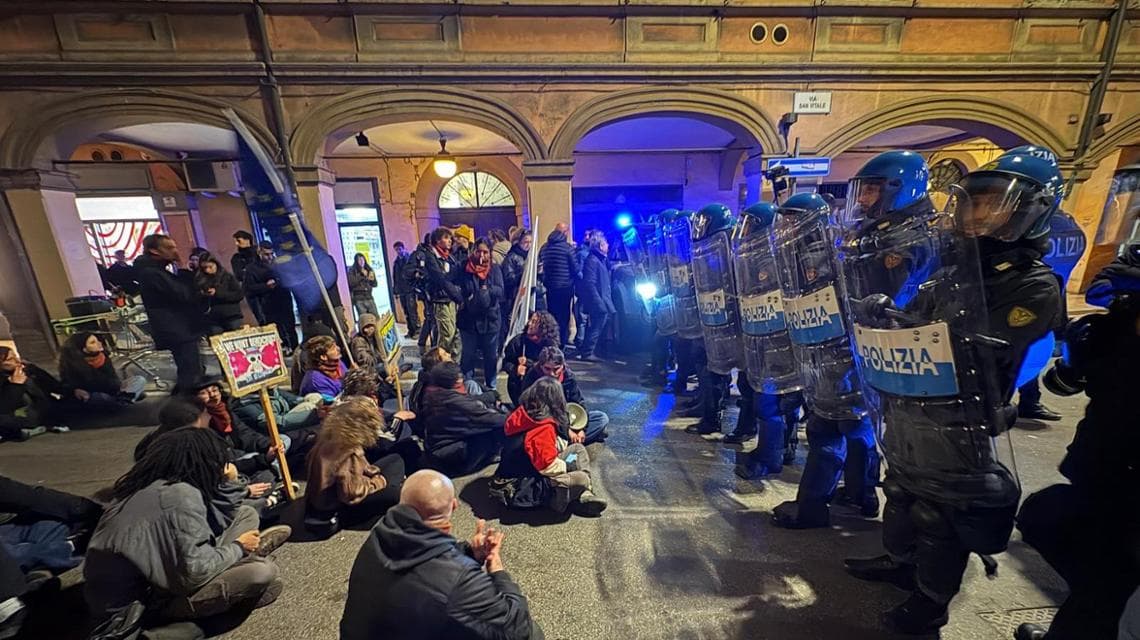
Lagarde Warns of Economic Fragmentation
Lagarde’s address, delivered as part of the 2026 Annual Global Risk Lecture series organized by Johns Hopkins University in honor of Robert Mundell, underscored the potential of artificial intelligence (AI) to boost global productivity. However, she cautioned that increasing geopolitical fragmentation and trade barriers could undermine these gains, leading to economic self-harm. According to Lagarde, recent estimates suggest AI could increase annual productivity growth by up to 1.5 percentage points – a level not seen since the early 20th century. Conversely, significant market fragmentation could reduce global output by as much as 7% of GDP within a decade, equivalent to the combined economies of Germany and Japan.
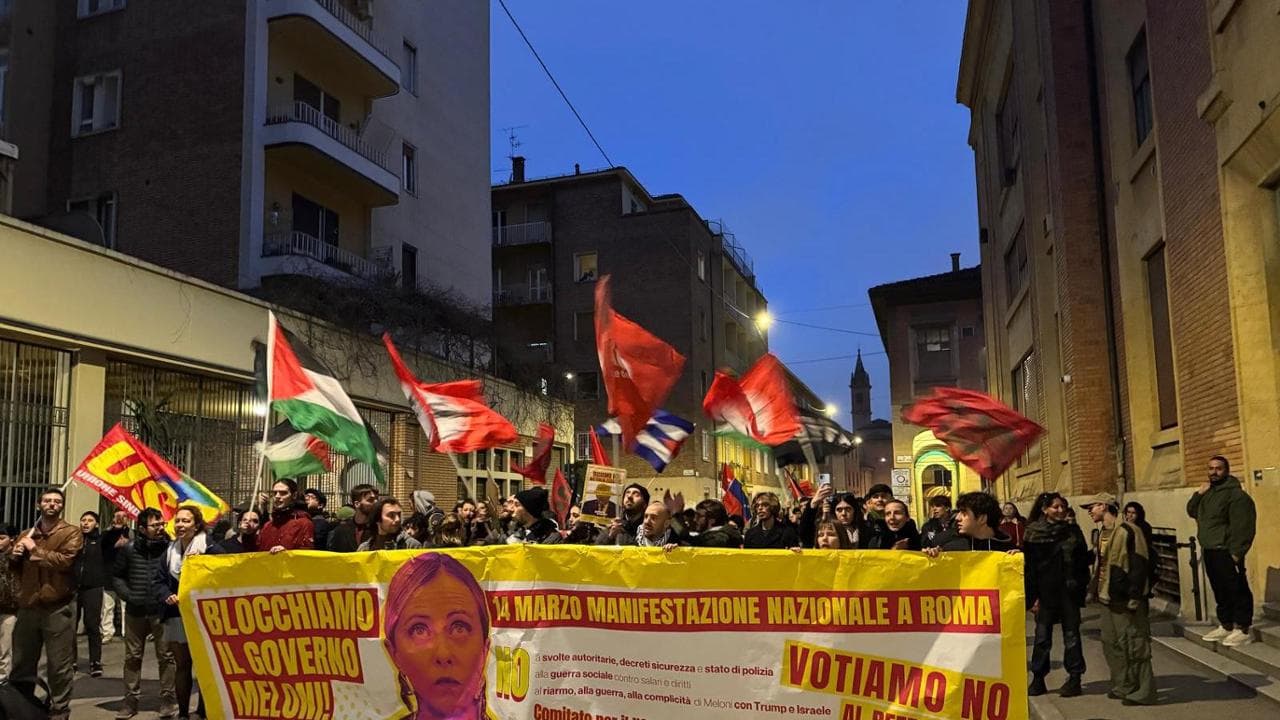
Protest Actions and Symbolic Displays
During the protests, demonstrators positioned two effigies in the roadway – one representing Lagarde and the other depicting Italian Prime Minister Giorgia Meloni. They as well reportedly detonated firecrackers while chanting slogans denouncing what they termed “the ladies of war.” The protests reflect a growing wave of discontent with perceived austerity measures and increasing military spending within the European Union. The demonstrators’ actions underscore the complex political climate surrounding Lagarde’s visit and the broader debate over the future of European economic policy.
The presence of a significant police contingent, including officers from the Digos (investigative division) and Carabinieri, highlights the authorities’ anticipation of potential disruptions. The Johns Hopkins University campus was effectively locked down in preparation for Lagarde’s arrival, with security measures implemented to prevent unauthorized access. Attendees at the lecture included representatives from various institutions, politicians, and academics, including former Italian Prime Minister Romano Prodi.
The protests in Bologna are part of a larger pattern of demonstrations targeting European leaders and institutions. Concerns over economic inequality, social justice, and the impact of globalization continue to fuel activism across the continent. The situation in Bologna underscores the challenges facing policymakers as they attempt to navigate a period of rapid technological change and increasing geopolitical uncertainty.
Looking Ahead
The European Central Bank is scheduled to hold its next monetary policy meeting on April 16, 2026, where policymakers will assess the latest economic data and determine the appropriate course of action regarding interest rates and other monetary policy tools. This meeting will be closely watched by markets and investors as they seek clarity on the ECB’s outlook for the European economy.
What are your thoughts on the protests in Bologna and the issues they raise? Share your comments below and join the conversation.
Worth a look