
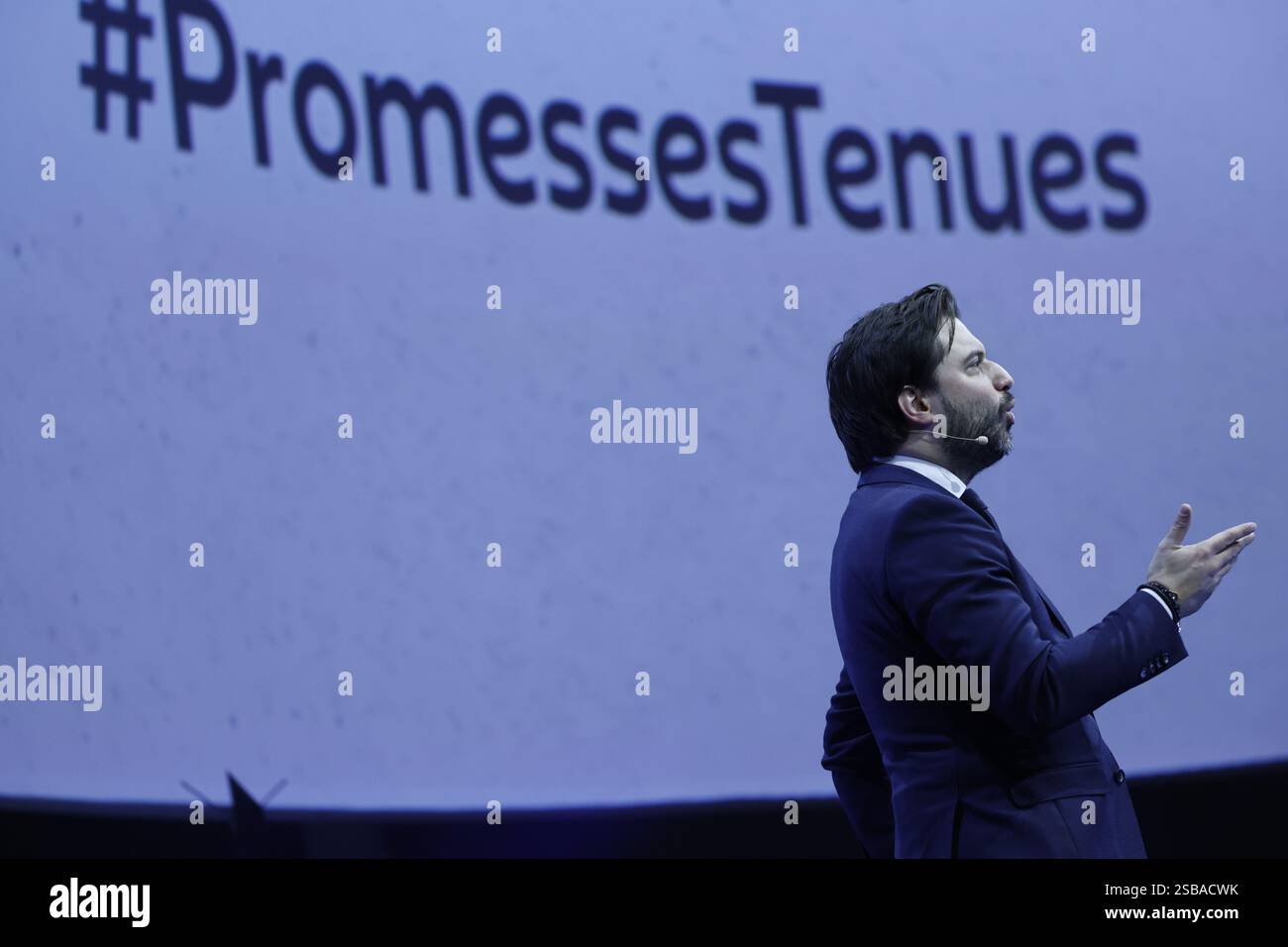
Gavere, Belgium – Georges-Louis Bouchez, the leader of the Reformist Movement (MR) in Belgium, sparked discussion this week with remarks made during a speech to a Rotary club in Gavere, a municipality in the Flemish region. Describing himself as “in fact a Fleming who speaks French,” Bouchez sought to explain the challenges of leading a right-leaning party in Wallonia, suggesting that the political landscape is more favorable to liberal parties in Flanders. The comments, reported on April 2, 2026, highlight the complex interplay of linguistic and regional identities within Belgian politics and the ongoing efforts to address economic concerns, particularly regarding purchasing power.
Bouchez’s statement, as reported by De Standaard, came during an address where he emphasized the need to demonstrate tangible improvements in the financial well-being of his constituents. He acknowledged the difficulties of navigating the political terrain in Wallonia as a conservative voice, contrasting it with the comparatively easier position of liberal parties in Flanders. This observation underscores the significant regional differences in political ideology and voter preferences within Belgium.
Belgium’s Linguistic and Political Divisions
Belgium is a federal parliamentary democracy with a complex political structure shaped by its linguistic and cultural divisions. The country is broadly divided into three communities: the Dutch-speaking Flemish Community, the French-speaking Community, and the German-speaking Community. These communities have significant autonomy, particularly in areas such as education and culture. The political landscape is further complicated by regional interests and the historical tensions between Flanders and Wallonia. Belgium’s political system is often described as a consociational democracy, designed to accommodate these diverse interests through power-sharing and compromise.

The Reformist Movement (MR), led by Bouchez since November 29, 2019, is a liberal and francophone political party primarily active in Wallonia and Brussels. Bouchez himself was born in 1986 and has served as a Senator since 2019, balancing his political duties with his role as owner and chairman of the Challenger Pro League football club, Royal Francs Borains. The MR traditionally advocates for economic liberalism, individual freedoms, and a strong European integration. However, in Wallonia, the party often faces challenges in appealing to a broader electorate, particularly those concerned about social welfare and economic inequality.
The Rotary Club and Local Engagement
The Rotary Club of Gavere Schelde-Leie, where Bouchez delivered his speech, is part of a global network of business and professional leaders committed to humanitarian service. Established in 2002, the club focuses on local community projects and international initiatives. Rotary clubs often provide a platform for political figures to engage with local stakeholders and discuss issues of importance to the community. The Rotary Club Tielt recently launched its 21st edition of the “Rotary & Toekomst – Wetenschap & Techniek” project, aiming to inspire young people to pursue careers in science and technology.
Bouchez’s choice to address a Rotary club in Flanders is noteworthy. It suggests a deliberate effort to reach out to a different audience and build bridges between the political spheres of Wallonia and Flanders. By acknowledging his own connection to the Flemish identity, he may have been attempting to foster a sense of understanding and common ground. However, the statement also carries the risk of being interpreted as a concession to Flemish nationalist sentiments, which have been gaining traction in recent years.
Economic Concerns and Purchasing Power
A central theme of Bouchez’s speech was the need to address the economic concerns of his constituents, particularly the issue of purchasing power. Belgium, like many European countries, has been grappling with rising inflation and the increasing cost of living. The MR has consistently advocated for policies aimed at boosting economic growth and reducing the tax burden on businesses and individuals. Bouchez’s emphasis on demonstrating improvements in purchasing power suggests a recognition of the growing economic anxieties among voters.
The economic disparities between Flanders and Wallonia have long been a source of tension in Belgian politics. Flanders generally enjoys a higher level of economic prosperity and lower unemployment rates compared to Wallonia. This disparity is often attributed to differences in industrial structure, investment levels, and labor market policies. Addressing these economic imbalances is a key challenge for the Belgian government, and Bouchez’s remarks reflect the ongoing debate over how to achieve greater economic convergence.
The MR’s Position on Economic Policy
The MR’s economic platform centers on promoting free market principles, reducing government intervention, and fostering a business-friendly environment. The party supports tax cuts, deregulation, and investments in innovation and technology. Bouchez has also been a vocal advocate for fiscal responsibility and reducing public debt. However, these policies have faced criticism from trade unions and left-leaning parties, who argue that they exacerbate income inequality and undermine social welfare programs.
The current economic climate in Belgium is characterized by a complex set of challenges, including high energy prices, supply chain disruptions, and the lingering effects of the COVID-19 pandemic. The Belgian government has implemented a range of measures to mitigate these challenges, including energy subsidies, tax breaks, and social safety net programs. However, the effectiveness of these measures remains a subject of debate, and the long-term economic outlook remains uncertain.
Implications for Belgian Politics
Bouchez’s statement and the broader context of Belgian politics suggest several potential implications. Firstly, it highlights the ongoing need for dialogue and cooperation between the different linguistic and regional communities in Belgium. Secondly, it underscores the importance of addressing economic concerns and ensuring that all citizens benefit from economic growth. Thirdly, it raises questions about the future direction of the MR and its ability to appeal to a broader electorate in Wallonia.
The upcoming elections in Belgium will be a crucial test for the MR and other political parties. Voters will be closely scrutinizing the parties’ economic platforms and their proposals for addressing the challenges facing the country. The outcome of the elections could have significant implications for the future of Belgian politics and the country’s relationship with the European Union.
As of today, April 2, 2026, no immediate reactions from other political leaders have been widely reported. However, analysts anticipate that Bouchez’s comments will likely fuel further debate about regional identity and economic policy in the lead-up to the next elections. The focus will remain on whether the MR can effectively translate its economic vision into tangible benefits for voters in Wallonia and across Belgium.
Key Takeaways:
- Georges-Louis Bouchez, leader of the MR, described himself as a “Fleming who speaks French” during a speech in Gavere.
- The statement highlights the complex linguistic and regional divisions within Belgian politics.
- Bouchez emphasized the need to address economic concerns and improve purchasing power for his constituents.
- The MR advocates for economic liberalism and a business-friendly environment.
- The upcoming elections in Belgium will be a crucial test for the MR and other political parties.
The situation remains fluid, and further developments are expected as the political debate intensifies. We will continue to monitor the situation and provide updates as they become available. Share your thoughts on this developing story in the comments below.