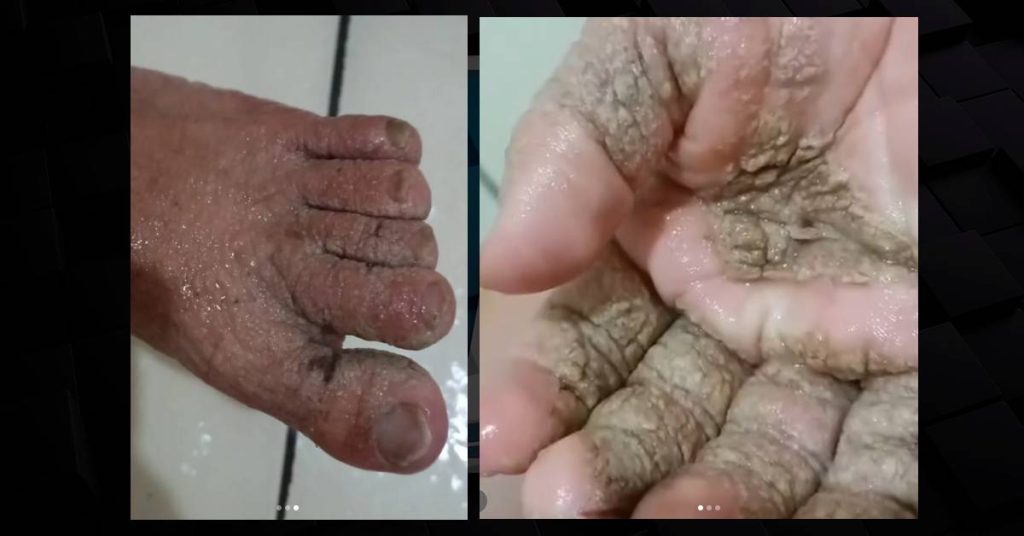
A heartbreaking case unfolding in Canoinhas, Santa Catarina, Brazil, has captured the attention of both local residents and health authorities. A 15-year-old boy is battling a severe and debilitating skin condition, prompting a desperate plea from his family for specialized medical attention. The case, initially brought to light by a concerned neighbor, highlights potential challenges within the public healthcare system and the difficulties families face when navigating complex medical diagnoses.
Silmara Xavier, a neighbor of the family, shared a poignant post online detailing the boy’s deteriorating condition. She described inflamed skin, open wounds, and even the loss of fingernails, expressing concern that initial assessments at the local Unidade de Pronto Atendimento (UPA) and health post resulted in a return home despite the worsening symptoms. Xavier’s post quickly circulated, prompting a response from the municipality, but also raising questions about access to timely and appropriate care for those with rare or complex illnesses. The situation underscores the critical need for robust diagnostic pathways and coordinated care, particularly for vulnerable populations.
The boy’s mother, Camila, has revealed that the initial diagnosis was challenging, with doctors initially suspecting common skin infections like scabies. But, after seeking a private dermatological consultation, a diagnosis of severe atopic dermatitis was reached. Atopic dermatitis, also known as eczema, is a chronic inflammatory skin condition characterized by intense itching, widespread eczematous lesions, and significant scaling. According to the National Eczema Association, atopic dermatitis affects approximately 31.3 million Americans, highlighting its prevalence globally. While not contagious, the condition can significantly impact quality of life and requires ongoing management.
Navigating the Healthcare System and Treatment Challenges
Camila’s account reveals a frustrating journey through the healthcare system. After initial visits to the UPA, Hospital Santa Cruz, and local health posts, she sought a private dermatologist due to a lack of progress. The subsequent diagnosis of severe atopic dermatitis led to a treatment plan, but complications arose when a dermatologist within the Sistema Único de Saúde (SUS), Brazil’s public healthcare system, altered the medication regimen, reducing the dosage of a prescribed corticosteroid. This decision, according to Camila, exacerbated the boy’s condition, leading to the spread of the rash to his feet and abdomen, and even causing bleeding from his scalp. The case raises questions about coordination of care between private and public healthcare providers and the potential consequences of abrupt changes in treatment plans.
The use of corticosteroids in treating atopic dermatitis is a common practice, but long-term use can lead to side effects, including dependence and adrenal suppression. The National Institutes of Health (NIH) provides detailed information on the management of atopic dermatitis, emphasizing the importance of a tailored treatment approach and careful monitoring. Camila reports that her son is now undergoing a process of gradually reducing the corticosteroid dosage under the care of his private dermatologist, a process complicated by the initial disruption to his treatment. The boy has begun experiencing headaches and convulsions, necessitating a consultation with a neurologist to investigate the underlying cause.
Municipal Response and Ongoing Care
The Municipality of Canoinhas has responded to the public outcry, issuing a statement indicating that the boy has received care from both general practitioners and dermatologists within the public system. According to the statement, the boy had a consultation on Wednesday and received medication, with appointments scheduled for Thursday with a neurologist and another dermatologist. However, Camila maintains that the dermatology appointment was only scheduled after the case gained public attention. The municipality also noted that the Conselho Tutelar (Council for the Rights of the Child and Adolescent), an independent body, visited the boy at school and facilitated another consultation with a general practitioner.
The UPA (Unidade de Pronto Atendimento) in Canoinhas, as outlined on the Portal do Cidadão, is part of the Rede de Atenção às Urgências, a network designed to provide intermediate-level healthcare services. The UPA aims to alleviate pressure on hospitals by managing urgent but non-life-threatening conditions. The Hospital Santa Cruz, also mentioned in Camila’s account, is a key healthcare facility in the region. The Instituto de Desenvolvimento, Ensino e Assistência à Saúde – IDEAS, is contracted to manage the UPA Canoinhas, with a contract in effect from November 9, 2023, to November 9, 2028, according to the Portal das OS.
The Financial Burden and the Need for Support
A significant challenge for Camila is the financial strain of continuing her son’s care privately. She has publicly appealed for assistance from the municipality to support cover the costs of ongoing consultations and treatment. The case highlights the economic disparities that can impact access to healthcare, even within a universal healthcare system like Brazil’s SUS. Families facing chronic illnesses often encounter substantial out-of-pocket expenses for medications, specialist visits, and complementary therapies. The emotional toll of navigating a complex medical system while simultaneously managing financial burdens can be overwhelming.
The situation in Canoinhas is not unique. Across the globe, families grapple with similar challenges when faced with rare or complex medical conditions. Advocacy groups and patient organizations play a vital role in raising awareness, providing support, and advocating for policies that improve access to care and reduce financial barriers. Organizations like the Global Skin Foundation offer resources and support for individuals and families affected by skin diseases.
As of today, March 5, 2026, the boy is scheduled to meet with a neurologist to investigate the cause of his headaches and convulsions. Further consultations with dermatologists are also planned. The municipality has affirmed its commitment to providing support, and the case remains under the scrutiny of both health authorities and the Conselho Tutelar. The outcome of these consultations and the long-term management of the boy’s condition will be crucial in determining his quality of life and overall well-being.
This case serves as a stark reminder of the importance of accessible, coordinated, and compassionate healthcare. It underscores the need for ongoing investment in public health infrastructure, robust diagnostic capabilities, and a commitment to addressing the social determinants of health that can exacerbate health inequities. The story also highlights the power of community advocacy in bringing attention to individual struggles and prompting action from those in positions of authority.
We will continue to follow this developing story and provide updates as they become available. If you have information to share or wish to offer support to the family, please depart a comment below. Your voice can help raise awareness and contribute to a more equitable healthcare system for all.
Keep reading