Breaking Apart the Building Blocks of Disease: New Research Reveals How too Disperse Harmful RNA Clusters
A groundbreaking study published in Nature Chemistry unveils a novel approach to tackling diseases linked to RNA aggregation, offering a potential pathway towards targeted therapies. Researchers at the University at Buffalo (UB) have discovered not only how these damaging RNA clusters form within cells, but also a method to effectively dismantle them using engineered RNA molecules.
For years, scientists have recognized the connection between RNA abnormalities adn a growing list of diseases, including neurodegenerative disorders and certain cancers. A key feature of these diseases is the tendency of specific RNA molecules – particularly those with abnormally long, repeating sequences – to clump together, forming solid-like aggregates that disrupt normal cellular function. This new research provides critical insights into the mechanics of this process and, crucially, offers a potential solution.
Understanding Biomolecular Condensates and RNA Clustering
The story begins with biomolecular condensates – cellular compartments formed through the phase separation of RNA, DNA, and proteins. Think of them as liquid droplets within the cell, concentrating specific molecules and facilitating biochemical reactions. These condensates, extensively studied by Priya Banerjee, PhD, associate professor in the Department of Physics at UB, are increasingly recognized as vital players in both healthy cellular processes and disease advancement.
“We’ve been deeply investigating these condensates, not just for their role in disease, but also for their fundamental material properties and the exciting possibilities they present for synthetic biology,” explains Dr. Banerjee, the study’s corresponding author. “What we’ve discovered is that these condensates can inadvertently become a breeding ground for problematic RNA clusters.”
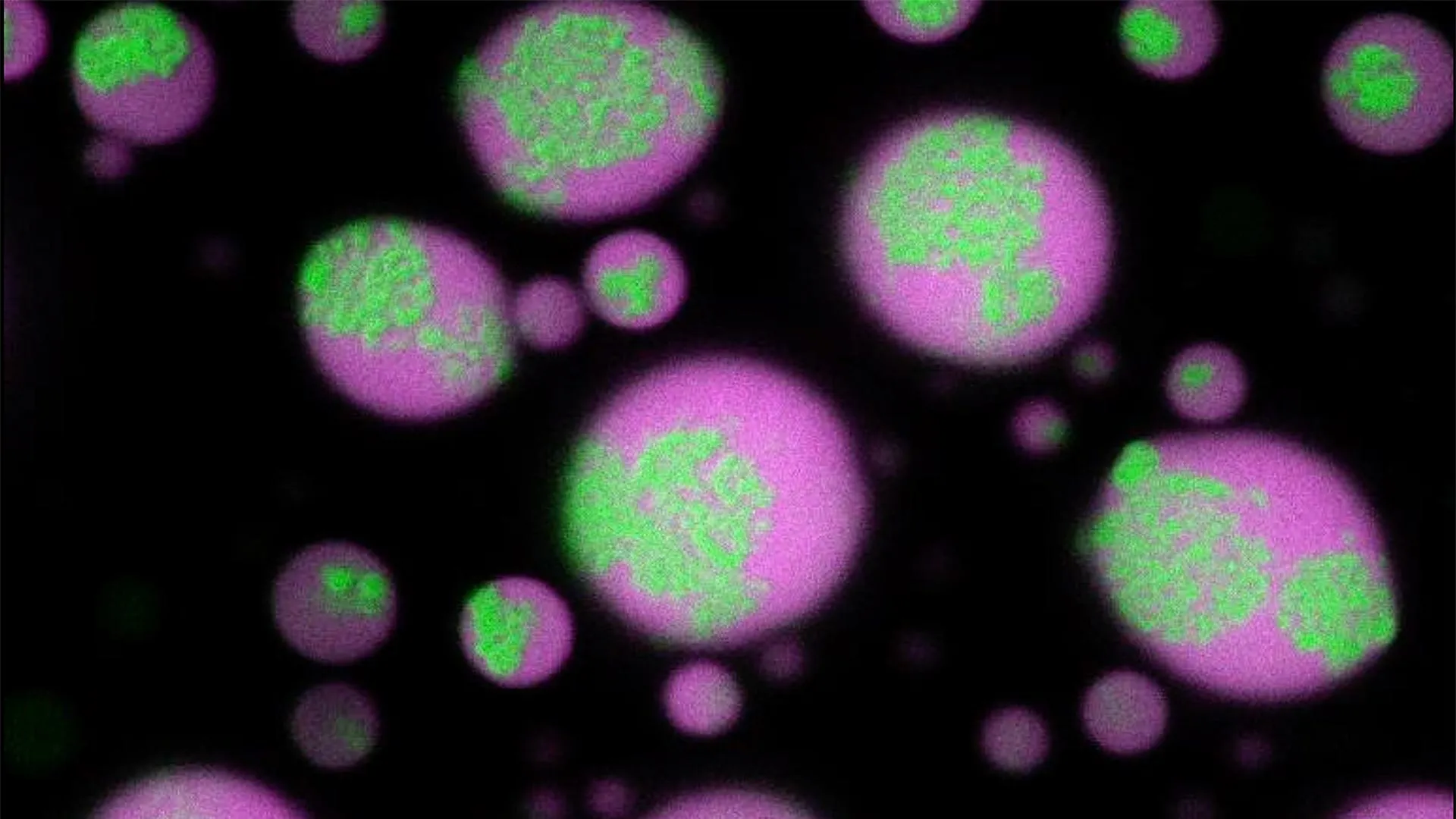
The research team, led by first author Tharun Selvam Mahendran, a PhD student in Dr.Banerjee’s lab, observed that repeat RNAs, known for their “sticky” nature, initially remain dispersed within the condensate. Though,as the condensate matures,these RNA molecules begin to aggregate,forming a dense,RNA-rich core surrounded by a fluid shell.
“Repeat RNAs are inherently prone to sticking together, but they typically fold into stable 3D structures that prevent this,” Mahendran clarifies.”The condensate provides the ideal surroundings for these RNAs to unfold and clump, essentially acting as a catalyst for aggregation.” Importantly, the team found that once formed, these solid RNA clusters persist even after the host condensate dissolves, contributing to their perceived irreversibility.
A Two-Pronged Approach: Prevention and Reversal
The UB team’s research doesn’t stop at understanding the problem; it offers potential solutions. They identified two distinct strategies for managing RNA clustering: prevention and reversal.
Preventing Cluster Formation: The researchers demonstrated that introducing the RNA-binding protein G3Bp1 into the condensate effectively halts cluster formation. G3Bp1 acts as a “molecular chaperone,” binding to the sticky RNA molecules and preventing them from aggregating. “It’s akin to adding an inhibitor to a crystal-growing solution,” Dr. Banerjee explains. “By introducing another ‘sticky’ element, we disrupt the RNA-RNA interactions and prevent the ordered structure - the cluster – from forming.”
Reversing Existing Clusters: The most significant breakthrough lies in the team’s ability to disassemble existing RNA clusters. They achieved this using an engineered strand of RNA called an antisense oligonucleotide (ASO).ASOs are designed with a sequence complementary to the target repeat RNA, allowing them to bind specifically and pull the aggregates apart.
“The specificity of the ASO is crucial,” emphasizes Dr. banerjee. ”Scrambling the sequence renders it ineffective, highlighting the potential for tailoring these molecules to target specific repeat rnas. this is a very promising sign for therapeutic applications.”
Implications for Therapeutic Development & The Origins of Life
This research has significant implications for the development of targeted therapies for diseases driven by RNA aggregation. The ability to selectively dismantle these clusters coudl offer a new avenue for treating conditions previously considered intractable. The team’s findings underscore the importance of understanding the complex interplay between RNA, proteins, and biomolecular condensates in disease pathogenesis.
Beyond disease, Dr. Banerjee’s work extends to fundamental questions about the origins of life. Supported by a seed grant from the Hypothesis Fund, she is investigating whether biomolecular condensates played a role in protecting and facilitating the catalytic functions of RNA in the prebiotic world.
“This research really highlights the remarkable versatility of RNA,” Dr.Banerjee concludes. “It can adopt different forms of matter, some essential for biological function and even life itself, while others can contribute to disease. Understanding these different forms is key to unlocking its full potential.”
About the Research:
This work was supported by the U.S. National